“A wonderful feeling” – Giovinazzi drives an SF15-T at Fiorano
Posted: 02.02.2017 / Source: Ferrari
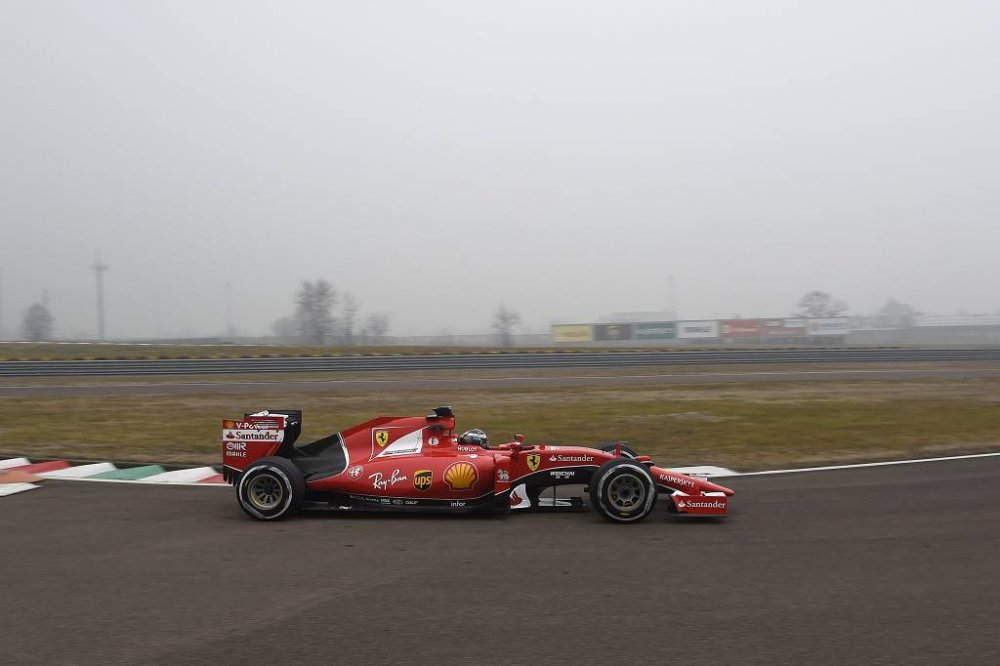
Maranello, 2 February 2017 – The Fiorano circuit provided the backdrop for Antonio Giovinazzi’s track debut with Ferrari, when he got behind the wheel of an SF15-T today. As from the 2017 racing season, Antonio has come onboard at Scuderia Ferrari as its third driver. He ran a test programme, approved by the FIA, aimed at making a comparison between data acquired in the simulator and on track. Once he had finished for the day he said, “it was a wonderful feeling, as this was my first time driving a Formula 1 car. For an Italian, driving out of the pits in a Ferrari is an amazing experience. The actual testing was very interesting, with so many procedures to follow. But the guys in the team were very nice to me and extremely helpful and that made everything much easier. I’d like to thank the whole team.” As permitted within the rules relating to off-season testing, the 2015 car will be running again tomorrow.


RM Sotheby’s 2017 Paris Auction – The Ferrari Lots
Posted: 02.02.2017
Source: RM Sotheby’s

| Lot | Ferrari | S/N | Remarks |
| 108 | 1970 Ferrari Dino 246 GT ‘L-Series’ by Scaglietti | 01004 | |
| 112 | Ferrari 550 Maranello WSR | ZFFZR49B000120147 | |
| 116 | Ferrari 360 Challenge Stradale | ZFFDT57B000138735 | |
| 118 | Ferrari 550 Barchetta Pininfarina | ZFFZR52B000124279 | |
| 120 | Ferrari 599 GTO | ZFF70RDB000178253 | |
| 137 | Ferrari 250 GTE 2+2 Series III by Pininfarina | 4139 GT | |
| 140 | Ferrari 16M Scuderia Spider | ZFFKZ66B000168947 | |
| 145 | Ferrari 365 GTB/4 Daytona Spider by Scaglietti | 16801 | |
| 149 | Ferrari 365 GTB/4 Daytona Berlinetta by Scaglietti | 12801 | |
| 151 | Ferrari 250 GT Cabriolet Series II by Pininfarina | 3803 GT | |
| 154 | Ferrari F430 GTC | 2616 | |
| 157 | Ferrari 275 GTB by Scaglietti | 07341 | |
| 165 | Ferrari F40 | ZFFGJ34B000080747 | |
| 166 | Ferrari Dino 206 GT by Scaglietti | 00238 | |
| 176 | Ferrari Testarossa ‘Monospecchio’ | ZFFAA17B000066437 |


Glorious Alfa Romeo Tipo B P3 Headlines a Night of Sparkling Results in Paris
Posted: 09.02.2017 / Source: RM Sotheby’s
PARIS, 9 February, 2017
RM Sotheby’s, the world’s largest auction house for investment quality automobiles, has enjoyed a spectacular night in Paris in which the company achieved a gross sale total of €27,576,400 – the best ever result for its Rétromobile week sale.
The star lot of the night was the beautiful 1934 Alfa Romeo Tipo B P3, one of the most important and coveted of all pre-war Grand Prix cars. Campaigned by Scuderia Ferrari during the 1934 and 1935 seasons, it was driven by many of the most significant Grand Prix pilots of the era, including Nuvolari and Varzi. An important and iconic piece of motor sport history, the car fully deserved the €3,920,000 it achieved. The second biggest seller on the night was the 1973 Ferrari 365 GTB/4 Daytona Spider, a very rare car offered in outstanding condition with only 20,314 miles on the clock. The car attracted huge attention and brought €2,156,000.
In many respects the night might be most noted as a further demonstration of the continued demand for the best examples of modern-era Porsches. A headline attraction of the sale was a group of 13 Porsches offered from a private Swiss Collection and presented entirely ‘without reserve’. The highlight was a highly original, one-of-29 1988 Porsche 959 Sport, the pinnacle of Porsche performance and technology in the ‘80s. With just three owners and 11,281 miles from new, the 959 Sport achieved a world-record auction price of €1,960,000. Another remarkable Porsche result from within the collection was for the rare 1994 Porsche 911 Turbo S 3.6, which achieved a very significant result of €901,600. An additional selection of high quality Porsches from this private Swiss collection will be presented across various global RM sales in 2017, including the company’s well established Amelia Island, Monterey and London auctions. In total, 23 examples of the marque were sold in Paris, and among the numerous notable results outside the collection, the 1995 Porsche 911Turbo Cabriolet was a particular highlight, bringing a remarkable final figure of €1,344,000.
“The Paris sale has been important on a number of levels”, says Peter Wallman, Managing Director, RM Sotheby’s Europe . “More than anything, the results demonstrate that the European market remains incredibly strong, with the prices achieved providing a robust continuation of what we achieved in London last September and Milan in November. Collectors are looking for quality, and rarity remains the key driver to some of the most significant values. Clearly, Porsche is still the star marque in the ascendance, although the Alfa Romeo P3 reminds us that the true greats of the pre-war era still command much attention from serious collectors where pure beauty, heritage and provenance are the corner stones of desirability.”
Demonstrating that Aston Martin is still a marque very much in demand, and illustrating that strong prices for modern classics run beyond the Stuttgart marque, the sale featured two rare, Zagato-bodied cars which attracted significant interest. A 2012 Aston Martin V12 Zagato “No. Zero”, a one-of-a-kind car within just 65 cars constructed to celebrate the 50th anniversary of the legendary DB4GT Zagato, exceeded estimate and sold for €750,400. The 2003 DB7 Zagato, which represents the first collaboration between the Italian and English firms since the V8 Vantage Zagato of 1986, is the first of just 99 produced and made a very strong €392,000.
RM Sotheby’s presence in Paris continues through Sunday (12 February) with a display at the world-famous Rétromobile exhibition at the Porte de Versailles, where the company is proudly showcasing early highlights for its key Spring / Summer sales. On view on the RM stand (Pavilion 1, Stand N29), a striking 1937 Talbot-Lago T150C SS ‘Goutte d’Eau’ Coupé, which is set to grace the company’s boutique Villa Erba sale during the Concorso d’Eleganza Villa d’Este weekend in May, along with the one-off 1950 Ferrari 166 MM/212 Export ‘Uovo’, an early highlight for the company’s flagship Monterey, California sale in August. In addition to previewing its forthcoming auctions, RM car specialists will be on hand at Rétromobile to offer collectors a resource for auction and restoration services.
RM Sotheby’s continues its 2017 auction calendar in Amelia Island, Florida, 10-11 March. The official auction of the Amelia Island Concours d’Elegance, this well-established sale has been extended to two days this year with the addition of A Gentleman’s Collection: The Pride and Passion of Orin Smith, a superlative group of Rolls-Royces, Bentleys and other sporting icons, offered largely without reserve. The company’s European calendar continues, 27 May, with a return to the shores of Lake Como (Cernobbio), Italy, for its exclusive sale during the celebrated Concorso d’Eleganza Villa d’Este weekend.
The Ferrari GTC4Lusso Wins the “Most Beautiful Supercar of the Year”
Posted: 01:02:2017 / Source: Ferrari

Paris, February 1st, 2017 – The Jury of the International Automobile Festival, chaired by internationally renowned architect, Jean Michel Wilmotte, awarded the Ferrari GTC4Lusso “The Most Beautiful Supercar of the Year” Grand Prize. This represents the first European award of the year for this car.
During the opening ceremony of the Festival in the prestigious site of les Invalides at Paris, Flavio Manzoni, Senior Vice President, Ferrari Design, received the award in front of 600 guests. Flavio Manzoni declared: “I’m very proud and honored to accept this very prestigious award on behalf of Ferrari and the team at the Ferrari Styling Centre. The Ville Lumière is a symbol of elegance and beauty which encapsulates the very essence of the Ferrari GTC4Lusso.”
The GTC4Lusso will be on display at the Festival until the 5th of February.


The legend of Ferrari to be star of the next Retromobile
Posted: 18.01.2017 / Source: Retromobile

Ferrari has a place all of its own in the automotive industry’s hall of fame and the Italian brand with
the prancing horse emblem continue to make dreamers out of grown-ups and little ones. At the next
Retromobile show, a total of eight exceptional models will be presented through an exhibition made
in tribute to the 70 years of the brand. A selection of most incredible racecar the 166 Mille Miglia to
the iconic 250GT SWB, will be exposed as the Ferrari heritage.
FERRARI’S PASSION
Just try it: say the name «Ferrari» in front of any group of people. You will see their faces light up. Their eyes will sparkle and twinkle. Sometimes, they
even become hysterical. Ferrari is now the world’s most influential brand – ahead of Apple – reigning supreme in the world of car manufacturers. Most of its models fetch extremely high prices at auction.
The Ferrari legend can trace its roots back to the first half of the 20th century. Ferrari was a man before becoming a brand. The kind of story you’d expect to find in a novel : a story about a man who was practically married to cars – so much so that he spent his whole life working with them.
FERRARI, 70 YEARS OF HISTORY
Not content with being a competent racing driver with numerous titles to his name, including second place in the 1920 Targa Florio open road endurance
race and numerous other victories – from Savio to Pescara – Enzo Ferrari proved his worth as a manager, officially taking over Alfa Romeo’s racing.
The red cars quickly found their flanks adorned with badges featuring a black horse rearing up against a golden yellow background – the colour of Modena. This coat of arms was originally emblazoned on the cabin of an aeroplane belonging to Francesco Baracca – a crack Italian aviator who died in combat on 19 June 1918. His mother, Countess Paolina Baracca, encouraged Enzo Ferrari to feature this emblem on his cars. «It will bring
you luck», she assured him. History was to prove her right.
At that time the Grand Prix Alfa Romeos were the machines everybody wanted to beat. Ferrari founded Scuderia Ferrari on 1 December 1929. In 1933, it started officially representing Alfa Romeo’s racing department. Wilfredo Ricart started working for Alfa Romeo, heralding changes to the balance of power within the company. Enzo Ferrari’s dislike for the man led to his leaving. Ferrari returned to the premises of the now-defunct Scuderia in Modena. There, he was able to turn his dream of designing and producing a car bearing his own name into reality. Well, nearly. When he left Alfa Romeo in 1939, it was under the understanding that he would not use the Ferrari name in association with races or racing for at least four years. He got around this by founding Auto Avio Costruzioni in September 1939. The outbreak of the Second World War postponed his racing car projects, forcing him to move to Maranello. After the war ended, he was once again able to resume work on his dream.
On the 12 of March 1947, a crowd gathered in the Trento Trieste in front of Ferrari’s factory, hoping to get a first glimpse of the 125 S, which already
featured a V12 engine. The famous Ferrari emblem adorned the end of the bonnet against a yellow background. On 25 May, only just over two months after the world’s very first Ferrari had rolled off the production line, Franco Cortese clinched a victory at the Rome Grand Prix at the wheel of a Ferrari 125 Sport. But this first success story was not enough to stave off Ferrari’s day-to-day difficulties. To keep the company afloat and enable it to develop racing cars, Enzo Ferrari decided to start building road cars. At the Turin Motor Show in September 1948, he revealed his first ever grand tourer: the four-seater 166 coupé designed by Milan-based coachbuilder Carrozzeria Touring.
In the meantime, change was the only ever constant in his racing car factory. Ferrari was spinning his web. Single-seater, Sport and GT: Ferrari started
building cars of all types. More often than not, successfully. They started amassing praise and titles, establishing themselves as the cars to beat. This
unique and unshakeable commitment across the board in all of the main areas of motorsport is what sowed the seeds of the legend of Ferrari. Ferrari’s
charismatic personality, the commitment of the best engineers and racing pilots taking on a merciless fight, the cult that had grown up around V12
engines, the sculpted, feline, distinguished forms of the cars themselves, the nobility of racing which defined the very essence of the grand tourers, the
cars’ exclusive nature that resulted from limited production runs and highquality performance all contributed to the special aura which was beginning
to surround the brand.
Ferrari’s main accomplishment was not so much its accumulated F1 victories (in itself a major feat, considering how young the company was), so much as
its ability to work on several programs at once. Following the defections of a number of leading builders, the sports authorities had decided that Formula Two was to take over from Formula One for the 1952 and 1953 World Championships. Ferrari saw it as an opportunity to inexpensively develop a single-seater derived from the F2 which was dominating the discipline. Beneath the bonnet of this new car was a 4-cylinder 2 L engine featuring a double overhead camshaft and a 185 hp twin-plug ignition system. This engine, designed by engineer Lampredi proved unfailingly reliable. Ferrari was therefore involved in competition events right at the very beginning.
The following years saw many ups and downs. The 1970s were difficult years for sports cars: oil prices increased, and speed limits were increasingly
widespread. As far as racing was concerned, the Scuderia factory saw both victories and disappointments. Enzo Ferrari died on 14 August 1988. He is survived by what he created. He had long since passed over the running of the company to Fiat. Luca Cordero di Montezemolo was appointed CEO in 1991, heralding the start of a highly successful era – both from a sports perspective and in terms of sales. Following Jean Todt’s appointment as Sporting director in 1993, Ferrari won eight Constructors’ Championship titles and six World Drivers’ Championship titles, five with Michael Schumacher at the wheel. On 21 October 2015, Ferrari made the headlines for a completely different reason: it became a Wall Street listed company. A new chapter is just beginning.
FERRARI’S SHOW AT THE RETROMOBILE EXHIBITION
Retromobile pays tribute to Ferrari with eight exceptional cars, true sacred beasts on both the road and competition. Initially in the racing field the
manufacturer has, over the time, become a reference in the industry and art of the automobile which made it known as a pioneer as much in design than
performance.
The Ferrari 166 Mille Miglia sports race car on show has a golden pedigree. With its Touring bodywork, it won the first 24 hours of Le Mans to be staged after the Second World War in 1949. Luigi Chinetti – who had already won the race in 1932 and 1934 – drove the 166 MM for more than 22 hours,
as part of a team with Lord Selsdon. On loan from the Automobile Club de l’Ouest Museum, the red racing car (number 22) marks the start of Ferrari’s
supremacy at the 24 hours of Le Mans . Eight more victories were to follow up until 1965, six of which were consecutive (1960 to 1965).
The Ferrari 500 F2 is one such example:
With two world titles in 1952 and 1953, this single-seater is the most decorated car in the brand’s whole history. It won 11 Grand Prix with Alberto Ascari at the wheel. With 14 victories under its belt out of a total of 15 races, the 500 F2’s superiority was absolute. The car was already an example of Enzo Ferrari’s forward-thinking and strategising approach.
The Ferrari 250 LM, the manufacturer’s first mid-engined saleable racer for the public. On loan from the Schlumpf Collection housed at the Mulhouse National Automobile Museum under the chassis number #5975 GT, this model featuring a 3.3 L V12 engine (275 LM) has the lowest mileage of the line and it has clocked up barely 1300 miles since it was delivered to its very first owner – Helge Pehrsson from Sweden. The real fake GT had never known the thrills of racing before becoming part of the Schlumpf collection in 1967. It was at around this time that the Schlumpf brothers acquired the 500 TRC two-seater MD TR (chassis number #0692), sold new to Adrian Conan Doyle. Much prized by private collectors – often amateurs themselves – this 1957 sports car was the last vehicle to feature Lampredi’s 4-cylinder engine. It is an important milestone in the family tree of sports cars: its chassis formed the basis of the Ferrari 250 Testa Rossa which was to replace it in 1958.
La 250 GT Cabriolet « Série 1 » :
The 250 family is without contest the most prolific and the most glorious. The 250 exposed will be a «Series 1” 250 GT Cabriolet designed by Pinin Farina as part of a close collaboration that had begun in 1951. With a chassis number of #1193 GT, this extremely elegant cabriolet is one of a very limited series of only thirty-seven vehicles that were built practically to measure in the Corso Trapani factories between 1957 and 1959.
The classical 250 GT Berlinetta :
Ferrari was to unveil another masterpiece designed by its partner coach builder that year at the Paris Motor Show: the 250 GT Berlinetta, more frequently known as the SWB (which stood for Short Wheelbase). Built by Italian automobile designing coachbuilding company Carrozzeria Scaglietti, the 250 GT Passo Corto was produced in two versions: aluminum and steel.
The 275 GTB, one of the last Maranello GT to hold on to the front engine position : The Berlinetta who replaced the 250 GT Berlinetta in 1964 was
once again the epitome of elegance it was also designed by Pininfarina which – starting in 1961 – was written as a single word (a move formally authorized
by Italy’s president). The sign of a bygone era, red was in considerably less demand than it is today. The car on show is maroon; the first GTB sold in France in January 1965 was dark green.
no images were found
Kimi Ambassador for Sport
Posted: 18.01.2017 / Source: Ferrari

Finnish Prime Minister honours Raikkonen in Helsinki: “Thanks to my family and the Team”
The Finnish government has never before appointed anyone as an Ambassador for Sport, but it did so at a Sport Gala, held in Helsinki on Tuesday 17 January. The recipient was none other than Kimi Raikkonen, who received the honour from Prime Minister Juha Sipila. Kimi’s presence at the gala had been kept secret right up until the last moment. “I’m not that used to making formal speeches,” said Raikkonen. “But I would like to wish all the best to the winners in every category, as well as those who missed out on the prizes this year. I would stress how important it has been in my case to have the support of my family and help from trustworthy colleagues and the people within the Ferrari Team, with whom I have worked for so many years now.”
In 2017, Finland celebrates the centenary of its independence..

| Circuit | Daytona International Speedway |
| Date | 28.01. – 29.01.2017 |
| Laps | |
| Distance | km / miles |
| No | Driver | Ferrari | S/N | Team | Result |
|
51
|
Peter Mann / Maurizio Mediani / Alessandro Pier Guidi |
488 GT3
|
F142M GT3 xxxx
|
Spirit of Race
|
. overall /. in class GTD
|
| 62 | Giancarlo Fisichella / James Calado / Toni Vilander | 488 GTE | F142M GTE xxxx | Risi Competizione | . overall / . in class GTLM |
| 63 | Christina Nielsen / Alessandro Balzan / Matteo Cressoni | 488 GT3 | F142M GT3 xxxx | Scuderia Corsa | . overall / . in class GTD |


Daytona 24 Hours – Ferrari Sweeps GTD Class Front Row
Posted: 26.01.2017 / Source: Ferrari
Daytona Beach, 26 January 2017 – Ferrari 488 GT3s have taken over the front row of the GT-Daytona field for this weekend’s 24 Hours of Daytona. In GT-Le Mans class the 488 GTE of team Risi Competizione took fourth place.
GTD, a family affair. In Thursday’s qualifying session, Alessandro Pier Guidi drove the No. 51 Spirit of Race Ferrari 488 GT3 to pole position with a time of 1:47.099 around the 3.56-mile road course at Daytona International Speedway. Pier Guidi, who won the 24 Hours of Daytona in 2014 in a Ferrari 458 Italia, will share his car this weekend with Peter Mann, Rino Mastronardi, Maurizio Mediani and Ferrari factory driver Davide Rigon. A scant 0.018 of a second behind Pier Guidi was the No. 63 Scuderia Corsa Ferrari 488 GT3 driven by Alessandro Balzan. Balzan, who is the defending IMSA GT-Daytona champion with Christina Nielsen, will share the Scuderia Corsa Ferrari in this weekend’s race with Nielsen, Ferrari factory driver Sam Bird, and Matteo Cressoni. The two Ferrari 488 GT3s dominated the qualifying session, with Pier Guidi shooting to the pole position early in the session and Balzan quickly following into second place.
GTLM. In qualifying for the GT-Le Mans class, Toni Vilander drove the no. 62 Risi Competizione Ferrari 488 GTE to fourth position with a late flying lap. Vilander, who set 1’44”123 makes up the lineup of full Ferrari factory drivers in the Risi Competizione Ferrari which includes James Calado and Giancarlo Fisichella.
Schedule. The day schedule was completed with a session of night practice, while tomorrow there’s another session of free practice in the morning. The 24 Hours of Daytona will go green on Saturday, January 28 at 2:30 PM EST with coverage beginning at 2:00 PM EST on FOX.
IMSA SCC – Three Ferraris on track at Daytona
Posted: 26.01.2017 / Source: Ferrari
Daytona Beach, 26 Jan 2017 – Ferrari is back at Daytona just over a month after the success of the first Finali Mondiali ever held in America. In December, the Prancing Horse was there essentially to celebrate the marque together with customers and American fans. However, this time the aim is to beat the many other manufacturers at the legendary 24 Hours that opens the IMSA SportsCar Championship season and, in effect, the intense season of GT racing.
GLTM.Three Ferraris will be racing in two categories 50 years after the famous clean sweep of 1967. The 488 GTE of Risi Competizione, owned by Giuseppe Risi, will race in the GTLM class with an all-official crew of Toni Vilander and Giancarlo Fisichella, who will compete in the entire American championship season. James Calado will join them to reform the trio that won the Petit Le Mans at Road Atlanta, the last race of the 2016 season. The competition will be tough, with US cars keen to do well at home. It will also be the debut race for some new models, just like the 488 GTE a year ago.
GTD.Two 488 GT3s will be involved in the GTD class. Anticipation is high for the Scuderia Corsa car, with Denmark’s Christina Nielsen and Italy’s Alessandro Balzan seeking another championship win. Matteo Cressoni and Sam Bird, the Prancing Horse’s official GT racing driver, will crew the car of Giacomo Mattioli’s team in the 24 Hours. Spirit of Race will field the other 488 GT3, in the hands of the great gentleman driver Peter Mann. Maurizio Mediani, Rino Mastronardi, Alessandro Pier Guidi and official Maranello driver Davide Rigon will support Mann who is famous for his blue cars. This top-level crew will also include a past winner of the race. In fact, Alessandro Pier Guidi was a member of the crew that triumphed in the GTD class in 2014 at the wheel of the 458 Italia of Level 5 Motorsports.
History.Ferrari has twice been overall winner of the 24 Hours. The first time was in 1967 with the official 330 P4 of Lorenzo Bandini and Chris Amon, when there was the famous one-two-three overall finish and a Ferrari hat-trick on the podium. Then in 1998 the 333 SP-Moretti Doran Racing team won with Arie Luyendyk, Didier Theys, Mauro Baldi and Gianpiero Moretti. There have also been eight class victories, most recently the already mentioned one of 2014 in the GTD with Segal-Pier Guidi-Bell-Tucker-Sweedler on the Level 5 Motorsports 458 Italia. However, there have been another 11 wins not obtained in 24 hours. The first came in 1959, in the USAC series, with Santiago Gonzalez and Skip Hudson in a 250 GT for the Hans Hirch team. We also shouldn’t forget the triumph in the 6 Hours of 1972 by the 312 PB Scuderia Ferrari with Mario Andretti and Jacky Ickx.
Programme. The long weekend at Daytona kicks off on Thursday with the free practice sessions followed by qualifying at 3:10 pm local time (9:10 pm CET) for the GTLM class and at 3.35 pm (9:35 pm CET) for the GTD. On Friday there is another practice session before the race starts at 2:30 pm local time (8:30 pm CET). The conclusion is of course scheduled for the same time on Sunday.
Ferrari reveals its latest bespoke one-off: The SP 275 rw competizione
Posted: 21.12.2016 / Source: Ferrari

Maranello, 21 December 2016 – Designed under the direction of Ferrari’s Styling Centre with the collaboration of Pininfarina, the latest Ferrari one-off model, the SP 275 rw competizione, is built on the chassis of the F12berlinetta but equipped with the more powerful V12 engine and gearbox from the limited-series F12tdf.
Drawing inspiration from the 275 GTB, one of the most iconic front-engined V12 berlinettas of the 1960s, the SP 275 rw competizione features a thoroughly modern interpretation of some of the themes that give the 275 GTB its berlinetta connotation, such as the quest for the ultimate balance in proportions and the pure and curvaceous surface treatment. The stance of the car, particularly in the muscular transition from the rear three-quarter panel to the wheelarch was carefully refined with a slightly wider track to express potency over the rear wheels and confer a rakish attitude.
The characteristic front engine-bay vents of the 275 GTB are an evident styling cue, as is the adoption of the triple louvres in the three-quarter panel in place of the F12berlinetta’s B-post quarterlights. The louvres on the rear bumper, together with the pronounced nolder on the tail and milled aluminium fuel filler cap, recall instead the special competition-developed 275 GTB (chassis number 06885) that won the GT category in the 1965 Le Mans 24 Hour race, coming home an impressive third overall behind the winning 250 LM. The yellow paint scheme is also a tribute to that 275 GTB, echoing its Ecurie Francorchamps team colour.
The front features a closed perimeter Ferrari grille with a prominent yet smoothly integrated bonnet bulge, while the slim, vertically-stacked headlights and forged 20” alloys are unique to this car.

Giovinazzi to be Ferrari’s third driver
Posted: 19.12.2016 / Source: Ferrari

Scuderia signs an agreement with 23-year old Italian driver
Maranello, 19 December – Scuderia Ferrari announces that it has reached an agreement of cooperation with driver Antonio Giovinazzi. Following such agreement, Giovinazzi will take on the role of Third Driver of the Scuderia in the 2017 season.
Giovinazzi was born in Martina Franca (Taranto, Italy) on December 14th, 1993.
Ferrari Christmas, a time to look ahead
Posted: 19.12.2016 / Source: Ferrari

President Marchionne: “The team is giving its all”
Maranello, 19 December – “The team is giving its all and has a great will to win.” The words of President Sergio Marchionne rang out in determined fashion in the room that hosted the usual Christmastime meeting with the press. “We have restructured and I prefer to look to the future in a different way. I don’t regret the choices made, they were well thought out, so there’s no need to change ideas.” At the end of a season that was far from easy, the bosses at the Scuderia are, above all, thinking and looking to the year to come. “There are still many things missing,” added the President, “but the team is the team and it was put in place over a period of years and we’re not about to change it now. Our working practice is already different to what it was back in August, which is when Mattia Binotto took over the reins. The organizational change was also partly made to bring some calm. Put in the work and the results will come.”
Team Principal, Maurizio Arrivabene echoed the President’s sentiments. He thanked the Prancing Horse fans – “you have been very patient and we will do our utmost not to disappoint you” – and in replying to questions from the journalists, he immediately dismissed those who would describe Sebastian Vettel as being “demotivated.” “With Vettel and Raikkonen we have two world champions on our books. Sebastian was here yesterday, working in the simulator and he repeated the fact that he wants to win with Ferrari. It’s up to us to give them a car capable of doing that.”
And on the topic of that 2017 car, which will be officially launched on 24th February, it was the turn of the Scuderia’s Chief Technical Officer, Mattia Binotto to say a few words. “There are so many changes to the rules relating to aerodynamics. We will see cars that are much quicker through the corners, under acceleration and in braking. There is nothing to say that we here in Maranello cannot build such a car…It’s just a matter of time. What we lacked on occasions this year was the ability to react quickly. We must be able to introduce new solutions before the others do.”
And with that goal, the work does not stop, not even during the holiday period.


Ferrari 50 Year Anniversary Japan Finale
Posted: 13.12.2016
Source: Ferrari

Special celebration with a Japan-only bespoke model, Ferrari J50
2016 marks the 50th year since the first Ferrari was officially registered in Japan. To celebrate this milestone, a series of special events have been held this year including Ferrari Racing Days, Hokkaido Rally, Osaka Riverside Party and International Cavalcade.
To wrap up this momentous year, “Ferrari 50 Year in Japan Anniversary Finale” was held at the New National Art Museum in Tokyo and over 300 passionate VIP guests attended the exclusive event.
At the entrance to the venue were displayed a 275GTB , which was the model that this anniversary celebrates the importation in 1966 of, as well as a GTC4Lusso, the latest 12-cylinder model introduced in 2016. Facing them was a row of all the other models in the current lineup that warmly welcomed the guests.
The highlight of this Finale event was the unveiling of the J50, a new limited edition model – the first Fuori Serie model developed specifically for Japan. The J50 is said to have been designed with the notion of futuristic, exotic and unique in mind. Among the limited edition models it has unveiled to date, this is clearly the one with the most fresh styling and might serve as the blueprint for future Ferrari designs.
This finale event was an appropriate climax to a year packed with special events, and left the audience excited about the future of the brand.


