Berluti and Ferrari: an homage to excellence
Posted: 10.10.2018
Source: Ferrari

Ferrari Limited Edition – a collection inspired by gentlemen drivers
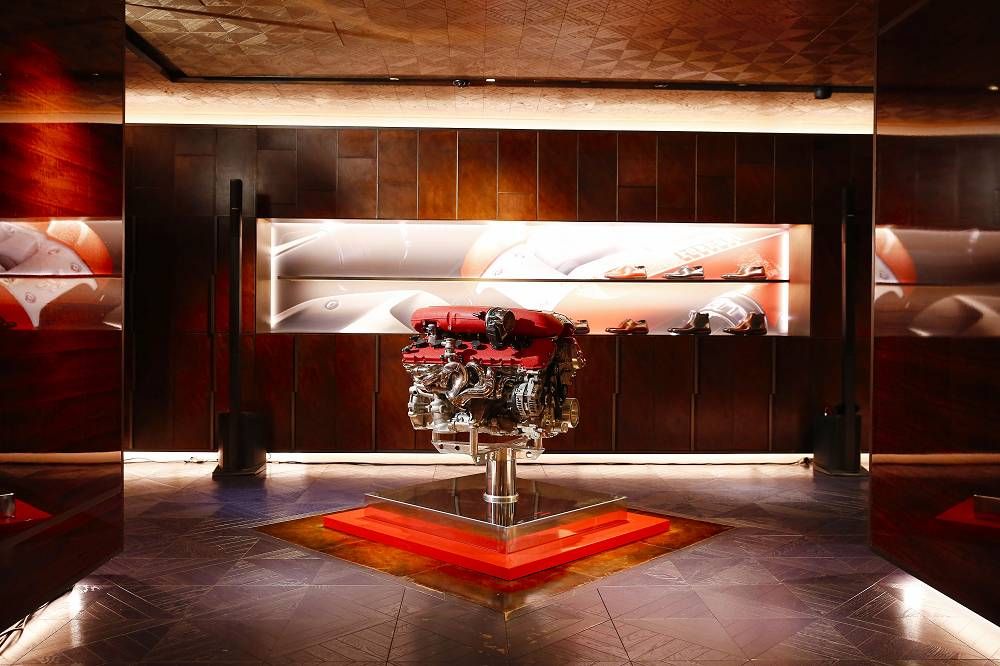
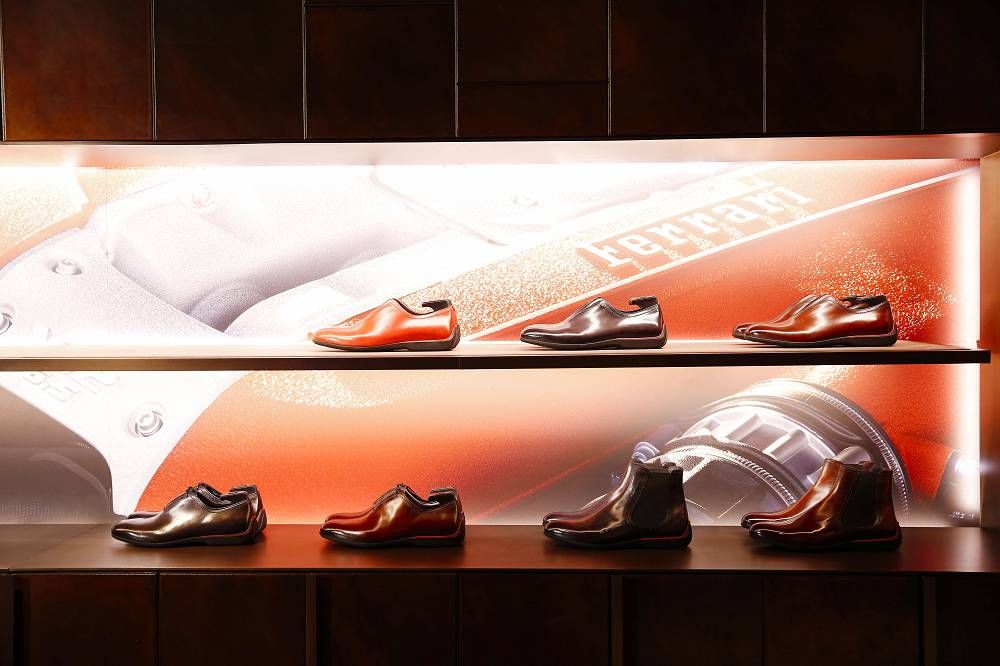
Maranello’s collaboration with Berluti has produced the Ferrari Limited Edition footwear collection designed specifically for gentlemen drivers and inspired by the Prancing Horse’s latest models, the Ferrari Monza SP1 and Monza SP2. Every detail and styling element of this exclusive collection – including its sculptural, sinuous shapes and stitching – references the iconic Ferraris, their instantly recongisable exterior styling and exquisite interiors.
To further underscore the link to the Prancing Horse, all three models – a Slip-on, an Oxford and a Chelsea Boot – have the same red piping detail on their heels.
When it came to designing and developing the soles used in the collection, Ferrari drew on its wealth of experience with innovative technologies, choosing to craft them in Twill 2×2 carbon-fibre which is not only used in its cars, but also makes for ultra-comfortable driving in particular.
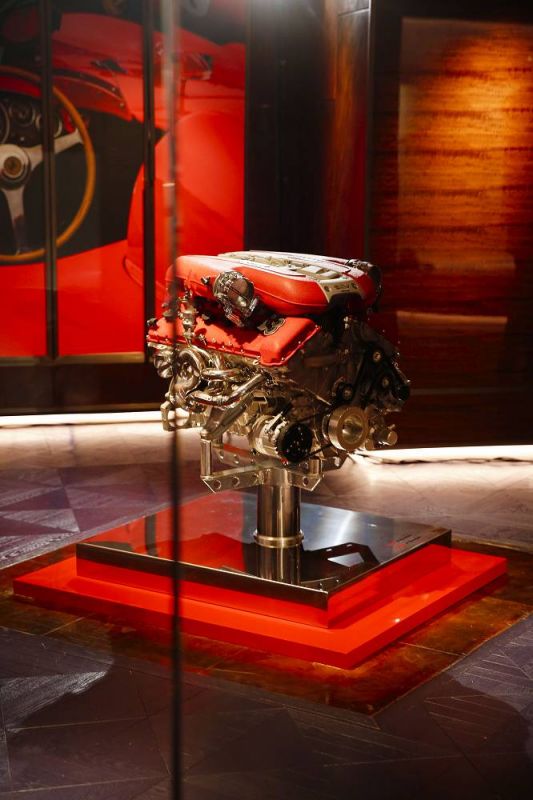
The Ferrari Limited Edition collection was unveiled by Ferrari Chairman John Elkann and Berluti CEO Antoine Arnault at a cocktail party in the brand’s boutique on Paris’s Rue du Faubourg Saint-Honoré to celebrate both Fashion Week and the Mondial Paris Motor Show. Designed by Berluti and Ferrari, the collection will be available from the start of November in select Berluti boutiques internationally.

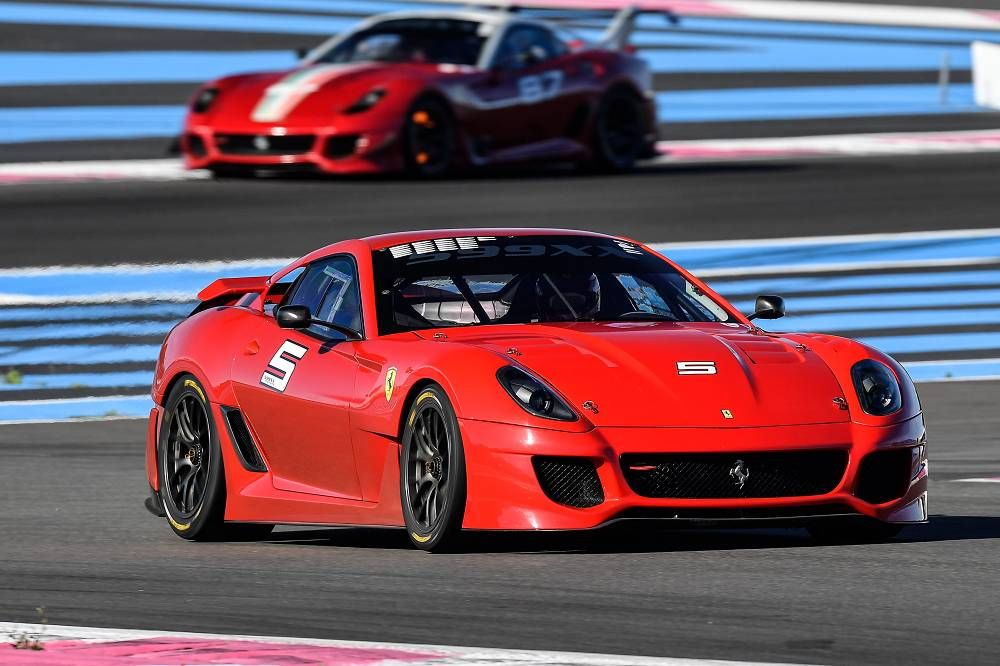
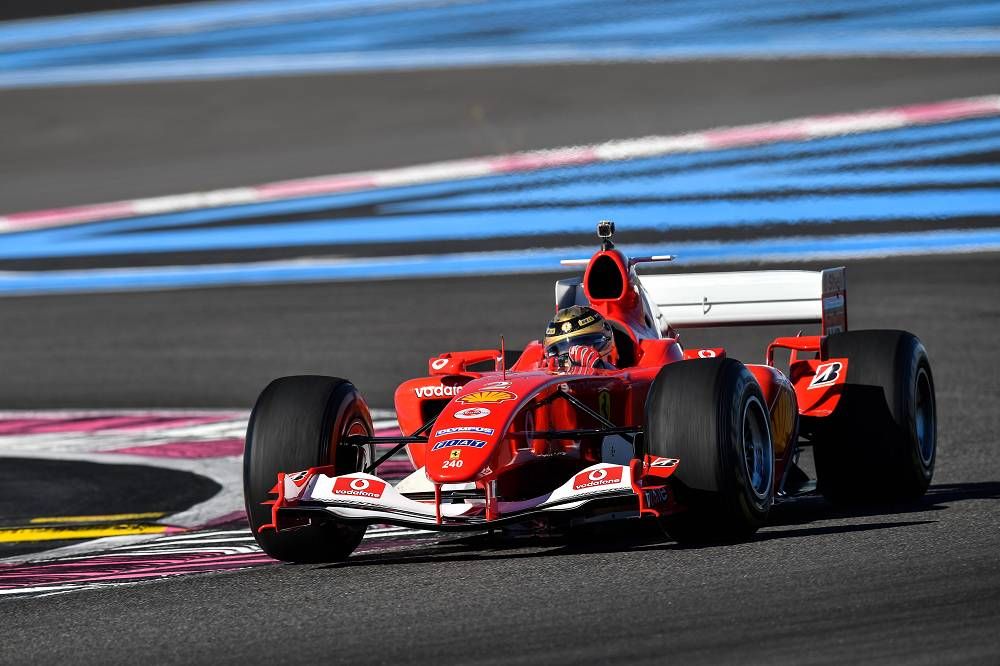
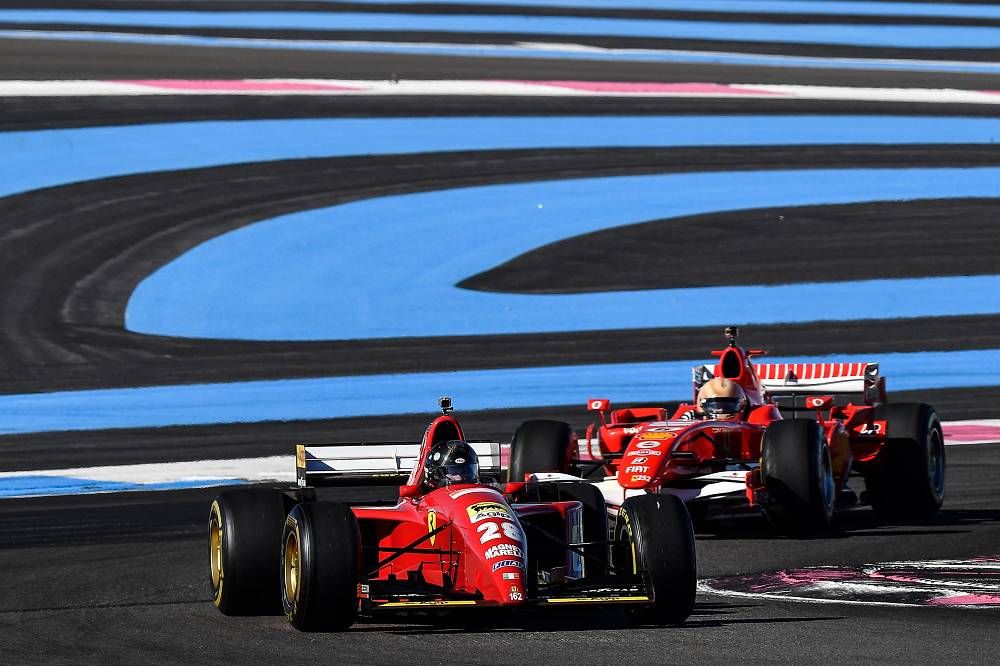
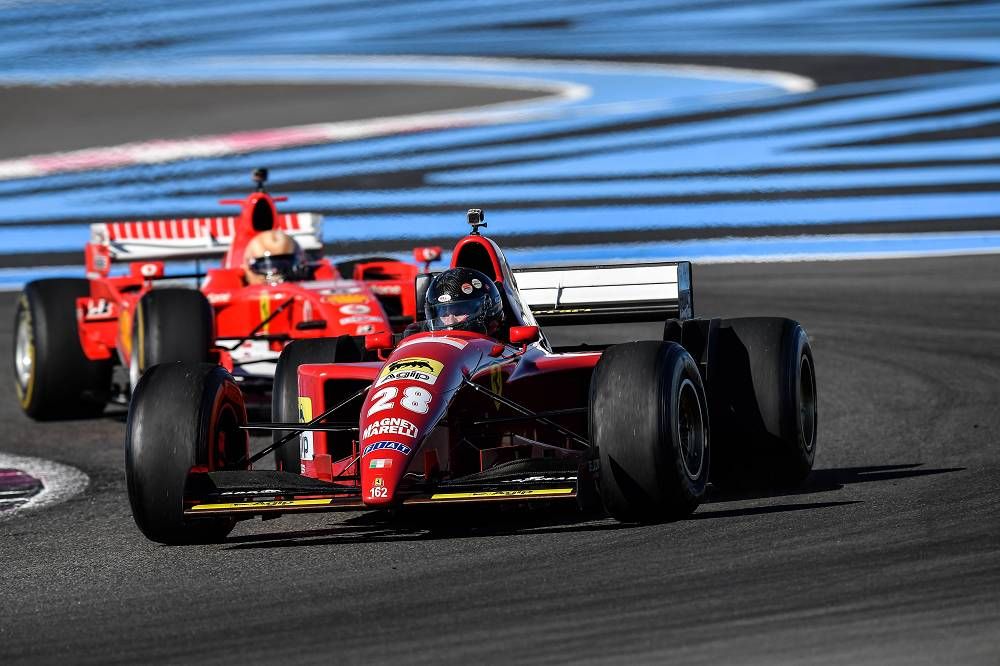
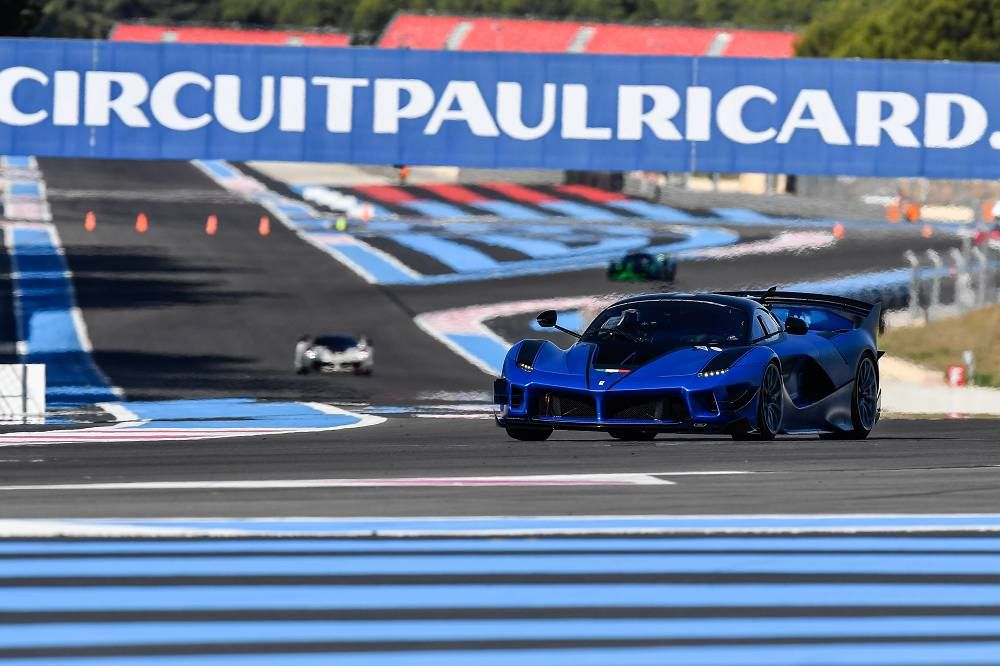
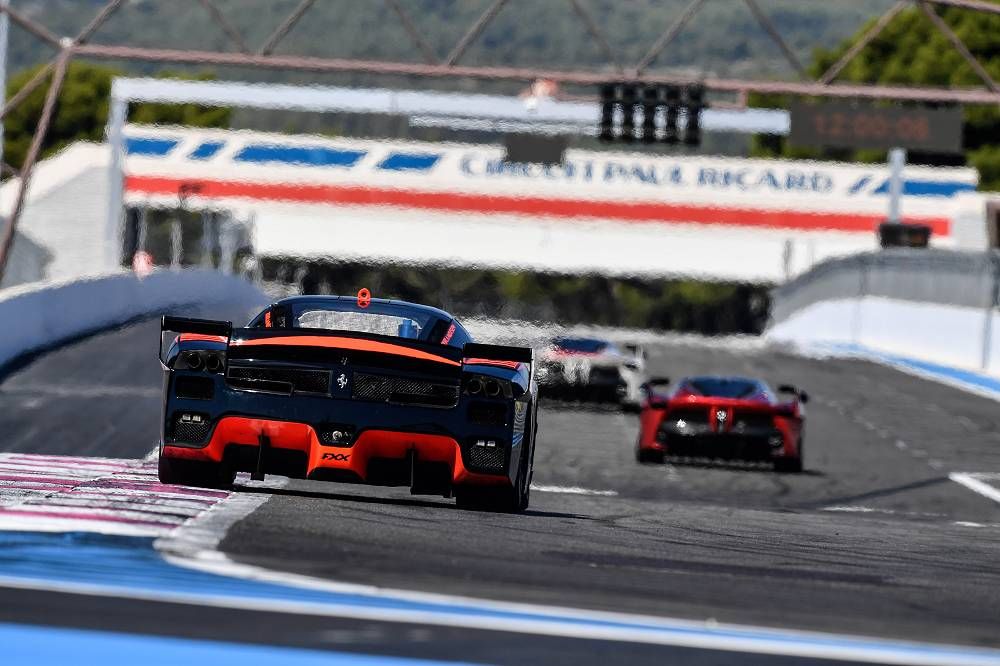
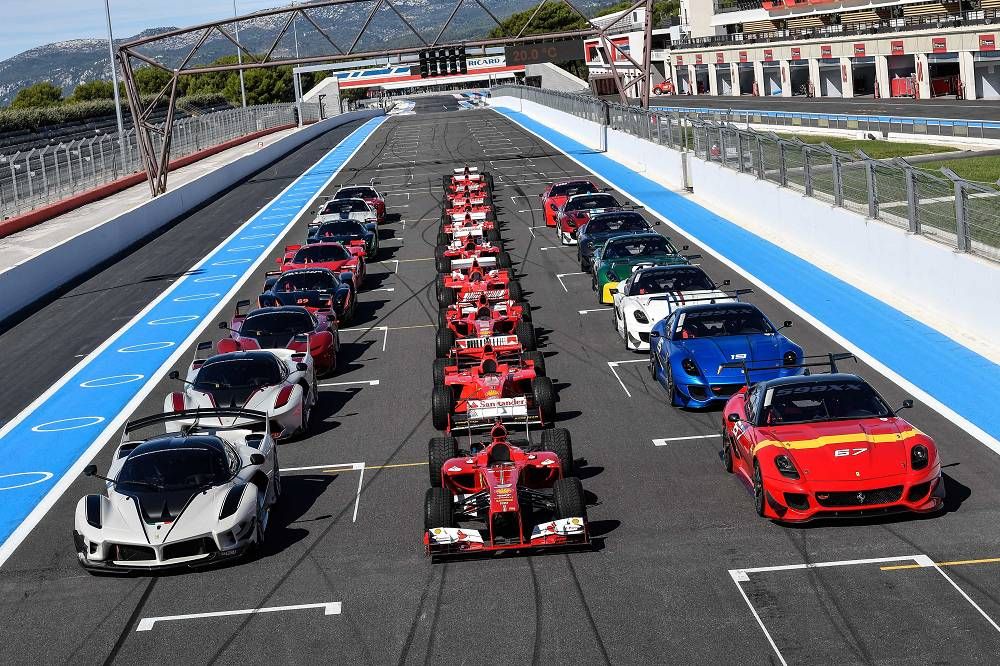
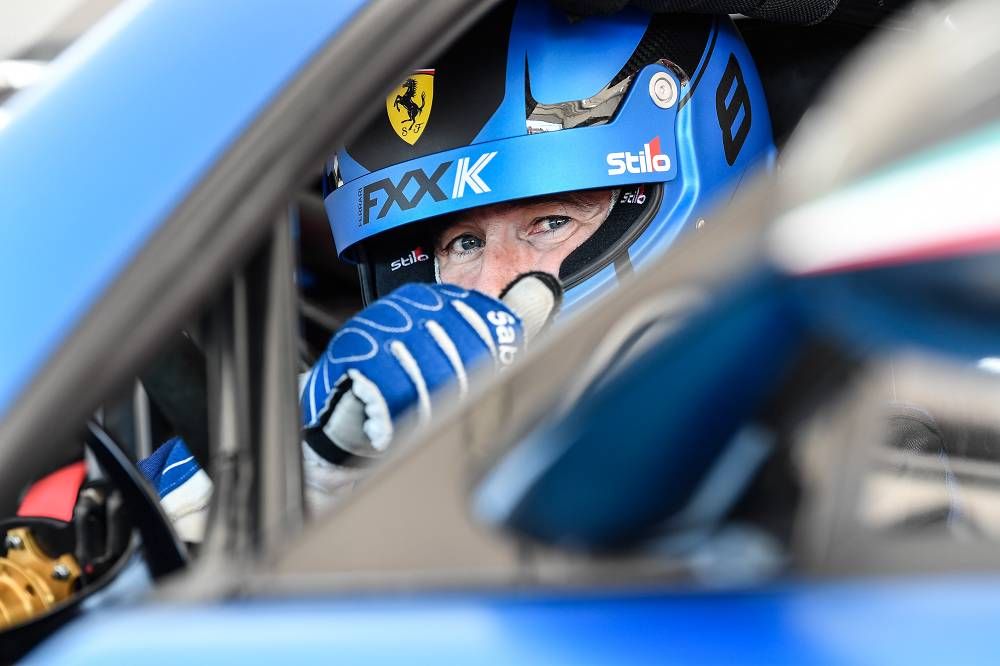
F1 Clienti/XX Programmes – Over 30 cars on track at Paul Ricard
Posted: 03.10.2018
Source: Ferrari
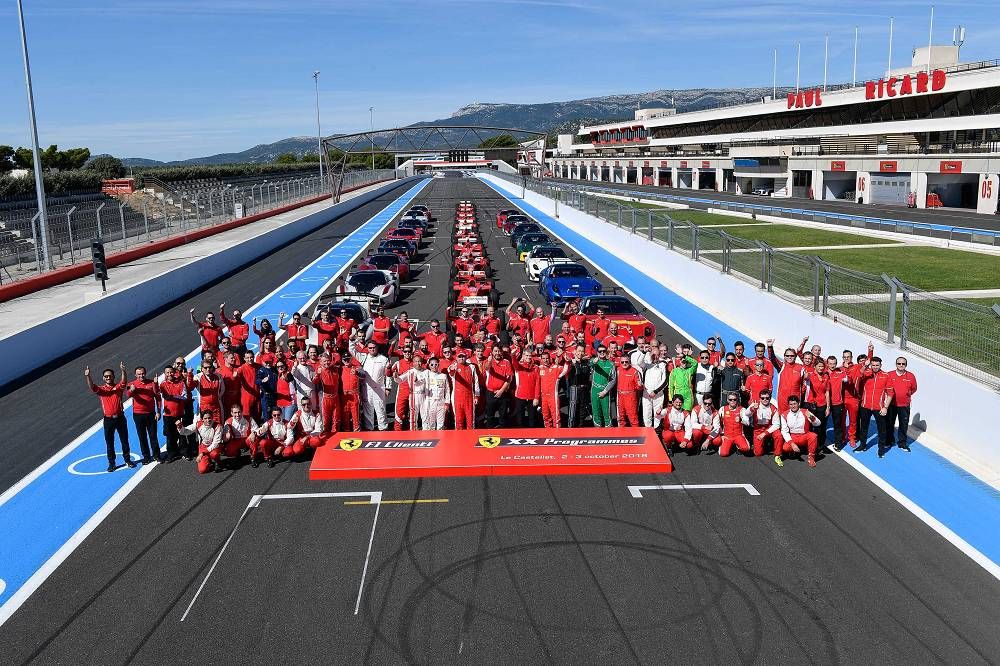
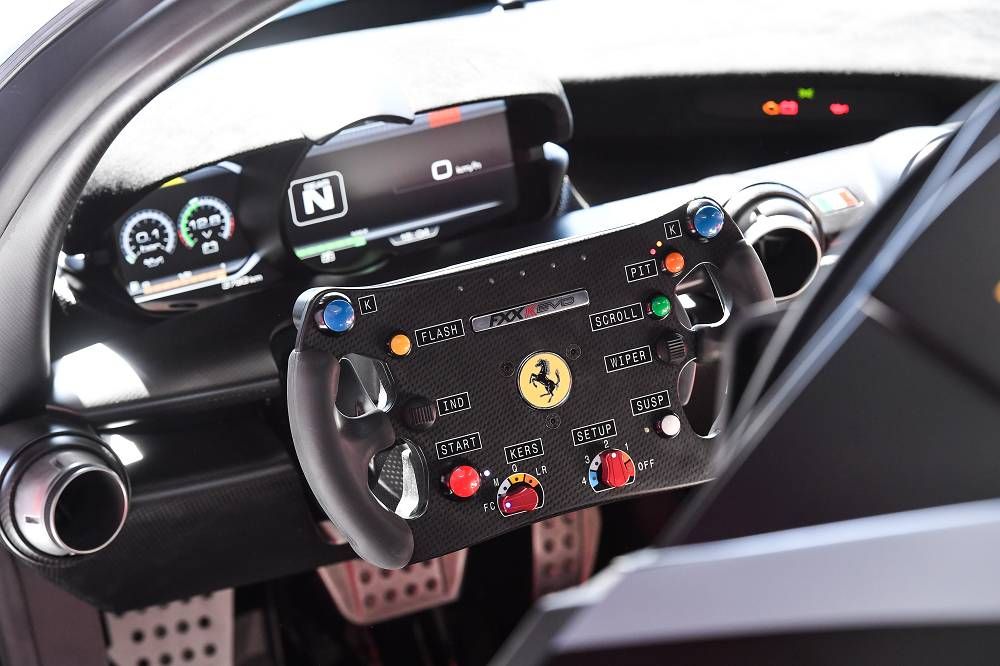
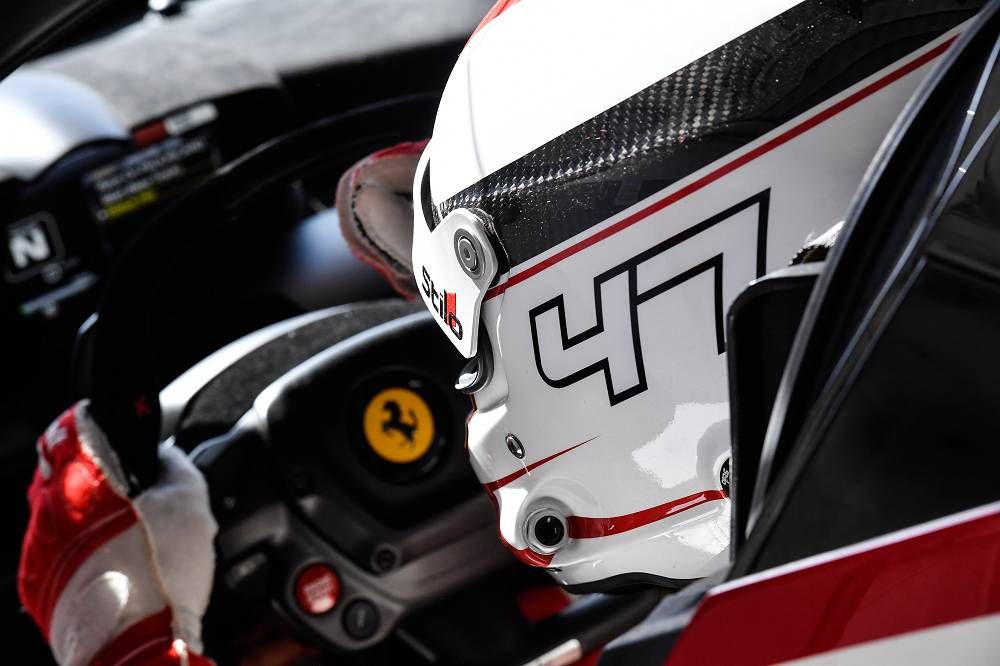
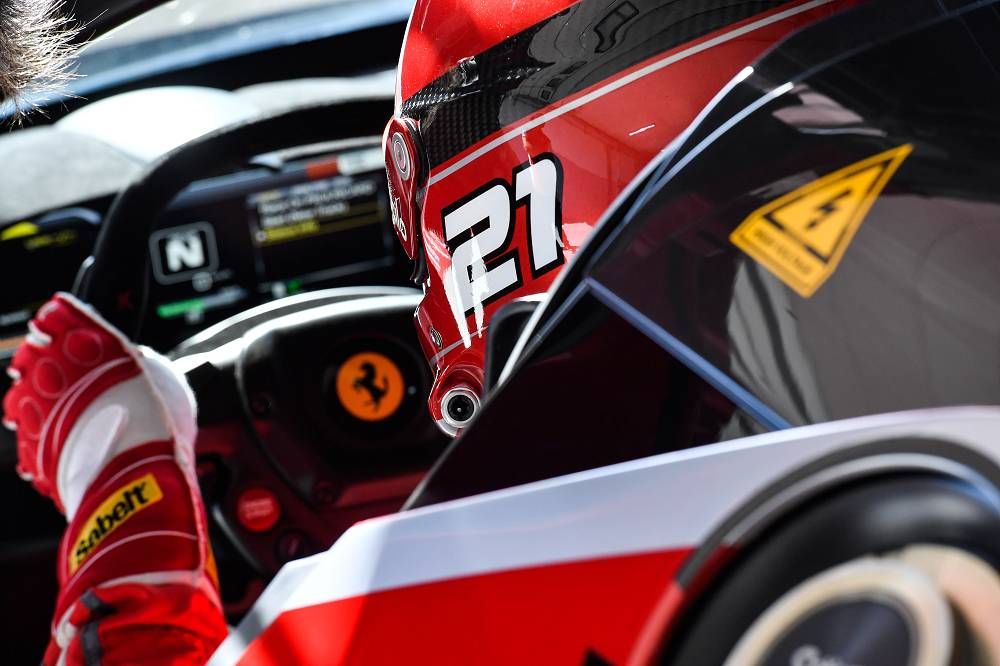
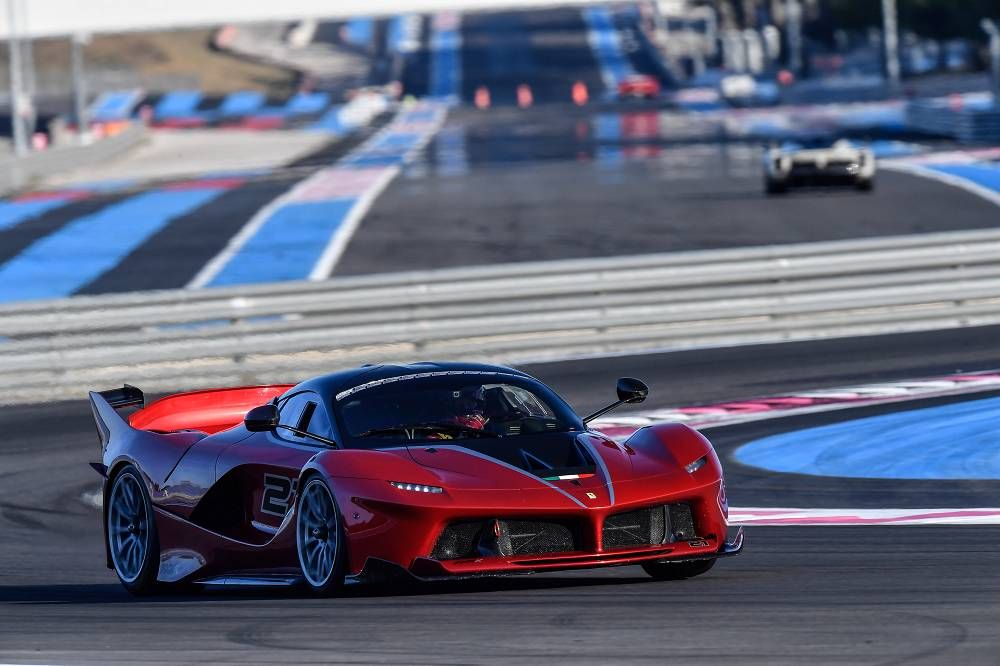
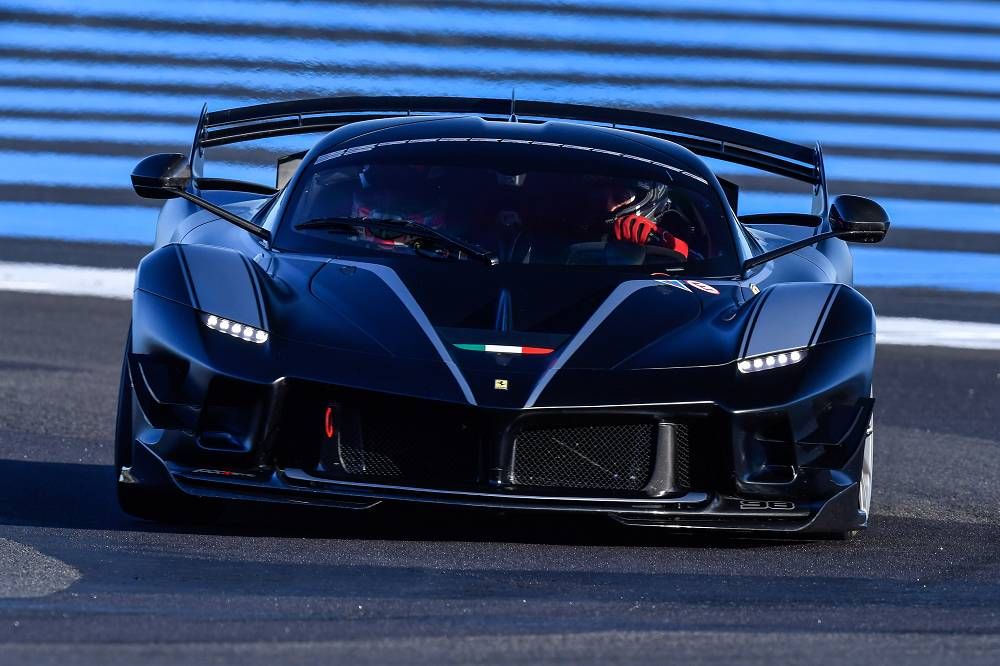
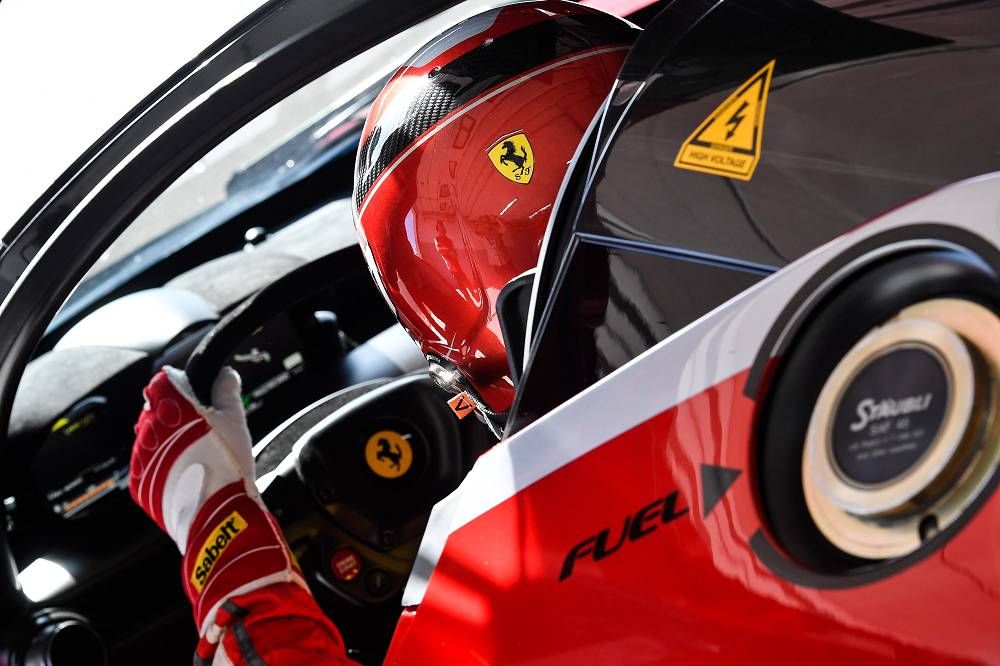
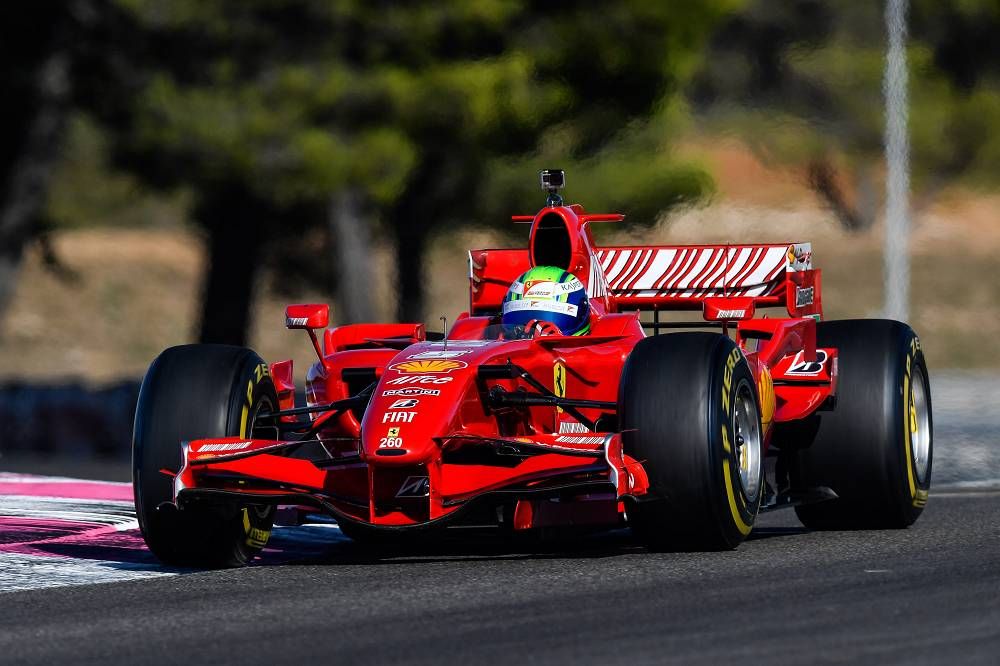
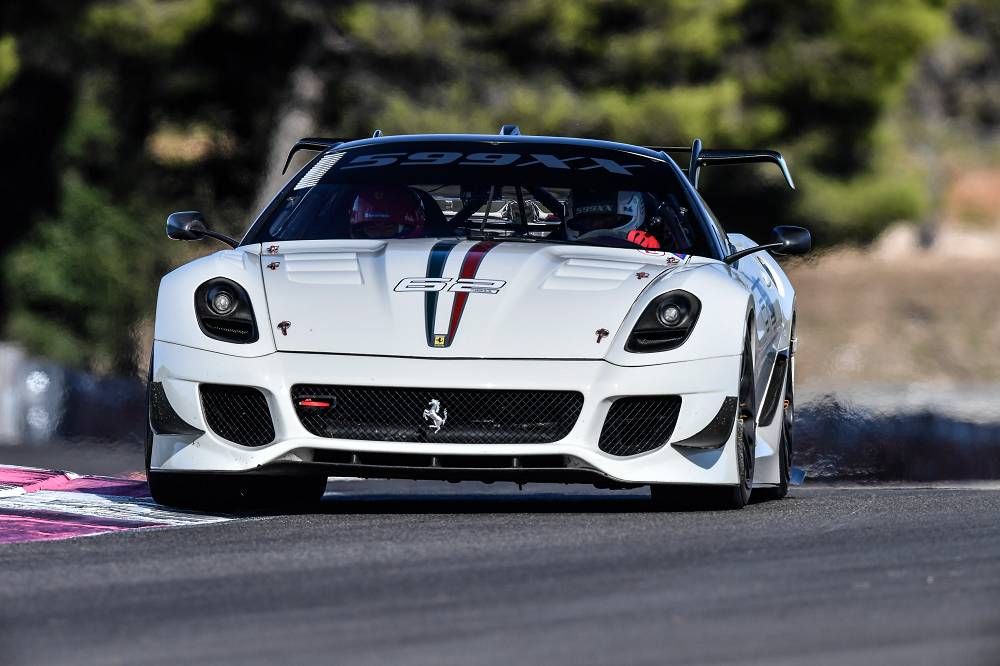
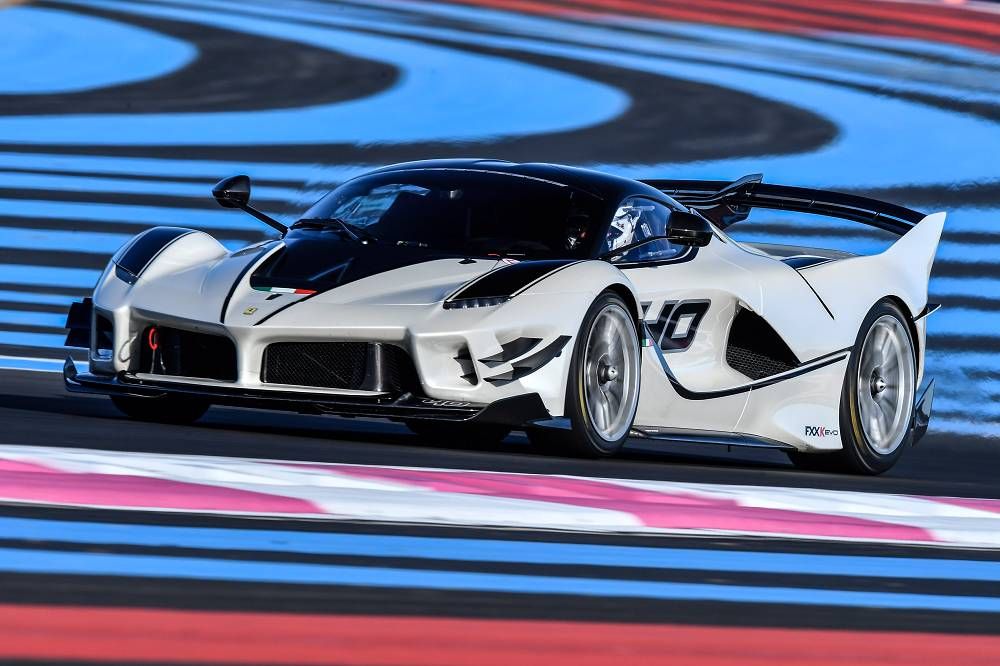
Le Castellet, 3 Oct 2018 – The two days of tests for the exclusive activities of F1 Clienti and XX Programmes are over. Ten Formula 1 cars took part along with 21 cars from the XX Programmes, including the FXX K EVO, FXX K, 599XX EVO, 599XX and FXX.
Grippy surface. The Formula 1 cars took full advantage of the new Paul Ricard asphalt with its unprecedented grip. A 1995 412 T2 took to the track, the last car in the Scuderia’s top category equipped with a V12 engine. Along with it some of the most successful single-seaters in history took turns on the Côte d’Azur circuit: from the F1-2000 of the famous Alba Rossa, to the F2002, F2004, and F2007. They were joined by a F300, a 248 F1, a F2012 and a F138 of 2013.
Plenty of power The XX Programmes put five cars on track. From the FXX, the first in the series, to the FXX K EVO presented for the first time at the 2017 Mugello Finali Mondiali and in action since 2018. This car too, which unlike the 2014 FXX K is equipped with a revolutionary aerodynamic kit, took full advantage of the increased downforce to achieve superior performance on corners as well as straights, where it could already exploit the more than 1000 hp provided by the combined action of the V6 thermal engine and the Hy-Kers hybrid system derived from F1.
Now to Monza. With the Le Castellet test day the F1 Clienti and XX Programmes have also come to the end of their ‘regular season’, and are ready to make their way to Monza where a record number will be unleashed on the faster World Formula 1 circuit, from 1 to 4 November.



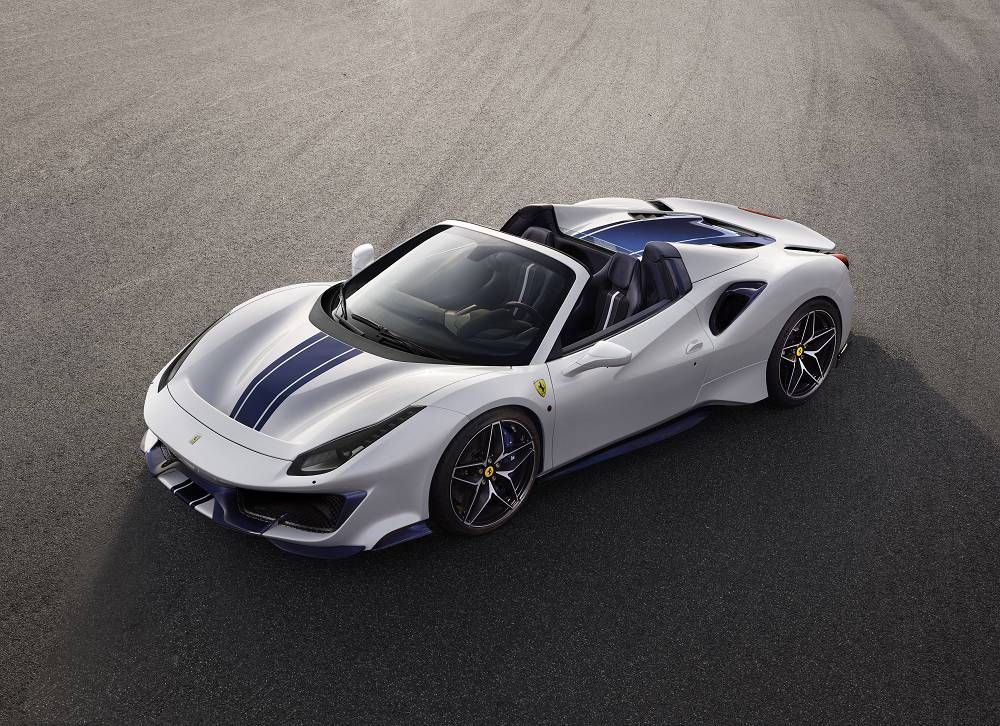
Meet the Ferrari 488 Pista Spider: the highest performance Prancing Horse drop-top ever
Posted: 02.10.2018
Source: Ferrari
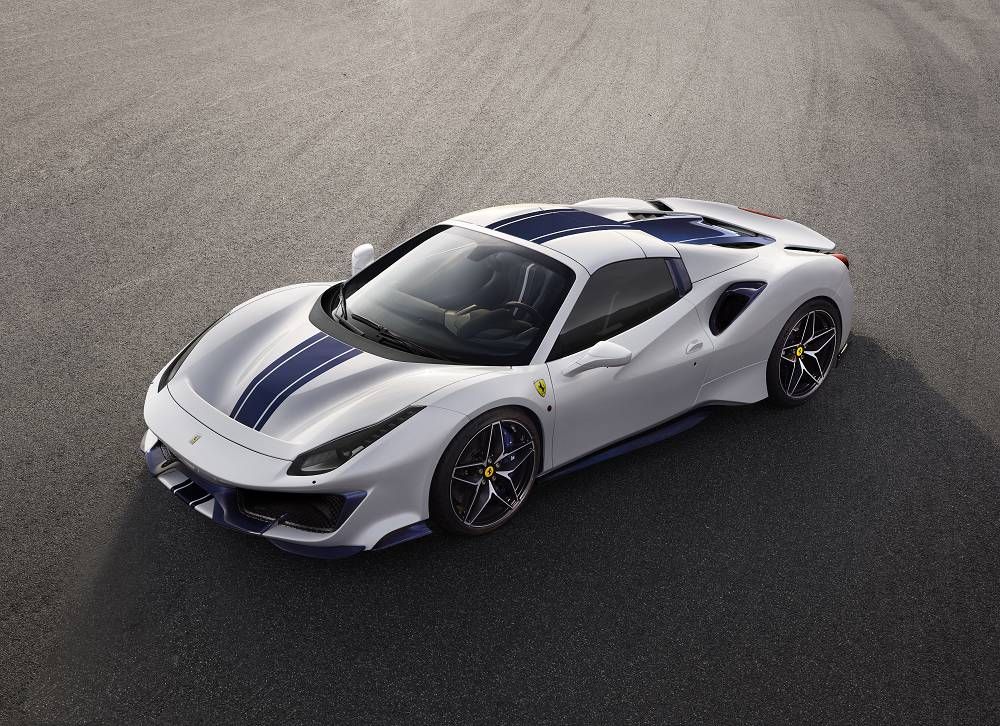
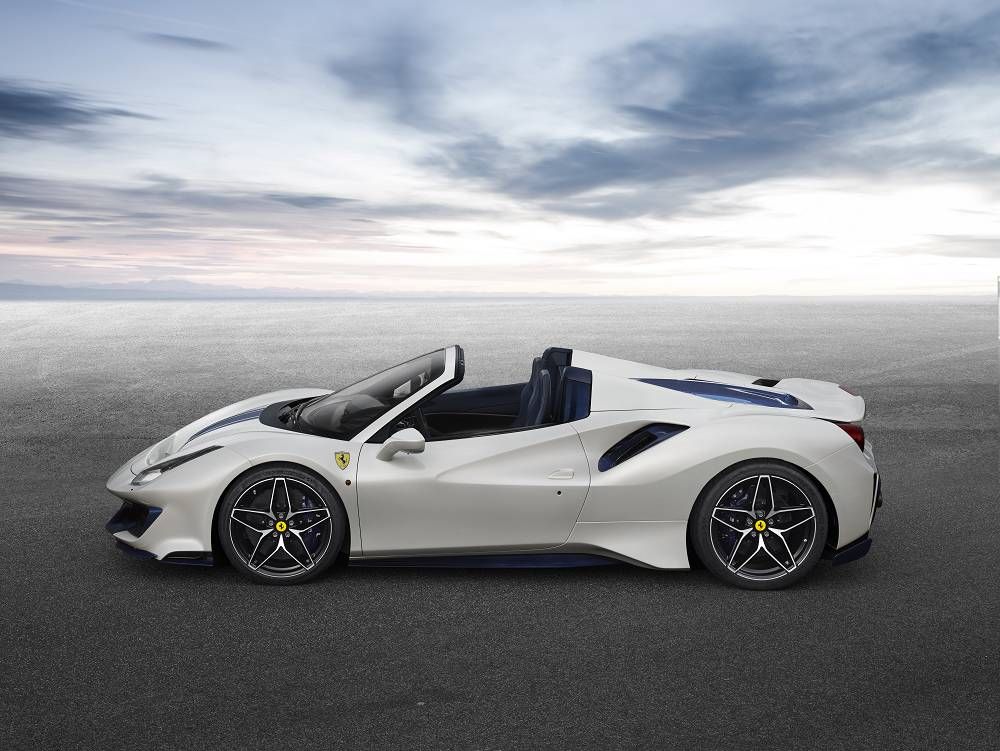
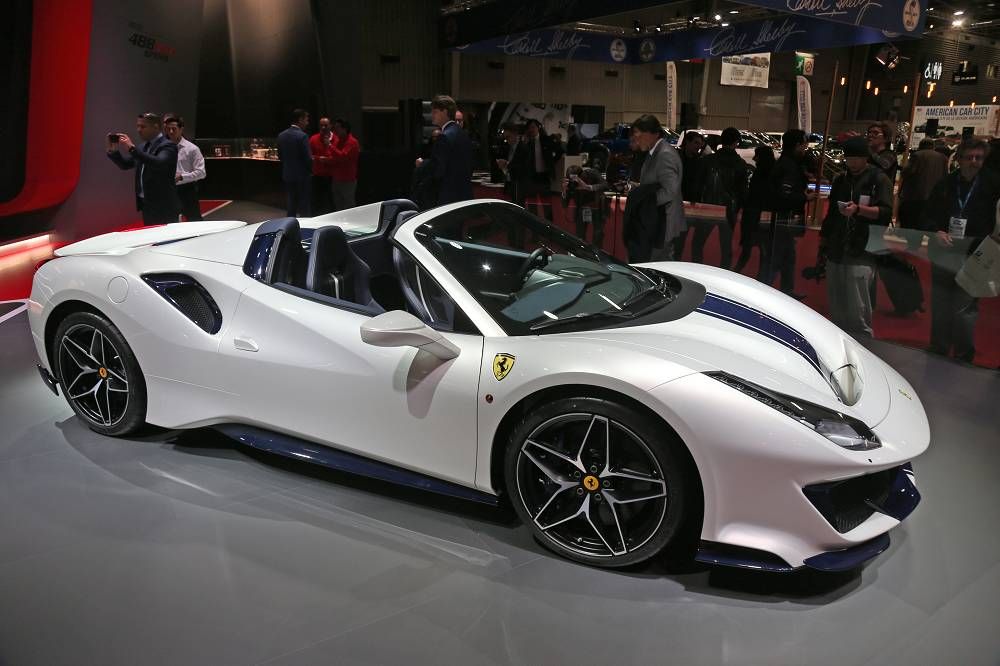
Paris, 2 October 2018 – After its world premiere at the Pebble Beach Concours d’Elegance®, the new special series Ferrari 488 Pista Spider has made its European debut at the Paris Motor Show. The 50th drop-top model to be introduced by the Prancing Horse is also the most powerful series production spider in Ferrari history, with an unprecedented weight/power ratio of 1.92 kg/cv.
The Ferrari 488 Pista Spider combines the finest race-developed technological solutions with the joy of en plein air driving to deliver an exhilarating experience behind the wheel. The driver feels absolutely as one with the car in a symbiotic relationship that guarantees instantaneous responsiveness to commands and absolute control when executing even the most complex manoeuvres. This is hardly surprising as the Ferrari 488 Pista Spider benefits from the greatest technological transfer from the track of any road-legal open-top car.
The model’s engine, dynamics and aerodynamics are derived from two track cars: the 488 Challenge and the 488 GTE. The latter won the GT class of the FIA World Endurance Championship in 2017, thus giving Ferrari a total of five GT Manufacturers’ titles since the championship’s inception in 2012. Furthermore, this model has very clearly benefited from the extensive development work done to produce the coupé version, the 488 Pista.
The Ferrari 488 Pista Spider sports the most powerful V8 engine in Maranello history which was also named Best Engine for the third consecutive year at the 2018 International Engine of the Year Awards. The 3902cc twin-turbo V8 unleashes 720 cv (50 cv more than the 488 Spider) with torque calibrated to deliver a feeling of constant, ever-increasing acceleration. The engine also won the special “Best of the Best” title as the top engine of all the winners of the last 20 years.
Its performance figures are the highest of any spider ever built by the Prancing Horse, including 0-100 km/h acceleration in 2.85 seconds and a lap time at Fiorano of just 1’21’’5.
The 488 Pista Spider’s target client is a typical diehard Ferrarista who already owns other Ferrari spiders. These are drivers that want to feel all the power and speed the 488 Pista Spider is capable of yet also enjoy drop-top driving and the soundtrack of that unparalleled engine.
But the innovations are not confined merely to a boost in power output – they also extend to an overall reduction in weight and beyond. In fact, the Ferrari 488 Pista Spider delivers even better handling, making it one of the most enthralling models Ferrari has ever produced, thanks also to multiple innovations in various different areas.
ENGINE
In terms of its characteristics and performance, the 488 Pista Spider’s engine sets the benchmark not just for new generation turbo engines but all engines, including naturally aspirated ones. This is why it was voted “Engine of the Year” for three years running: 2016, 2017 and 2018. It is also the most powerful V8 ever sported by a road-going Ferrari in terms of both its overall and specific power outputs. It also delivers the highest power increase over the model it was developed from, the 488 Spider.
The car’s technical performance figures are exceptional and set it at the very top of its segment. The Ferrari 488 Pista Spider can unleash 720 cv at 8,000 rpm -50 cv more than the 488 Spider and 115 cv more than the previous special version. Its specific power output has been upped to a best-in-class 185 cv/l. Maximum torque is higher at all engine speeds, peaking at 770 Nm (10 Nm more than the 488 Spider) and is available from 3,000 rpm.
These results were achieved thanks to the new engine intake layout developed for the 488 Challenge, with the intakes moved from the flanks to the rear spoiler area, ensuring a higher volume and cleaner flow of air to the engine, thereby contributing to the increase in power. Moving the air intakes from the sides to the rear also freed up space for a larger intercooler ahead of the rear wheels. This solution drastically reduces fluid-dynamic load losses and ensures a higher volume and cleaner flow of air to the engine, thereby contributing to the increase in power.
Weight was reduced by adopting evolved components such as Inconel exhaust manifolds, a lighter crankshaft and flywheel, and titanium con-rods, all using F1-derived technologies. In total, 18 kg was slashed off the weight of the engine alone.
The 488 Challenge also provides the turbos with integrated rev sensors. Response times are instantaneous and even faster than the 488 Spider, thanks to a new specifically-developed control strategy. A new pedal map also makes driving on the limit even easier.
Specific valves and springs combined with a new cam profile also contributed to the engine’s power boost. The cylinder liners are thinner too. These significant upgrades are completed by the geometry of the new exhaust manifolds. Not forgetting either the carbon-fibre intake plenums, which have become one of the signatures of Ferrari’s special series cars.
All the structural components were modified to deal with the engine’s power boost. The pistons and cylinder heads have been strengthened to cope with the higher loads. Parallel to this, particular attention was also focused on reducing internal friction by introducing, for example, solutions derived directly from Formula 1.
The engine’s sound is unique and unmistakable, as befits a special series car. In fact, the sound level is higher than the 488 Spider in all gears and at all engine speeds. The retractable hard top also makes all of this easier for occupants to appreciate than in the coupé version. The new Inconel exhaust manifolds and optimised exhaust bypass logic contribute to the superior quality and the intensity.
All these solutions contribute to the engine’s lower inertia allowing it to rev even more quickly, so much so that the driver can see the rev counter needle flying particularly in rapid transitions, such as gear shifting and scorching low-gear acceleration.
Aside from boosting power, the Ferrari 488 Pista Spider’s engine also makes the car’s handling more intuitive and its powerful, razor-sharp performance available to all drivers in all driving situations, both on the road and the track.
A slew of high performance features have been introduced to allow drivers to exploit to the very fullest the potential afforded the Ferrari 488 Pista Spider’s engine.
A new boost control strategy optimises response time and performance in sporty driving on the limit, making all the power the driver asks from the throttle available virtually instantaneously.
The rev limiter’s “Wall Effect” strategy is another leap forward in terms of extreme engine performance. Rather than gradually limiting the revs towards the limiter, it cuts off right at the red-line of 8,000 rpm, maximising the amount of power available in power-on dynamic driving situations.
TRANSMISSION
The sporty driving feedback is further enhanced by the high-performance gear shifting, typical of a thoroughbred race car. The new gear shift strategy, available in the manettino’s RACE position, reduces shifting times by 30 ms.
Also adopted once again on this model is the hugely successful Ferrari Variable Torque Management strategy for all gears. To adapt it to the car’s extreme sporty spirit, all of the torque curves were redesigned to deliver a feeling of consistently smooth, powerful acceleration all the way to the red line.
VEHICLE DYNAMICS
The aim of the Ferrari 488 Pista Spider’s dynamic development was to produce a car that offers high mechanical performance in terms of lap times and standing starts, driving pleasure and accessibility of performance to drivers of all types.
The vehicle dynamics developed for this drop-top V8 special series car thus offer a seamless combination of superb acceleration, braking efficiency, steering precision, grip, stability and handling that produces an unparalleled and genuinely immersive driving experience. This is thanks in part to the Ferrari Dynamic Enhancer (FDE) which makes controlling the lateral dynamics in high performance situations more intuitive, controllable and predictable.
To achieve these objectives, Ferrari’s engineers had to work on several fronts, starting with introducing numerous lightweight solutions as well as evolving both a new generation of the Side Slip Control System (SSC 6.0), improving the efficiency of the braking system and the introduction of new Michelin Sport Cup 2 tyres.
As was the case in the 488 Pista, the Spider features a lateral dynamics control system that uses Ferrari software to adjust the brake pressure at the callipers. The Ferrari Dynamic Enhancer (FDE) is available when the manettino is in the “CT-OFF” position. It regulates the lateral dynamics parameters, including side slip angle estimation. The control system intervenes in advance, lightly actuating the callipers through, and exiting corners.
As a result the system manages the evolution of the side slip angle, making control of the lateral dynamics in high-performance situations more intuitive, controllable and predictable. So it is not a stability control system, but a maximum performance-focused system.
The introduction of the Ferrari Dynamic Enhancer into the integrated SSC 6.0 system thus gives drivers extra confidence so that they can more easily handle even lengthy oversteer situations. It also makes performance on the limit easier to reach and control even for less expert drivers.
The Ferrari 488 Pista Spider is extremely efficient in dealing with rapid changes of direction and offers drivers a unique sense of predictability. The recalibrated SCM-E dampers and the 10% stiffer springs contribute to this improved handling precision. Longitudinal acceleration is 13% higher than on the 488 Spider.
Although the 488 Pista Spider was developed for mostly road use, it was also designed to deliver impressive performance on the track. As a result, the braking system was modified to improve cooling, particularly under extreme use, and also to cut the time it takes to get up to temperature.
The 488 Challenge’s brake servo was adopted to enhance the sporty pedal feel and deliver smooth, consistent braking even in extreme conditions. These interventions, combined with the car’s lighter overall weight, have reduced the 200-0 km/h stopping distance by a metre compared to the 488 Spider.
The bodyshell was designed to keep the car as light as possible and features ultralight materials such as carbon-fibre for the engine cover, the front and rear bumpers and the rear spoiler, and Lexan for the rear window.
This is also the first time that an optional 20” single-piece carbon-fibre wheel rim has been made available in the Ferrari range. Made entirely from carbon-fibre, it is around 20% lighter than the forged wheel rims that come as standard on this car and features a special coating developed for the aerospace industry on the channel and spokes which efficiently reflects and dissipates heat generated under braking.
AERODYNAMICS
In-depth aerodynamics research played a big part in improving the Ferrari 488 Pista Spider’s performance. Working on a concept focused on uncompromising innovation and performance allowed considerable engineering freedom in developing significant solutions.
The already-exceptional aerodynamic efficiency of the 488 Spider has been improved by 20%, with major benefits in terms of absolute speed and lap times on medium-fast tracks as well as sheer fun behind the wheel.
This substantial improvement is due in great part to the radical choices made for the bodywork and underbody forms with the aim of increasing downforce without increasing the car’s drag coefficient.
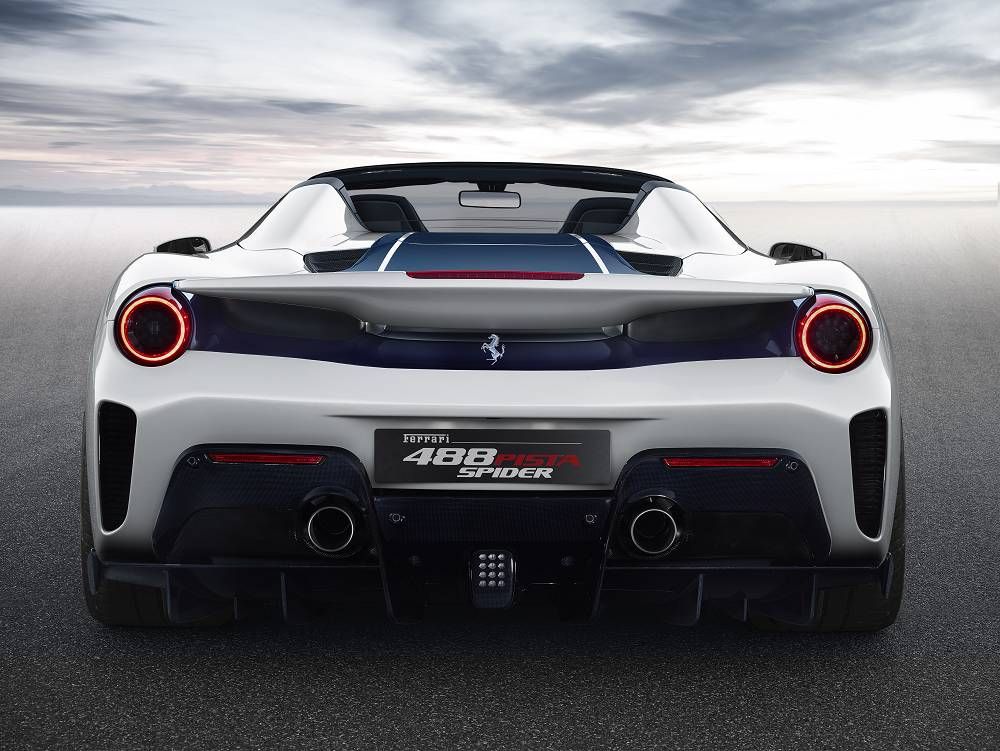
In fact, the 488 Pista Spider takes the aerodynamic concepts adopted on the 488 Spider from which it is derived and moulds them into a much more technically extreme and ambitious package. Examples are the active aerodynamics on the rear underbody and a completely redesigned version of the blown spoiler (patented on the 488 GTB).
The 488 Pista Spider’s V8 turbo punches out 50 cv more than the car on which it is based, thanks in part to a reduction of almost 15° C in the temperature of the air entering the plenum with respect to the 488 Spider. The development of the thermo-fluid dynamics consequently focused on powertrain cooling, to minimise any impact on pure aerodynamic performance.
To guarantee the kind of performance demanded of the powertrain, the intercooler would have required an increase of over 25% in size compared to that of the 488 Spider. In order to minimise the increase in weight and drag associated with such a large radiating surface, the engineers worked intensively on the car as a whole to improve efficiency, limiting the required surface area increase to just 7%. The main contributing factors to the improved intercooler efficiency were the radical layout choices made at the front of the car.
The front radiator arrangement was completely redesigned. As with 488 Challenge, the rake of the radiators has been inverted and they are now inclined towards the rear to direct the hot air to the underbody ahead of the front wheels. This choice produced, on the one hand, an improvement of 10% in the performance of the rear intercoolers, and, on the other, an additional aerodynamic benefit: the virtual fairing of the exposed area of the tyre which cuts the car’s drag by 7%.
The engine air intakes have been moved from the flanks – the solution adopted on the 488 Spider – to the rear spoiler as per the 488 Challenge. The specific shape of the spoiler delivers powerful recompression which guarantees that the engine air intake benefits from high dynamic pressure, shortening the length of the inlet duct, reducing consequent losses and boosting engine performance.
The need for efficient downforce resulted in the whole of the front of the car being completely redesigned, particularly the bumpers and bonnet. One innovative Formula 1-derived solution in particular stands out: the S-Duct. The air from the intake on the front bumper passes through an aerodynamic duct with calibrated sections and exits through a vent on the bonnet, creating downforce over the front axle.
Furthermore, the front intake is completed by a central lower wing profile with a dual function. On the one hand, it acts as a splitter which, thanks to its curvature, accelerates the flow and increases the amount of air passing through the S-Duct, thus improving its performance while, on the other, it creates a low pressure area under the front underbody, further boosting downforce.
The introduction of this particular solution accounts for 18% of the overall increase in downforce compared to the 488 Spider, but barely a 2% increase in drag.
The exterior sections of the bumper ahead of the wheels were also extensively redesigned with solutions modified from the 488 Challenge and reinterpreted so successfully that they are responsible for 23% of the increase in downforce compared to the 488 Spider. Radical scoops in the front bumper allow aerodynamic elements to protrude in areas where they can be most efficient. The volume of the front bumper is recessed before the wheelarch to deflect the flow ahead of the wheels outwards, generating suction from the wheelarch and thus from the front underbody, which is equipped with diffusers, all to the benefit of front downforce.
At the rear, two elements contributed to the achievement of the downforce target: the blown spoiler system and the venting behind the rear wheels.
The spoiler is higher (+30 mm) and longer (+40 mm) compared to its counterpart on the 488 Spider. Development work focused on the efficiency of the bleed under the spoiler. In fact, the evolution of the spoiler system and its bleed has had a significant impact on downforce, accounting for 25% of the overall increase compared to the 488 Spider.
As is always the case with each new Ferrari, the car’s underbody was specifically redesigned to ensure it delivers as efficient a downforce figure as possible. The first major difference from the 488 Spider is how the hot air from the radiators is deflected to the underbody ahead of the front wheels. This choice, made to enhance the cooling layout and lower the car’s drag coefficient, however shrinks the surfaces that can be used to generate downforce. To make up for this and further boost downforce, the designers decided to exploit other areas of the underbody.
The Ferrari 488 Pista Spider was thus equipped with front diffusers, made possible by the change in the inclination of the front radiators and the elimination of the dams ahead of the wheels. Thanks to a ramp already optimised for the 488 GTE, the diffusers accelerate the flow, venting it into the wheelarches, creating strong suction that in turn is responsible for 12% of the overall downforce increase compared to the 488 Spider.
The vortex generators on the underbody have also been optimised and now generate 10% more downforce, thanks to modifications to their profile and length.
The rear diffuser is also derived directly from Ferrari’s World Endurance Championship experience and has the same double kink line as the 488 GTE’s, amplifying the extraction and downforce generation capacities of a traditional diffuser. As in the 488 GTB, the diffuser is equipped with a system of 3 active flaps which rotate 14° in minimum drag configuration to completely stall the diffuser and thus significantly reduce the car’s drag.
EXTERIOR DESIGN
Aerodynamic demands guided the work of the Ferrari Design Centre team. The 488 Pista Spider’s forms have been meticulously sculpted to ensure they are more performance-oriented than ever, with huge attention lavished on ensuring that while aerodynamic demands were met, the Maranello marque’s signature styling elements and aesthetic canons were respected.
The designers used innovative elements, such as the aerodynamic S-Duct at the front, as an opportunity to visually shorten the car’s nose, creating an original floating wing effect. The black, omega-shaped edging on the front bumpers and the side flicks reference the prominent aerodynamic underbody motif of the 488 GTE.
Most notable on the flanks is the fact that the splitter in the side air intakes of the 488 Spider has been removed. At the front, the aerodynamic profiles that start at the front bumpers run sleekly along the side miniskirts all the way to the side appendages of the rear diffuser.
The concept of the front is echoed in the dolphin-tail rear spoiler which appears suspended to provide an impression lightness and efficiency, while the rear volumes add a sense of power to the tail.
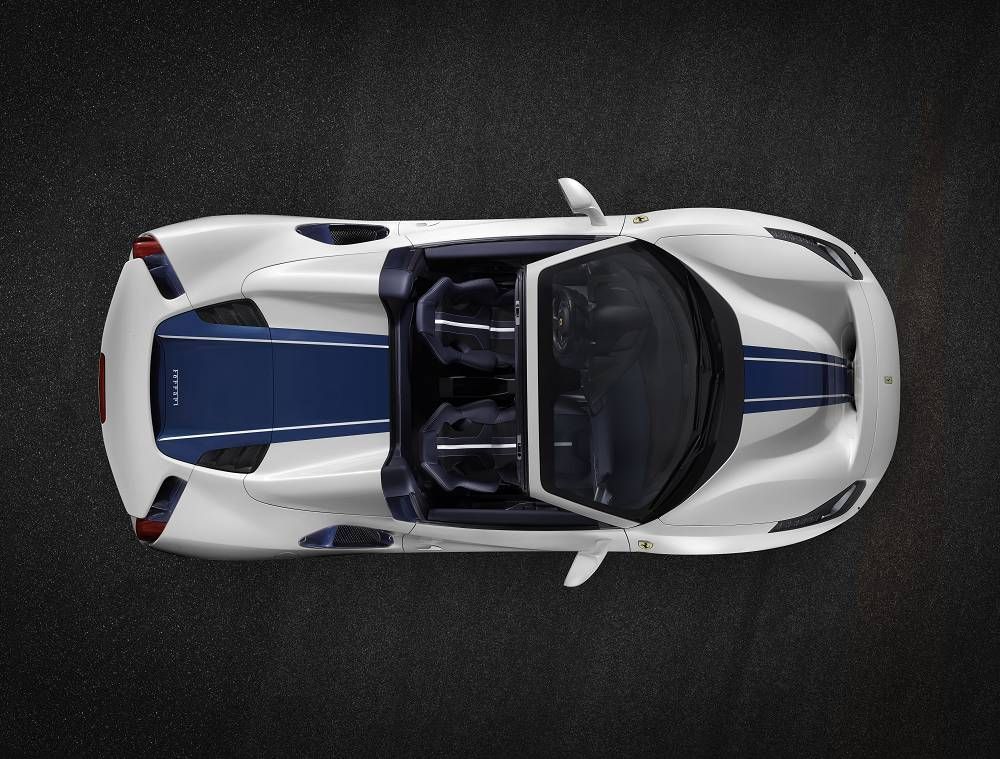
The Ferrari 488 Pista Spider has a racing livery that runs the entire length of the car, starting at the front bumper, then diving into the S-Duct and continuing all the way to the rear spoiler.
COCKPIT
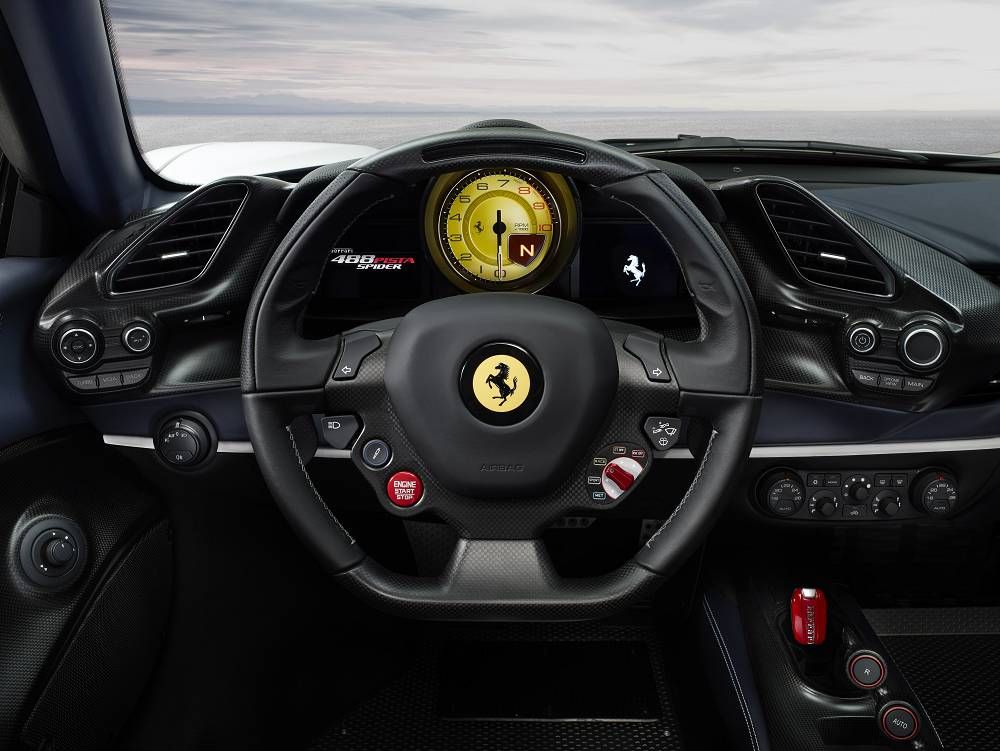
The interior has a distinctively spare racing feel. The extensive use of lightweight, exclusive technical materials such as carbon-fibre and Alcantara works brilliantly with the meticulous crafting and sophistication that is the signature of all Ferrari cockpits. Contrasting hand-stitching, tread plates and heel rests in triangular pattern aluminium and sculpted door panels are fine examples of this.
The driver zone has been enhanced by two newly-developed all-carbon-fibre instrument clusters around the main instrument panel (optional content). The glove compartment (normally incorporated into the dashboard directly in front of the passenger) has been removed and replaced by handy storage pockets on the rear bench and the doors. The effect is to significantly visually slim down the volume of the under-dash area.
7 YEARS MAINTENANCE
Ferrari’s unparalleled quality standards and growing focus on client service underpin the extended seven-year maintenance programme offered with the Ferrari 488 Pista Spider.
Available across the entire range, it covers all regular maintenance for the first seven years of the car’s life.
The scheduled maintenance programme for Ferraris is an exclusive service that allows clients the certainty that their car is being kept at peak performance and safety over the years.
Technical Specifications
ENGINE
Type V8 – 90°twin-turbo – Dry sump
Overall displacement 3902 cc
Max. power output* 530 kW (720 cv) at 8000 rpm
Max. torque* 770 Nm at 3000 rpm 7th gear
Specific power output 185 cv/l
Max. engine speed 8000 rpm
Compression ratio 9.6:1
DIMENSIONS AND WEIGHT
Length 4605 mm
Width 1975 mm
Height 1206 mm
Wheelbase 2650 mm
Front track 1679 mm
Rear track 1649 mm
Kerb weight** 1485 kg
Dry weight** 1380 kg
Dry weight/power ratio 1.92 kg/cv
Weight distribution 41.5% front – 58.5% rear
Boot capacity 170 l
Fuel tank capacity 78 l
TYRES
Front 245/35 ZR 20 J9.0
Rear 305/30 ZR 20 J11.0
Brakes
Front 398 x 223 x 38 mm
Rear 360 x 233 x 32 mm
TRANSMISSION/GEARBOX
F1 seven-speed dual-clutch transmission
ELECTRONIC CONTROLS
E-Diff3, F1-Trac, ABS/High Performance EBD with Ferrari Pre-Fill, FrS SCM-E, FDE, SSC 6.0
PERFORMANCE
0-100 km/h 2.85 s
0-200 km/h 8.0 s
100-0 km/h 29.5 m
200-0 km/h 116 m
Max. speed 340 km/h
Fiorano lap time 1’21.5”
FUEL CONSUMPTION/CO2 EMISSIONS
Under homologation
* With 98 RON petrol / ** With optional lightweight content
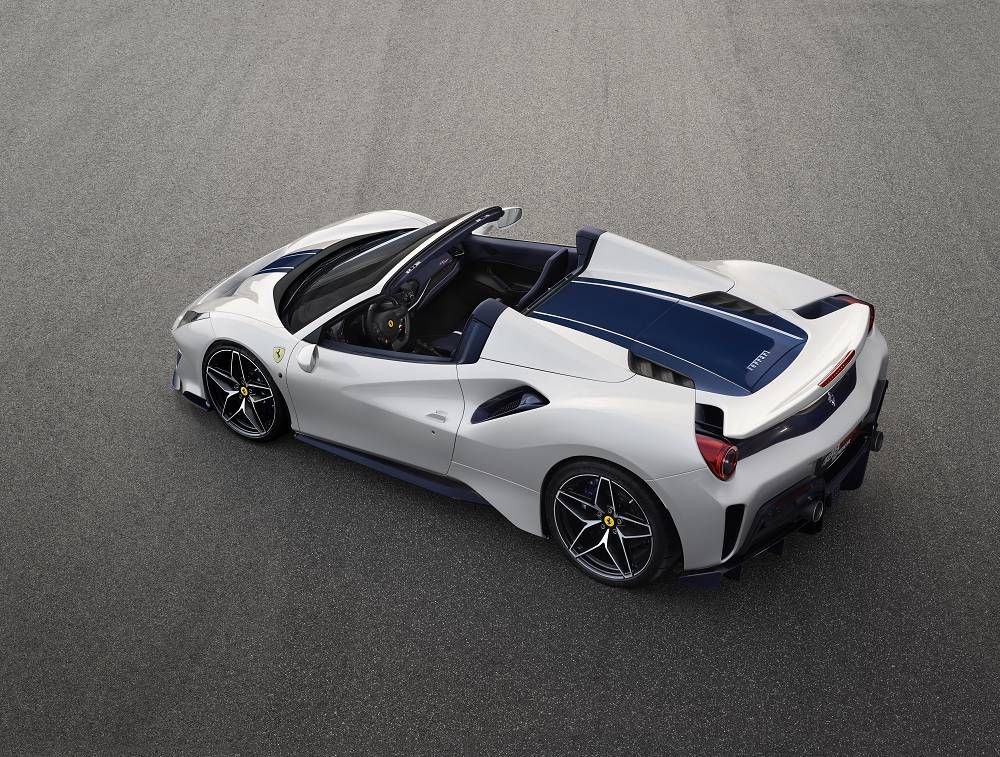

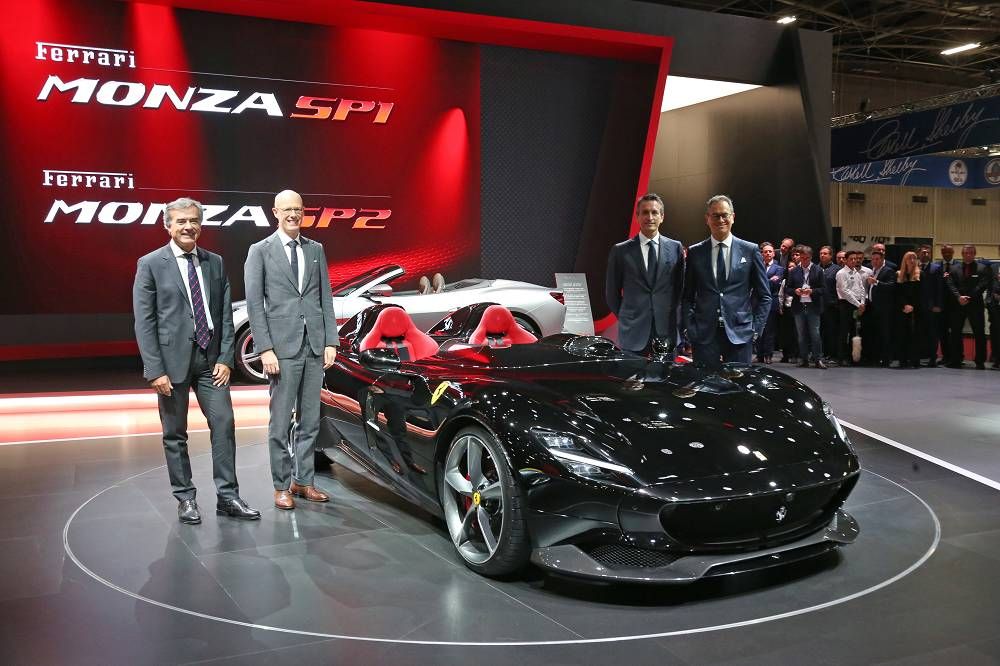
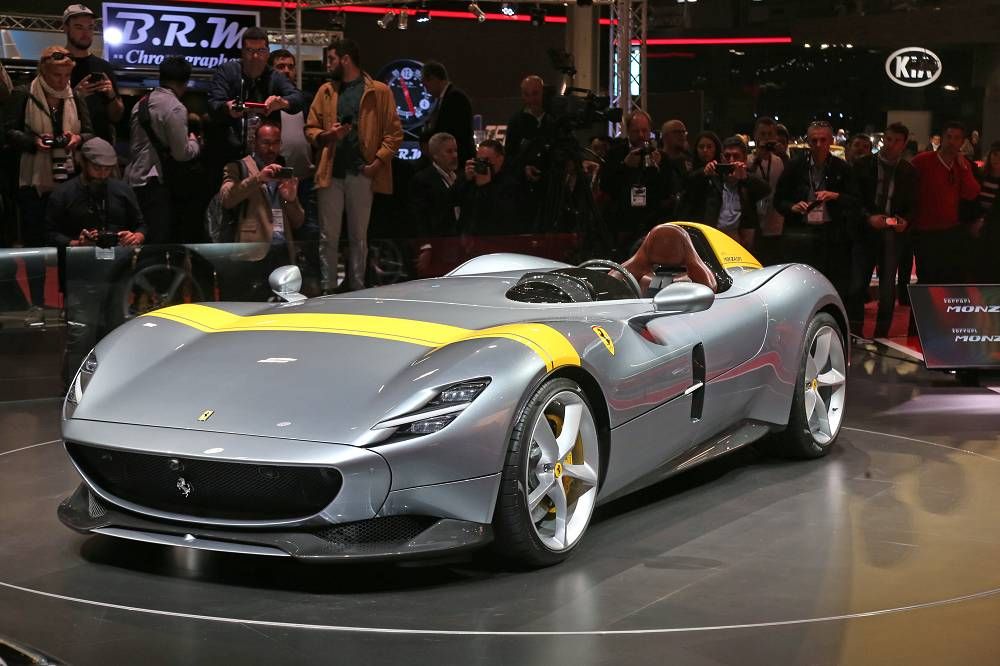
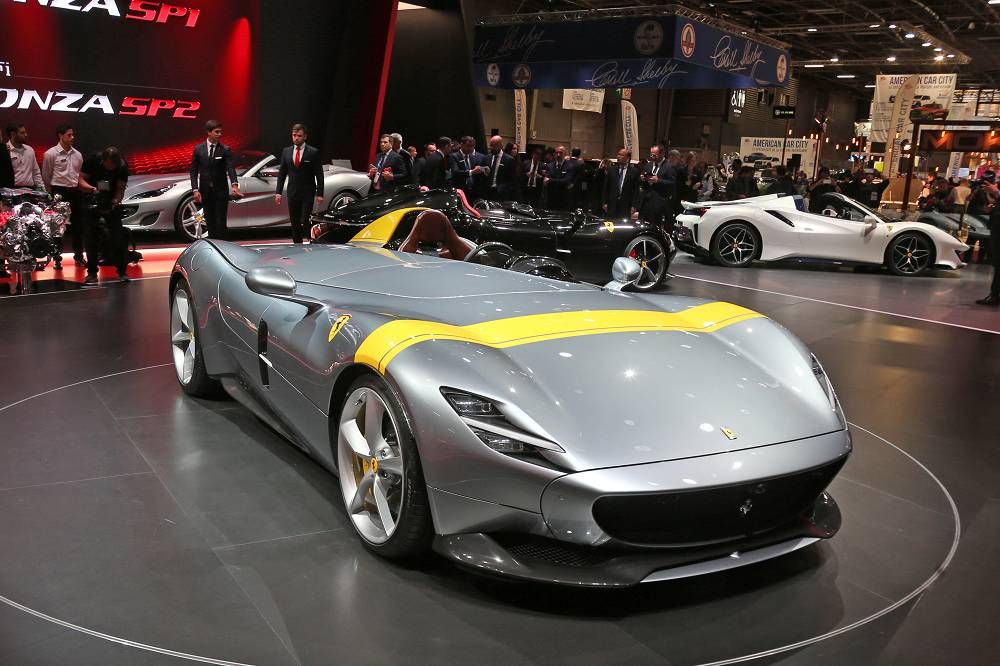
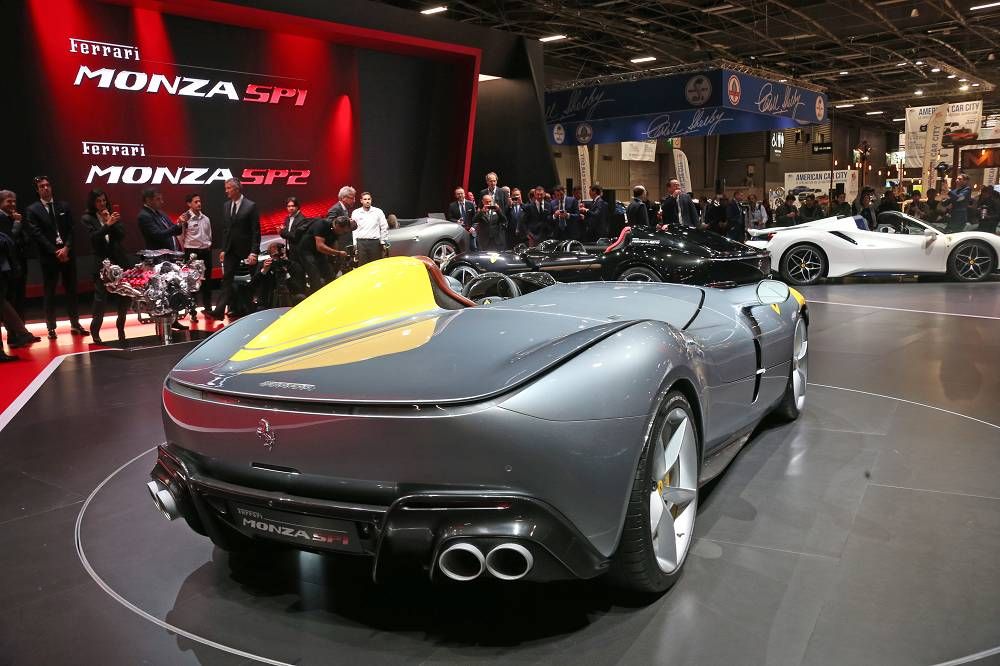
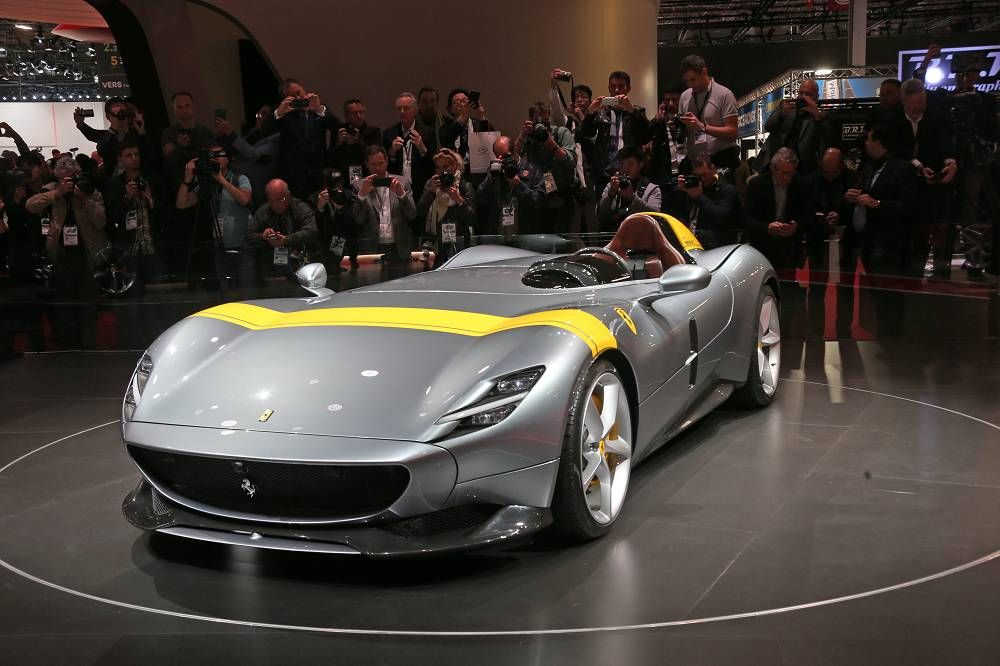
Ferrari Monza SP1 and SP2: the first in a new concept of limited series ‘Icona’ cars
Posted: 02.10.2018
Source: Ferrari
Models inspired by the Sports cars that made history
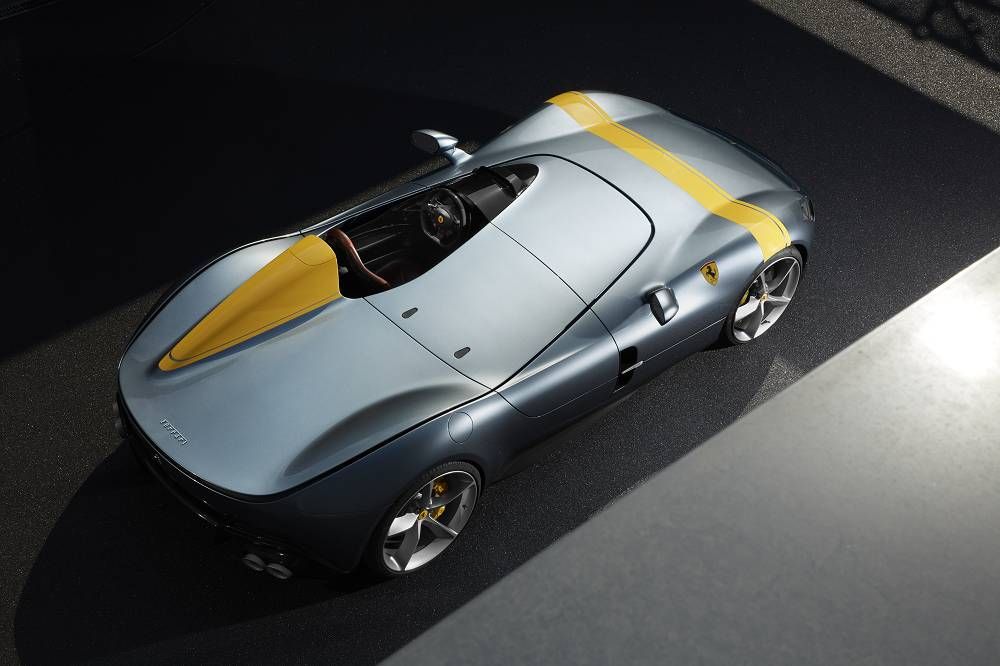
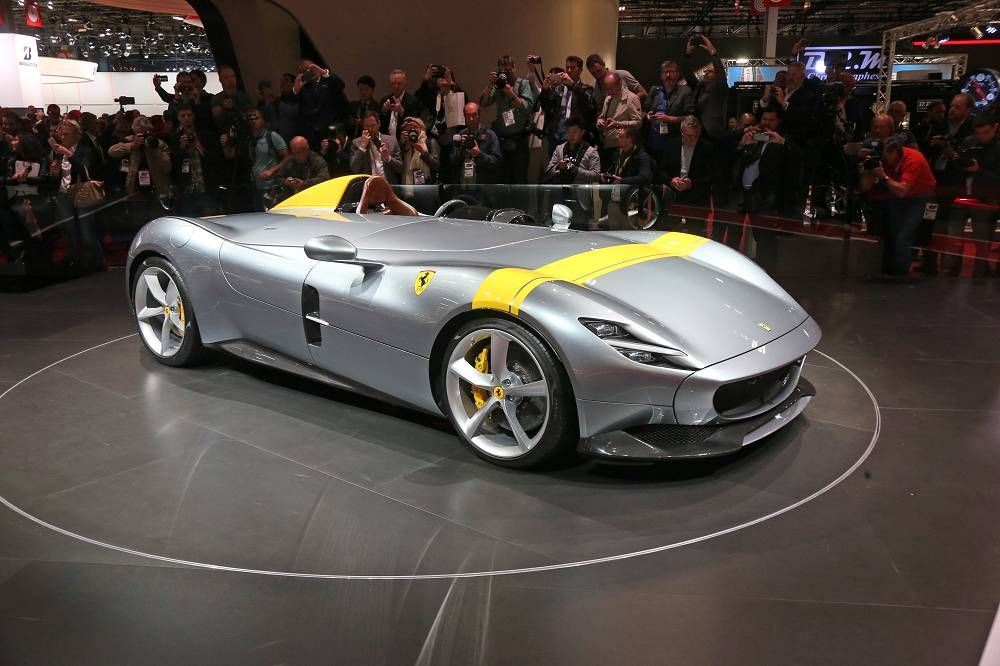
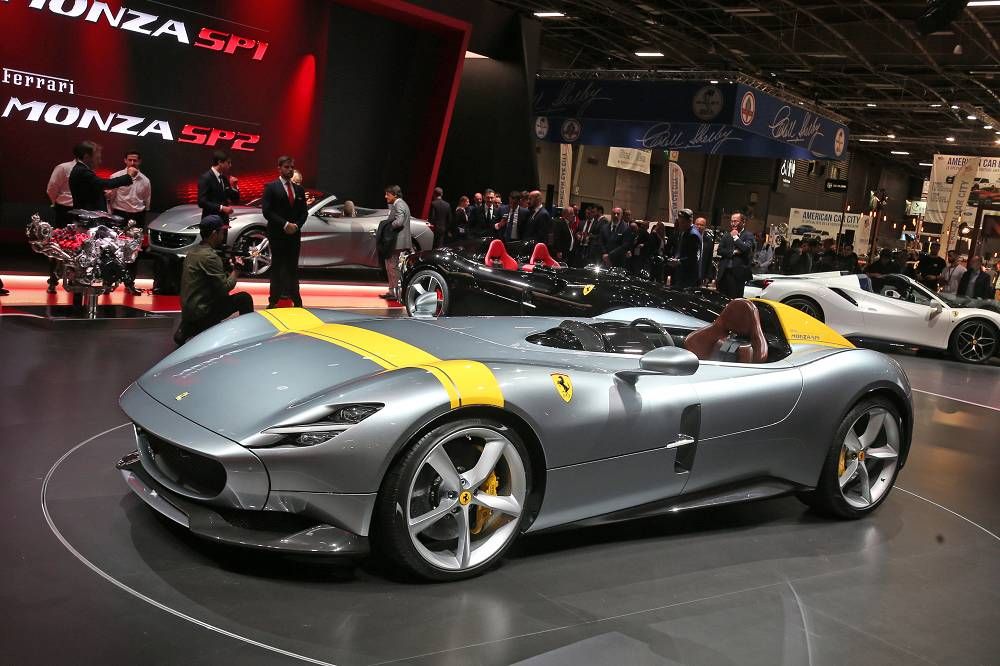
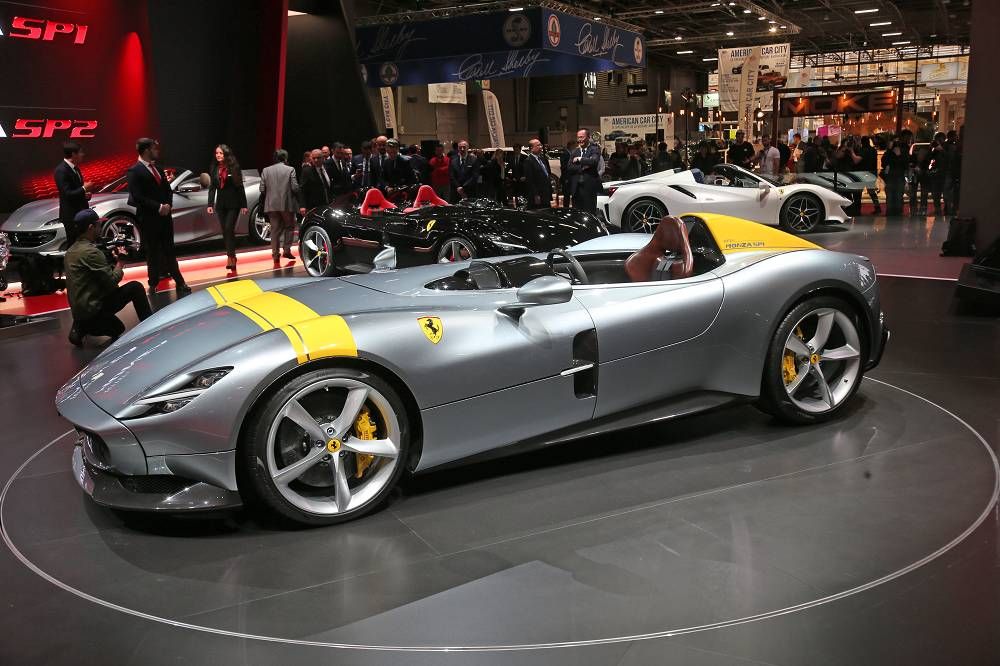
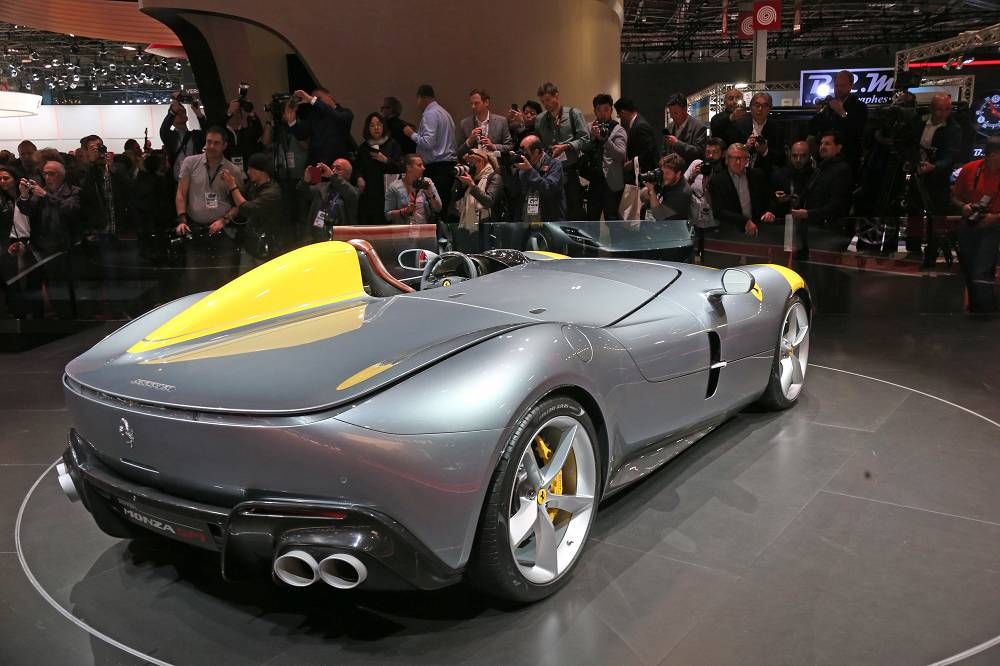
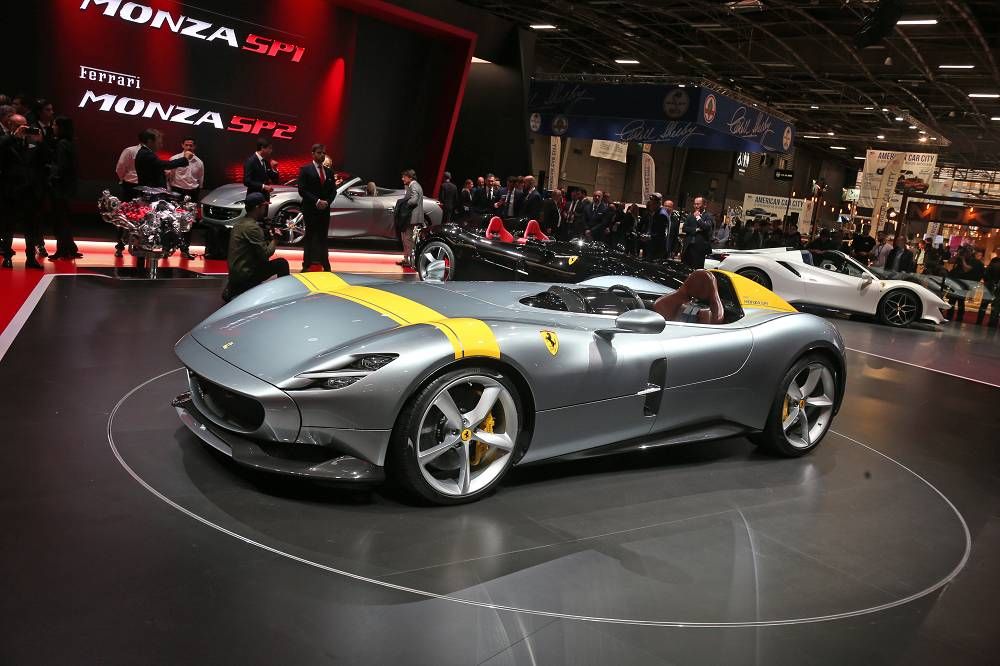
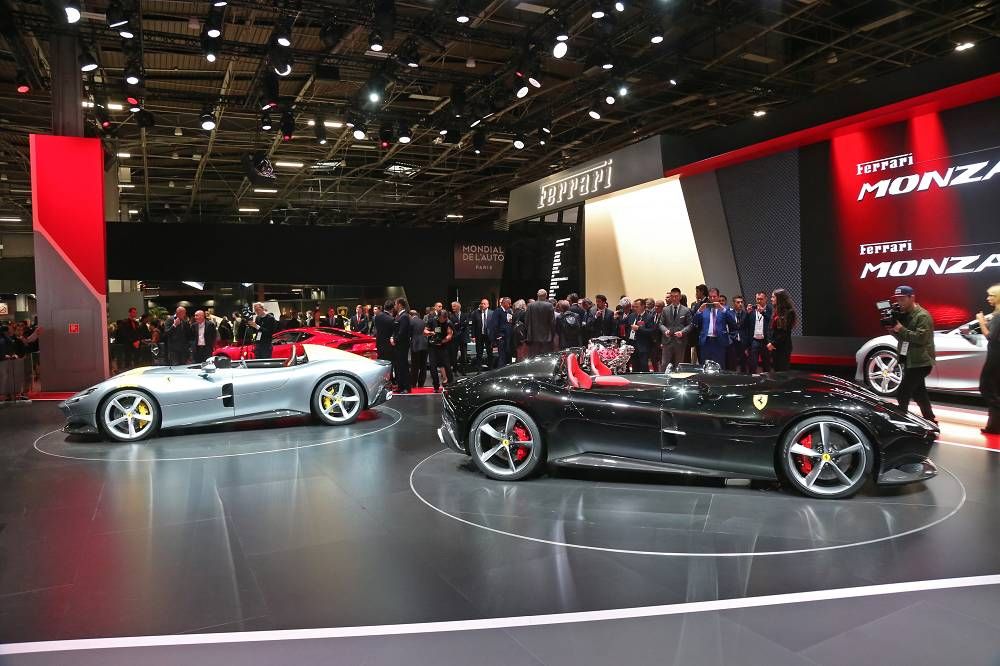
Paris, 2 October 2018 – The Ferrari Monza SP1 and SP2 are the forerunners in a new concept, known as ‘Icona’ (Icon), that taps into a leitmotif of the most evocative cars in the company’s history to create a new segment of special limited series cars for clients and collectors. The intention is to use a modern aesthetic to reinterpret a timeless style, with technologically advanced components and the highest performance possible through continuous innovation.
The Ferrari Monza SP1 and SP2 are inspired by barchettas of the 1950s which were driven to victory in international motor sport not just by official works team drivers from the Scuderia, but also by a legion of gentlemen drivers who, in those years, frequently found themselves wheel to wheel with legendary professional drivers of the era.
The first ever Ferrari to be referred to as a barchetta was the open-top version of the 1948 166 MM. The name was coined by Giovanni Agnelli who, upon seeing the car for the first time at the Turin Motor Show that year, commented that it was less like a car and more like a barchetta, referring to the Italian for a small speed boat. The Touring-bodied 166 MM barchetta wrote Ferrari’s name firmly in the history books, winning first the Mille Miglia and then the grueling 24 Hours of Le Mans in 1949. This model was followed by other extraordinarily successful Ferrari Sports cars, such as the 750 Monza and 860 Monza which were inspiration for the name of the new models.
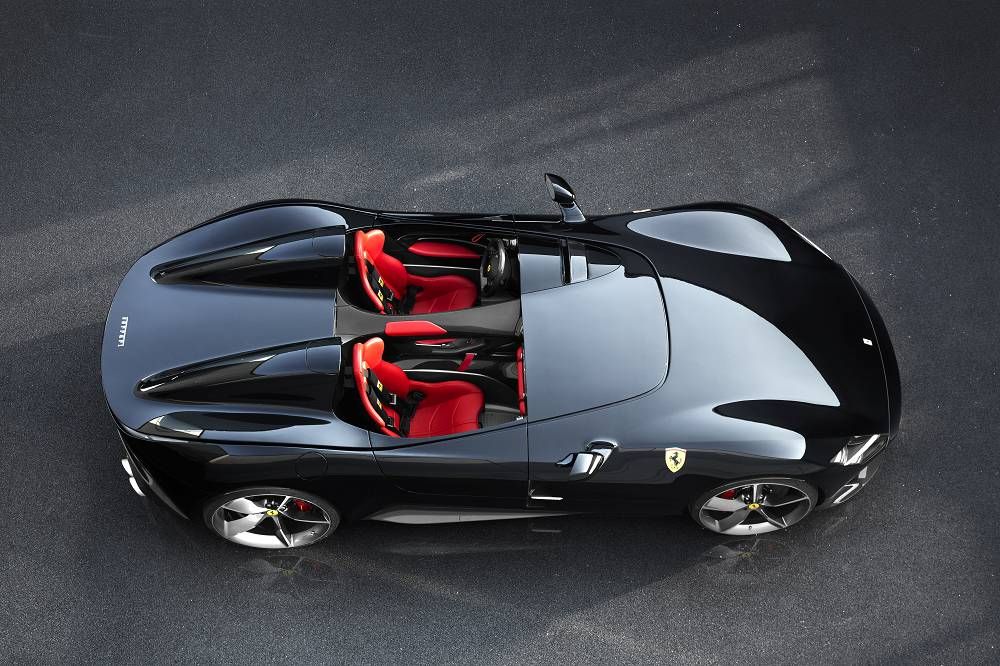
Barchettas were similar to spiders in form (two seaters), but had no roof or weather equipment. Instead of a full windscreen, they were equipped with just a small screen (single or wrap-around) and a removable tonneau cover over the passenger side. The Monza SP1 and SP2 are similar in concept, although the main difference is that they can be ordered either as a single-seater or as a two-seater.
The result is a car that seems sculpted by the wind. It is the purity of the styling elements that impresses – an aesthetic that is futuristic but, at the same time, a respectful yet un-nostalgic homage to the past.
Enzo Ferrari used to say that “If there is such a thing as a soul, engines have one”. This model’s soul is, as is true of all Ferraris, in its engine. The Ferrari Monza SP1 and SP2 are equipped with the most powerful naturally-aspirated V12 ever produced by Ferrari. Thanks to specific areas of development, the power of the 812 Superfast’s 6.5 litre has been increased by 10 cv to 810 cv at 8500 rpm with a slight increase in torque to 719 Nm at 7000 rpm.
Just like on racing cars, extensive use of carbon-fibre has been made throughout the construction of the Monza SP1 and SP2 to make them light and responsive and to enhance their sporty, aggressive visual appeal.
As these are completely en plein air sports cars with no windscreen, one of the biggest challenges was to create an aerodynamic solution that would ensure the driver enjoys the performance of the cars without being affected by issues caused by the barchetta configuration. The result was the patented “Virtual Wind Shield” which is integrated into the fairing ahead of the instrument panel and the steering wheel, providing exceptional driving comfort.
Design:
Exterior
Racing has always greatly influenced Ferrari design language and the Monza SP1 and SP2 are linked to the marque’s glorious past by an invisible bond. Their design, in fact, embodies the elegance, performance and innovation that are such an intrinsic part of Ferrari’s past and present.
From the point of view of pure creativity, the seductive images of 1950s Ferrari barchettas, that evoke in so many ways the atmosphere of the races of the day, were an invaluable source of inspiration.
The Ferrari Styling Centre’s designers gave the barchetta concept an absolutely modern connotation thanks a new and highly personal take on the theme. But there are no nostalgic references, no elements borrowed directly from the past. The Monza SP1 and SP2 were designed like a modern single-seater for a new generation of gentlemen drivers.
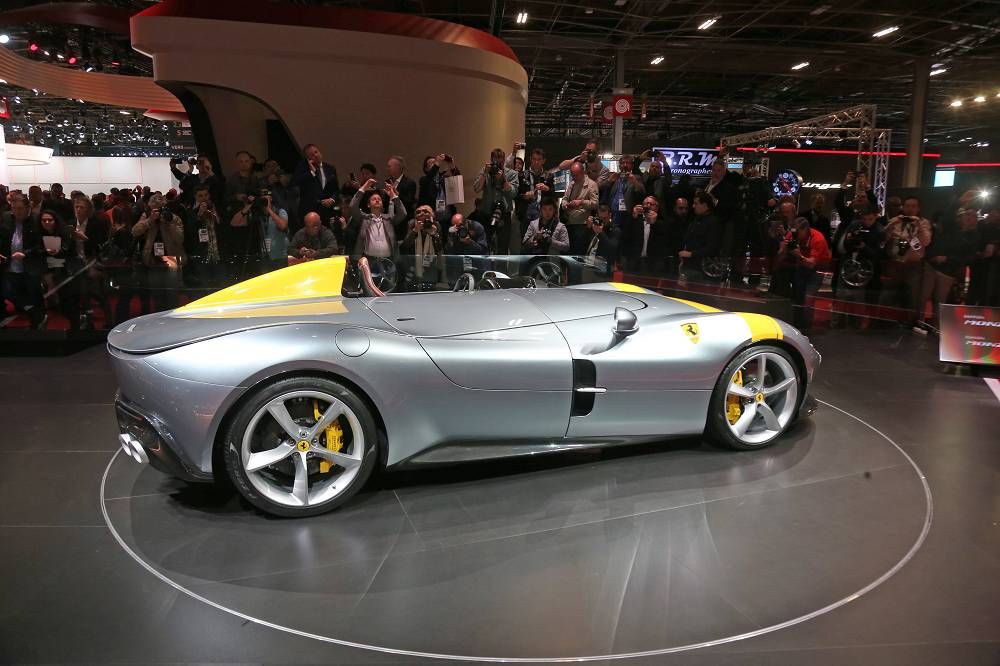
The Monza SP1 and SP2 design language is clearly visible in its elegant forms and the wing-profile volume of the all-carbon-fibre bodyshell, in its proportions, refined details, spare lines. The extreme forms of the more extreme high-performance Ferraris have been avoided. In this instance, the Ferrari Styling Centre’s designers strove to retain a form so pure it could be described in a single pencil stroke.
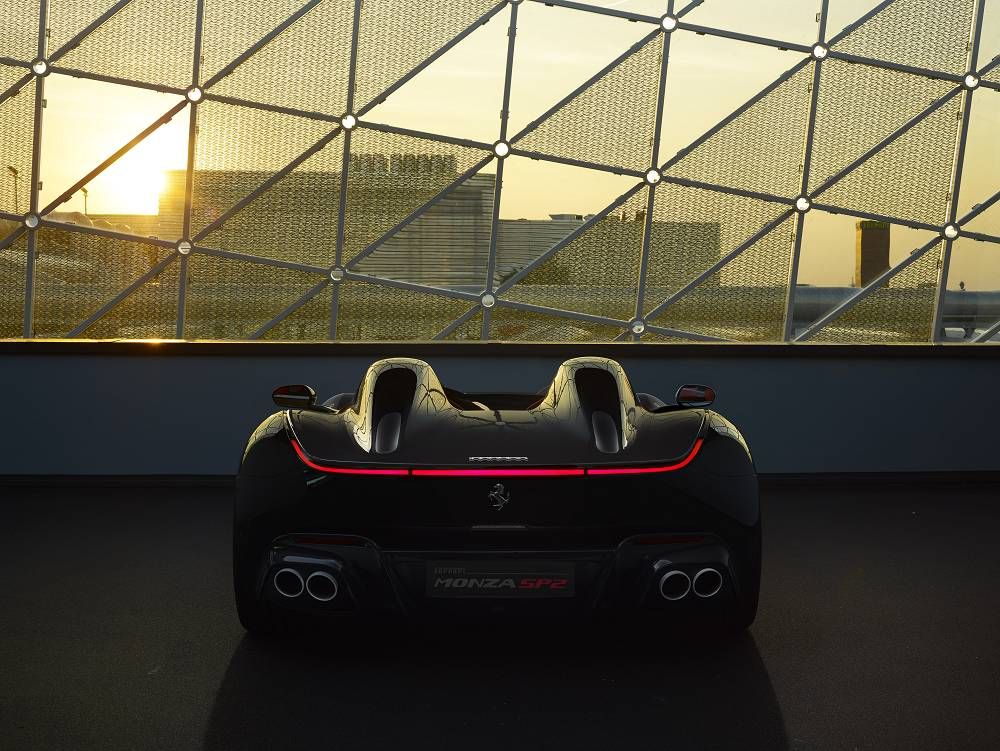
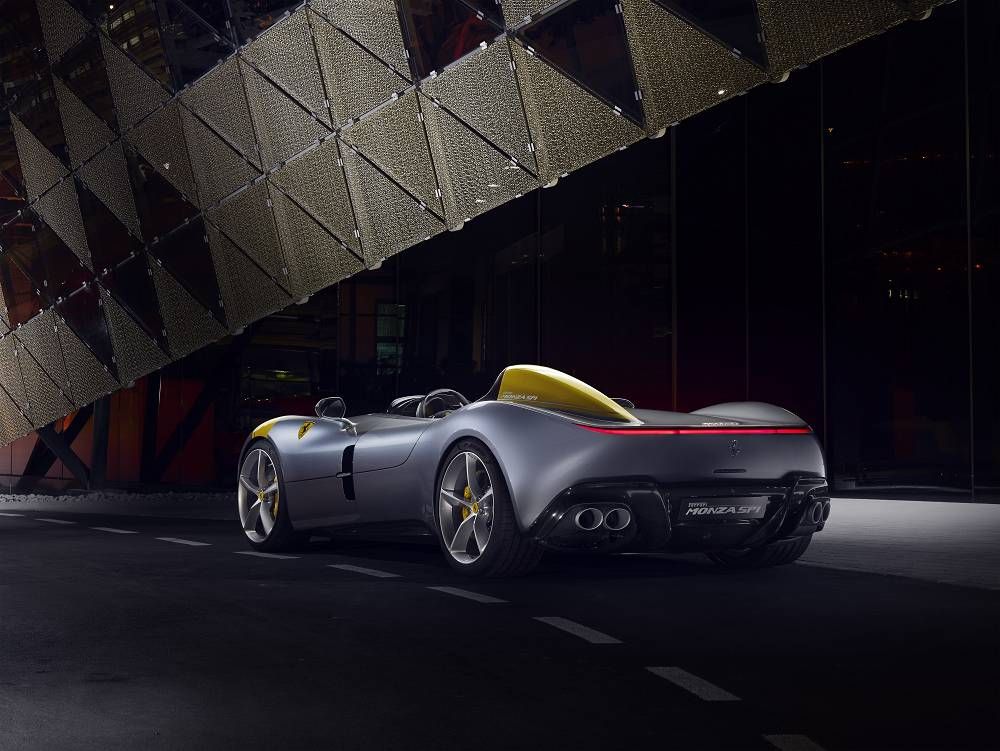
The cars’ sleek, minimalist silhouette seems almost to float on the delicate yet robust sculptural rear diffuser that wraps around the tail like an embrace, visually leading to the slender yet precise line of the flanks and then to the base of the front bumper. That effect is further amplified by the colour contrast between the black carbon-fibre of the sills and the rest of bodywork, the extreme lightness of which is underscored by the two elegant shells comprising it.
The Monza SP1 and SP2’s postmodern aesthetic is also clear at the rear which has the soft, sinuous look typical of the Ferraris of the 1950s, a compact tail and full, muscular forms.
The pivotal idea was to break up the volume into two shells: an upper cover and a lower hull. These two elements create a dialogue yet the upper shell seems almost to float, an effect obtained by a an uninterrupted strip inside a groove that circles the cockpit and ends above the tail. This solution creates the impression that the two volumes are separate.
This is a theme which appeared on Ferraris of various different decades, including those from the 1980s, but in this instance also became a leitmotif that brings structure to the form. It allows the rear of the car to be both solid and light at once.
The interesting thing in this case is that it allowed a new tail light concept to be introduced: the side lights and brake lights have been redesigned as a single unbroken line of light, seamlessly integrated into the slender gap between the two shells. This turns the tail light assembly into a theoretical line that traverses the wings and circles the bonnet, giving the impression that the upper shell is literally suspended above the rest of the volume. This is a very contemporary take on the rear-end treatment of the 750 Monza and 375 MM which provided the inspiration.
This iconic theme of the “line of light” resurfaces in the headlights too and along the side air vents creating a signature “naked” effect.
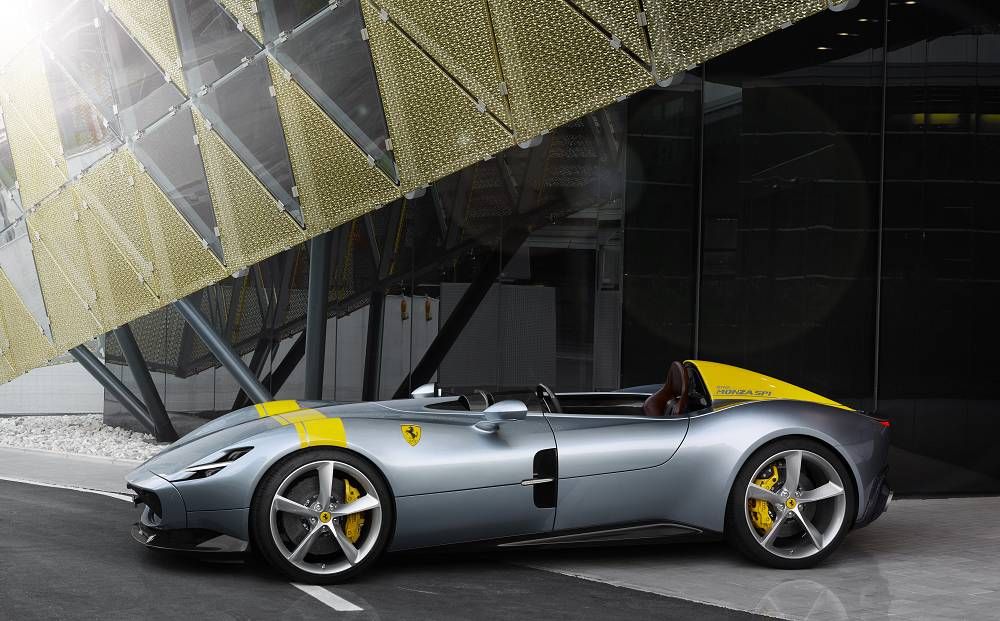
The cars’ flanks are absolutely clean, taut and pure, interrupted only by the visually striking, scooped side air vent, in homage to the barchettas of old.
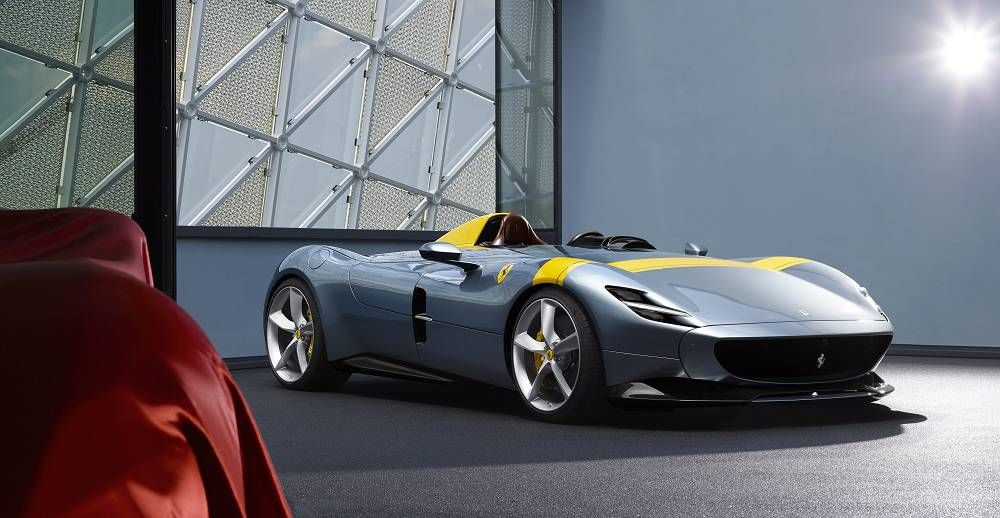
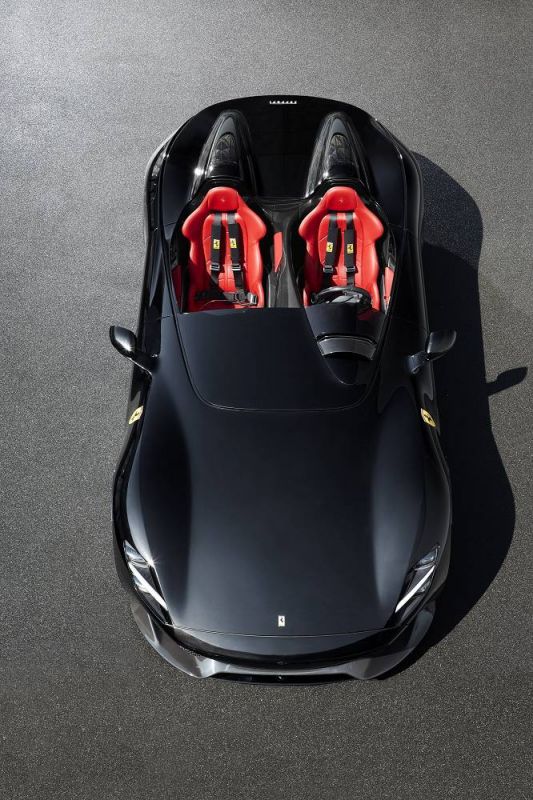
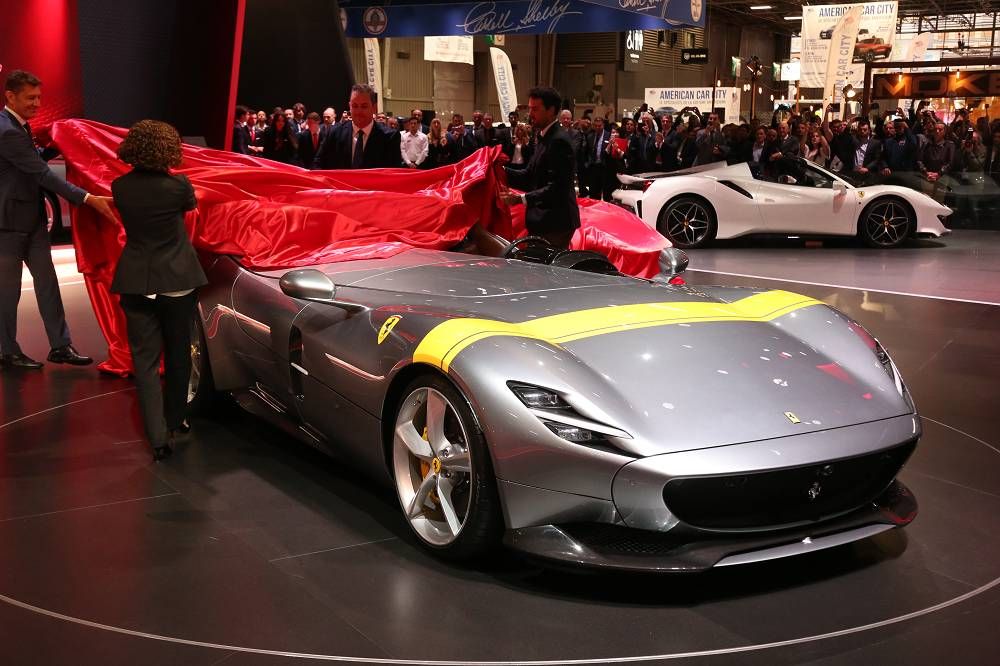
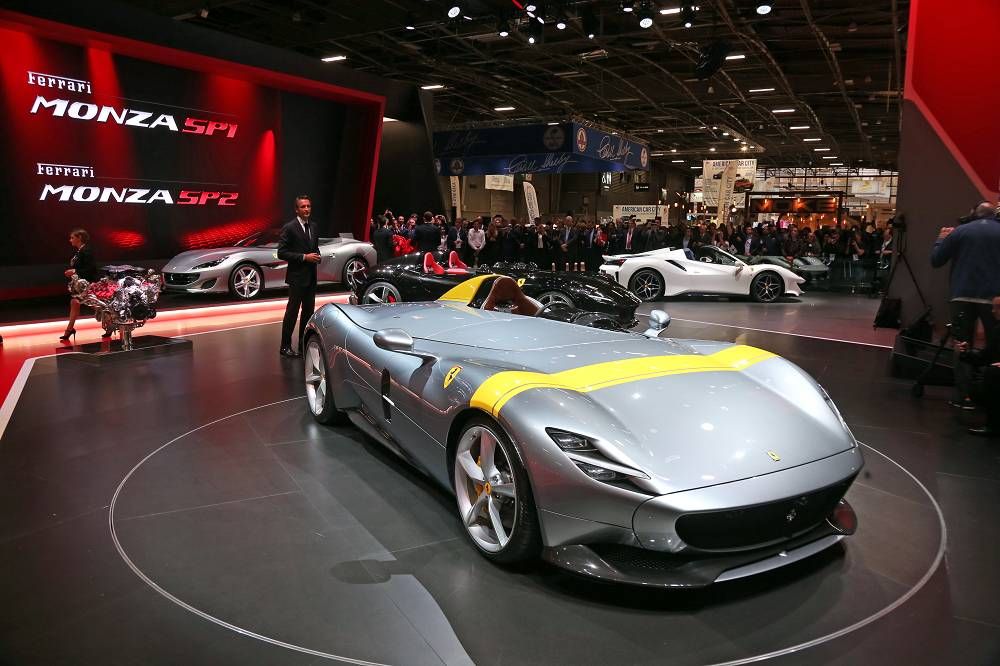
The front of the car is sober and spare: a single smooth, pared-back surface seamlessly integrating bonnet and sinuous wings. Its forms are a nod to the signature styling elements from Ferrari tradition. It is a fuselage extending back from the fine mesh radiator grille which itself is underscored by the three-dimensional structure beneath it with its two prominent air intakes. The entire front of the car looks as if it is draped, cloaked and enveloped by the surface treatment.
Particular attention was lavished on the design of the compact doors which open upwards. This involved re-engineering the 812 Superfast’s entire door assembly but the results are spectacular. Equally important is the all-carbon-fibre one-piece bonnet-wing assembly which is hinged at the front to showcase the imposing V12 engine once open.
The exterior is completed by wonderfully sculptural 21” five-spoke wheels that were designed specifically to compliment the minimalist lines of the two cars.
Another iconic theme is, of course, the livery designed for the Monza SP1 on display at the Paris Motor Show. This was inspired by the geometry and graphics of the liveries of Ferrari’s historic racing cars – the 250 GTO, 250 Testa Rossa, to name but a few icons. The result is a stripe across the bonnet which underscores the proportions of the latter and the wings, with the same theme picked up again on the driver’s roll-hoop buttress at the rear.
Interior
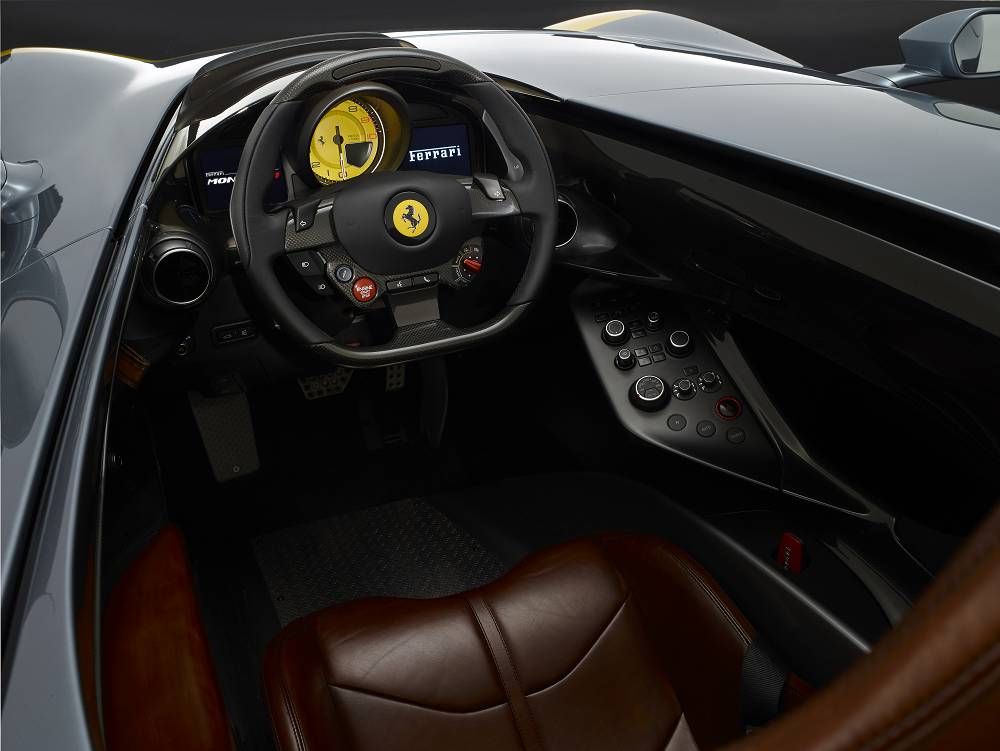
The development of the design of the interior focused specifically on the driver cockpit. The ergonomics were crafted by concentrating on all the interior content which were redesigned to match the car’s unique purpose. The instruments, instrument cluster and seat structure needed a functional rethink to meet the driver’s new requirements, one that would also retain a consistency of stylistic language with the exterior and the underlying design philosophy.
Starting with a drop theme [what is a “drop theme”?] in the form of an obvious ring on the tonneau cover, the interior architecture splits into three levels. The first is delineated by the driver’s visual horizon. From that perspective, the line between the car’s interior and exterior is very subtle indeed. The driver’s body is entirely encapsulated by the car apart from their head which juts out over the horizon line, as in racing cars, thus reducing visual distractions of all kinds.
The second level comprises the instrumentation, steering wheel and air vents. Lastly, the spare cockpit embraces, at armrest level, the rest of the commands which are clustered on a single very simple surface completely devoid of any stylistic virtuosity.
The carbon-fibre single-piece seat is upholstered in leather and lends the inside of the car an exquisitely tailored look, as do the very few other areas of leather upholstery which are carefully positioned to guarantee maximum comfort when driving.
Engine and gearbox
The engine in the Monza SP1 and SP2 is derived directly from that of the 812 Superfast, with optimised fluid-dynamics in the intake ducts to deliver even higher performance. The V12, which was recognized as the best engine over 4 litres and the Best New Engine at the 2018 International Engine of the Year Awards, brought in a number of innovative solutions. Amongst these is a 350 bar direct injection system for the very first time on a high-performance petrol engine paired with variable geometry intake tracts conceptually derived from those of naturally-aspirated F1 engines.
The high pressure injection system results in improved nebulisation of the injected fuel which drastically reduces the amount of particulate emitted during the catalyser warm-up stage, ensuring it complies with specific emissions legislation. Particular attention was also paid to calibrating the performance strategies to enhance the engine’s potential and the sensation of extreme power delivered by the car while ensuring the driver can easily dose the massive torque available, thanks to smooth, progressive power delivery at all engine speeds.
The dual-clutch transmission’s gear shifting strategies also enhance the cars’ sportiness. In the sportier Manettino positions, both up and down shift times are inherited from the 812 Superfast which has a faster, more pronounced shift for a more exhilarating driving experience.
Thanks to the uncompromising open configuration, the V12 sound is even more all-enveloping. The more noticeable intake sound is captivating and absolutely unmistakable. The driver feels completely immersed in an incomparable experience that only a car brimming with Ferrari DNA could deliver.
Vehicle dynamics
In terms of longitudinal and lateral performance, the car’s architecture is unique because of the complete absence of both windscreen and roof, yielding different aerodynamics. As a result, the goal for its longitudinal and lateral performance was to meet and, if possible, improve on the 812 Superfast’s performance.
The result is that the Monza SP1 and SP2 share the excellent acceleration characteristics (0-100 km/h in 2.9 sec and 0-200 in 7.9 sec) and braking performance (100-0 km/h in 32 m) of the 812 Superfast and only lose a little in maximum speed (over 300 km/h).
In order to achieve the goals set, the Virtual Short Wheelbase concept debuted on the F12tdf and then later also adopted on the 812 Superfast was maintained, as was the Electric Power Steering (EPS).
The larger 21” forged rims required bigger tyres – 275/30 at the front and 315/30 at the rear – and the suspension set up is slightly stiffer to improve the feeling of agility and the response time to commands.
The result is that the model is perfectly balanced with no roll whatsoever for almost unimaginably pure, uncompromising sports-car handling. Because there are no windscreen pillars, the driver’s view is completely unhindered and this enables them to attack corners with a freedom only experience with a Formula 1 car. The driver can thus enjoy involving and rewarding sports car responses over twisty routes: the car is always gratifying but never difficult to control.
Aerodynamics
As with all Ferraris, the design of the Monza SP1 and SP2 was crafted around the aerodynamics required to immerse the driver fully in the car’s impressive performance.
The Virtual Wind Shield was patented for this car in response to the need to allow the driver enjoy it at high speeds. Although it remains below the driver’s cone of vision, it delivers maximum driving comfort for a barchetta, both in terms of historic car benchmarks and models with similar architecture.
The concept was first developed virtually using in-depth CFD modelling and then physically in the wind tunnel. A full-scale mock-up was built specifically for the Wind Tunnel in which our test-drivers alternated with dummies fitted out with pressure sensors (rake and keel probes). Because of the extreme nature of the car, the support of the test-drivers and their experience was vital both in the initial phase of defining the target and the final validation stage of the overall package. Instrumented dummies and computations, on the other hand, gave our engineers an in-depth understanding of the aerodynamic phenomena that need to be managed and also allowed us to increase the critical mass of the solutions tested.
With no windscreen whatsoever, the air flowing over the bonnet would hit the driver’s face. The aim with adopting the Virtual Wind Shield was to minimise the negative effect of the air flow without compromising the exhilarating sense of speed and contact with the road that only a car of this kind can deliver.
The Virtual Wind Shield is essentially an aerodynamic passage underneath the driver’s side aero screen, where the upper part is shaped as an aerofoil. Part of the air flowing over the bonnet enters the air intake under the aero screen, where it is accelerated and deflected vertically ahead of the instrument panel. It is aided in doing so by the nolder on the aero screen itself which creates strong suction thereby accelerating the air coming out of the duct beneath the wind shield. This generates what is known as a highly energised upwash that deflects the flow over the driver’s head creating a low-speed bubble around the cockpit.
Inside the Virtual Wind Shield duct are two divergent fences. These two fences create a pressure variation between the central channel and the outer channels of the duct which minimises fluctuation in the flow field at the outer edge of the low speed bubble around the driver. This in turn reduces aerodynamic noise and boosts overall comfort by eliminating the risk of dangerous oscillations in the transverse aerodynamic forces around the driver’s head.
Driver and co-driver apparel
To communicate the feeling of being directly connected to history, Ferrari collaborated with two luxury companies of excellence, Loro Piana and Berluti, on creating a selection of apparel and accessories especially for Monza SP1 and SP2 clients.
Ferrari worked with Loro Piana to produce items of clothing to enhance the unique driving pleasure afforded by these two cars. The apparel was inspired by the elegant 1950s, a time when Mike Hawthorn always insisted on driving in a bow tie and Marzotto won the Mille Miglia in a double-breasted suit. Inspiration from the past that has produced a comfortable yet range of clothing.
Inspired by the design of the Ferrari Monza SP1 and SP2, a set of driver’s overalls comprising trousers and bomber jacket are made from “rain storm techno wool stretch” fabric which protects the driver from the elements yet allows complete freedom of movement. The suit closes securely to offer complete protection from the wind but can also be worn with the lapels opened back on the wearer’s chest, instantly conjuring up the imagine of a sophisticated sports jacket. Exclusive extra fine merino wool is used for the driver’s overalls, but it has been treated with Storm System® to make it water-resistant and windproof – perfect for driving at speed.
Ferrari worked closely with Loro Piana creating a seamless yet uncompromising interpretation in textiles of both styling elements and colours. Rosso Corsa provides a vivid contrast with carbon-fibre-inspired dark grey while the cars’ sinuous lines are reflected in the cut of the garments also, overlapping and running effortlessly through the bomber jacket, sweater and trousers. The predominantly diagonal motifs are sporty and borrowed heavily from carbon-fibre.
Inside the jacket, there is also a highly distinctive Ferrari styling reference: the engine and identification plate for each car personalised with the number of the car. A patch on the belt can also be personalised with the owner’s name or monogram as a further personalisation flourish.
The sweater is made from highly select ultrafine 15.5 micron Wish® merino wool. Soft, light and warm, it is designed to be extremely comfortable without creating any unnecessary bulk under the driver suit. The high collar is zipped for warmth but the zip is carefully concealed to keep the lines as clean and neat as possible.
In case of rain, there is a cap: traditional elegance given a modern take using water and wind-resistant technical wool with a wool piqué lining. The cap is elasticated at the back for a perfect and very comfortable fit that never feels tight.
The range of apparel is completed by the scarf in Wish® wool with a diagonal structure and contrasting selvage, and gloves in incredibly soft and unlined plongé leather for optimum feeling at the steering wheel.
Ferrari also worked with Berluti, a leading luxury footwear and leather goods brand, to produce other unique and innovative products Ferrari Monza SP1 and SP2 owners. A helmet was developed specifically to provide owners with the comfort and safety demanded in a barchetta-style car. Made from carbon-fibre, the helmet is instantly recognisable thanks to inserts in leather which have been subject to Berluti’s unmistakable treatment making this a genuinely exclusive item.
To carry the helmet and apparel owners will also receive two Berluti bags, both exclusively designed for this iconic car with clear references to Ferrari’s Rosso Corsa colour and the cars’ forms.
Lastly, a special lace-up Oxford driving shoe was developed. Available in Graphite black or Brun, it’s made of Venezia leather and features hidden laces and red piping on the heel. The special sole was designed using the same carbon-fiber fabric used by Ferrari for its cars.
7 years maintenance
Ferrari’s unparalleled quality standards and growing focus on client service underpin the extended seven-year maintenance programme that is also offered with the Monza SP1 and SP2. Available across the entire range, it covers all regular maintenance for the first seven years of the car’s life.
The scheduled maintenance programme for Ferraris is an exclusive service that allows clients the certainty that their car is being kept at peak performance and safety over the years. This very special service is also available to owners of pre-owned Ferraris.
Regular maintenance (at intervals of either 20,000 km or once a year with no mileage restrictions), original spares and meticulous checks by staff trained directly at the Ferrari Training Centre in Maranello using the most modern diagnostic tools are just some of the advantages of the Genuine Maintenance Programme. The service is available on all markets worldwide and from all Dealerships on the Official Dealership Network.
Technical Specifications
ENGINE
type V12 – 65°
Overall displacement 6496 cc
Bore and stroke 94 x 78 mm
Max. power output* 596 kW (810 cv) at 8500 rpm
Max. torque* 719 Nm at 7000 rpm
Specific power output 125 cv/l
Max. engine speed 8900 rpm
Compression ratio 13.6:1
DIMENSIONS AND WEIGHT
Length 4657 mm
Width 1996 mm
Height 1155 mm
Wheelbase 2720 mm
Front track 1688 mm
Rear track 1678 mm
Dry weight ** approx. 1500 kg (SP1), 1520 kg (SP2)
Fuel tank capacity 90 l
TYRES
Front 275/30 ZR 21 10 J
Rear 315/30 ZR 20 11.5J
BRAKES
Front 398 x 38 mm
Rear 360 x 32 mm
TRANSMISSION/GEARBOX F1 seven-speed dual-clutch transmission
ELECTRONIC CONTROLS ESP, ESC, F1-Trac, E-Diff 3, SCM-E with twin solenoids
PERFORMANCE
0-100 km/h 2.9 sec
0-200 km/h 7.9 sec
100-0 km/h 32 m
Max. Speed >300 km/h
FUEL CONSUMPTION/CO2 EMISSIONS
Under homologation
* With 98 RON petrol / ** With optional lightweight content







| Circuit | Suzuka International Racing Course |
| Date | 07.10.2018 |
| Laps | 53 |
| Distance | 307,471 km / 191,094 miles |
| No | Driver | Ferrari | S/N | Team | Result |
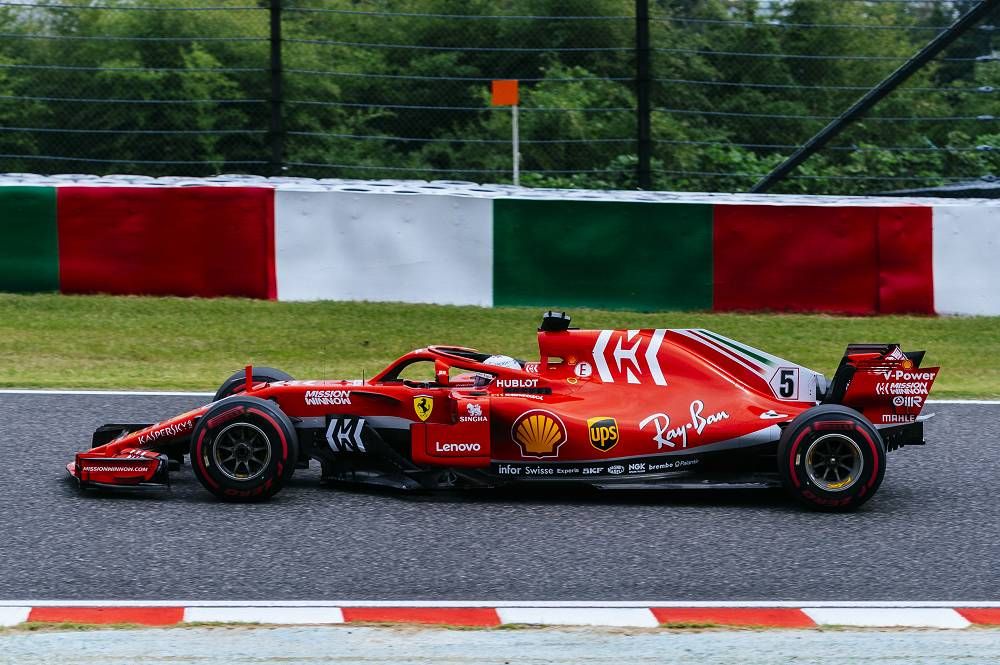
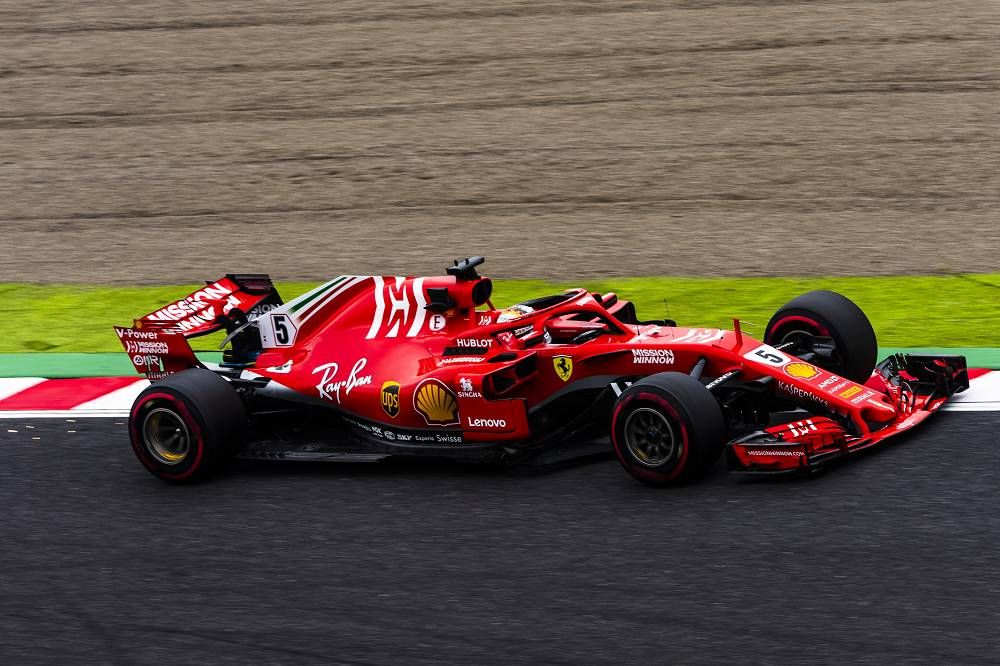
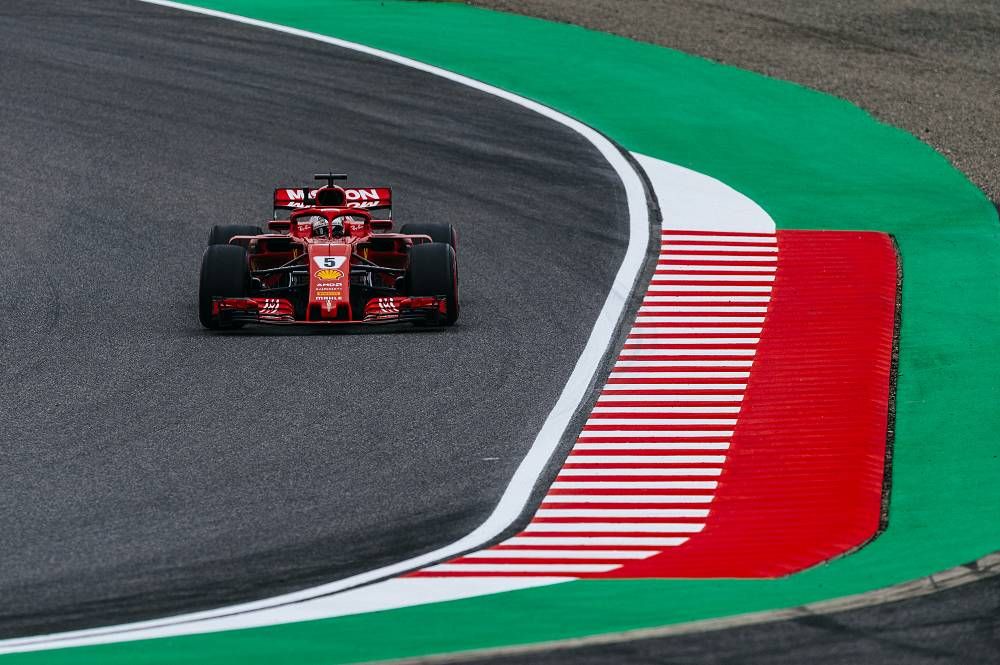
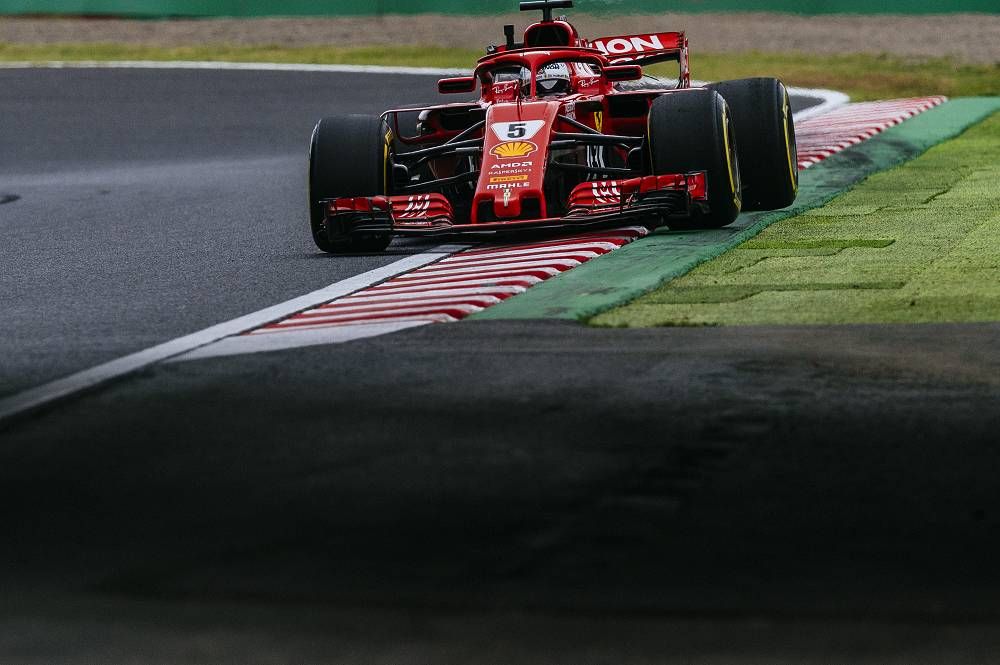
| 5 | Sebastian Vettel | SF71H | – | Scuderia Ferrari | 6. |
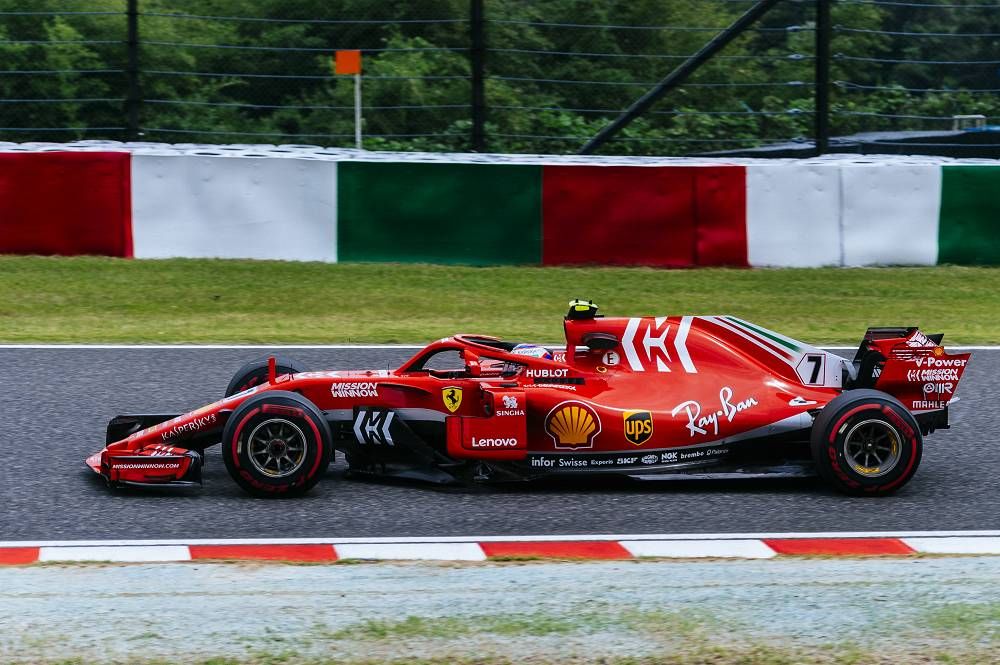
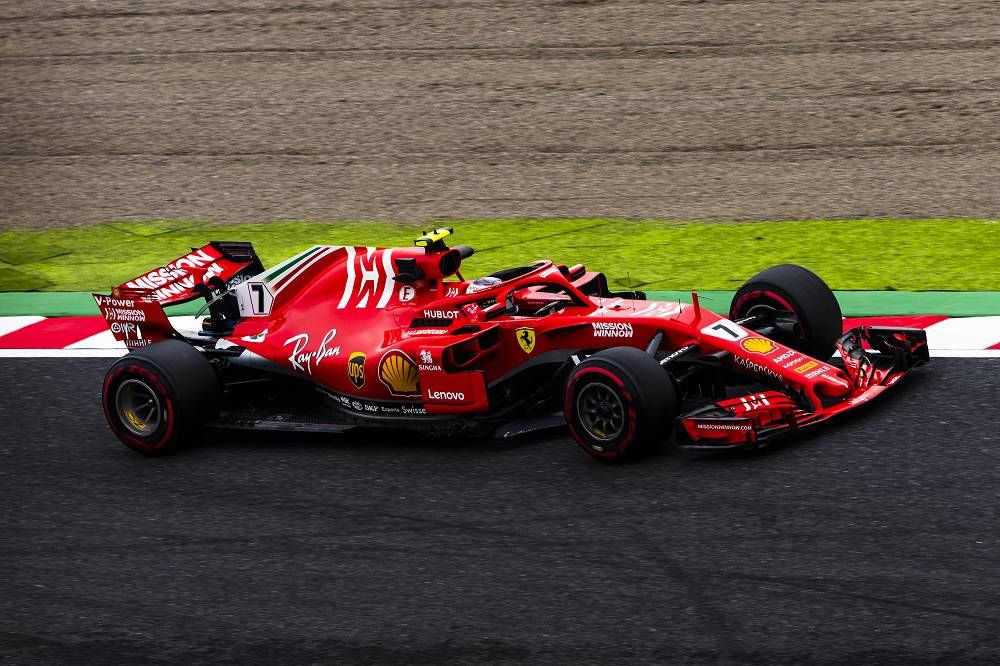
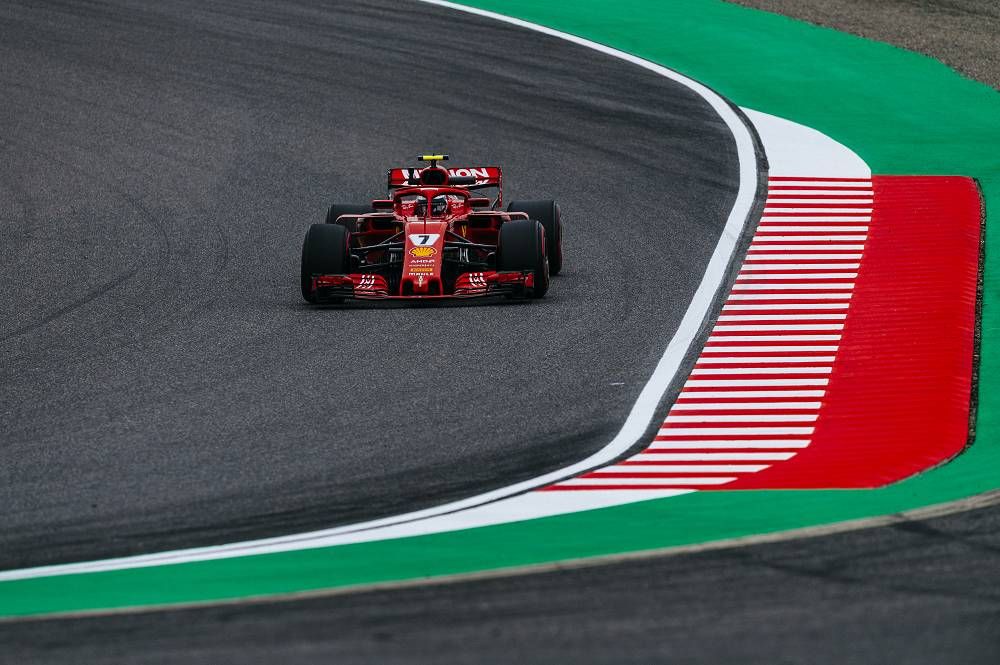
| 7 | Kimi Raikkonen | SF71H | – | Scuderia Ferrari | 5. |



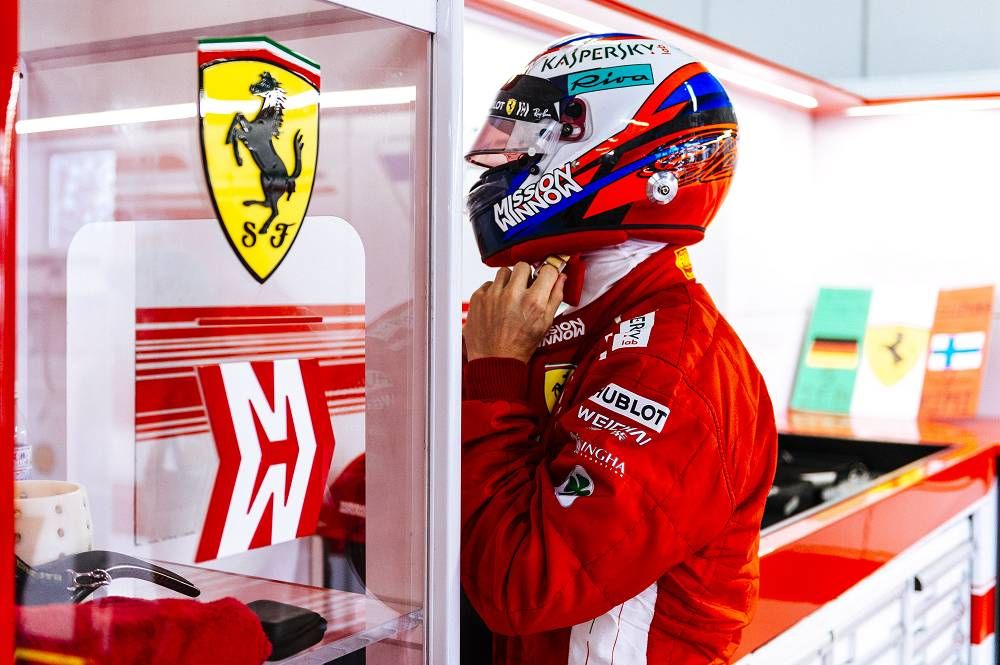
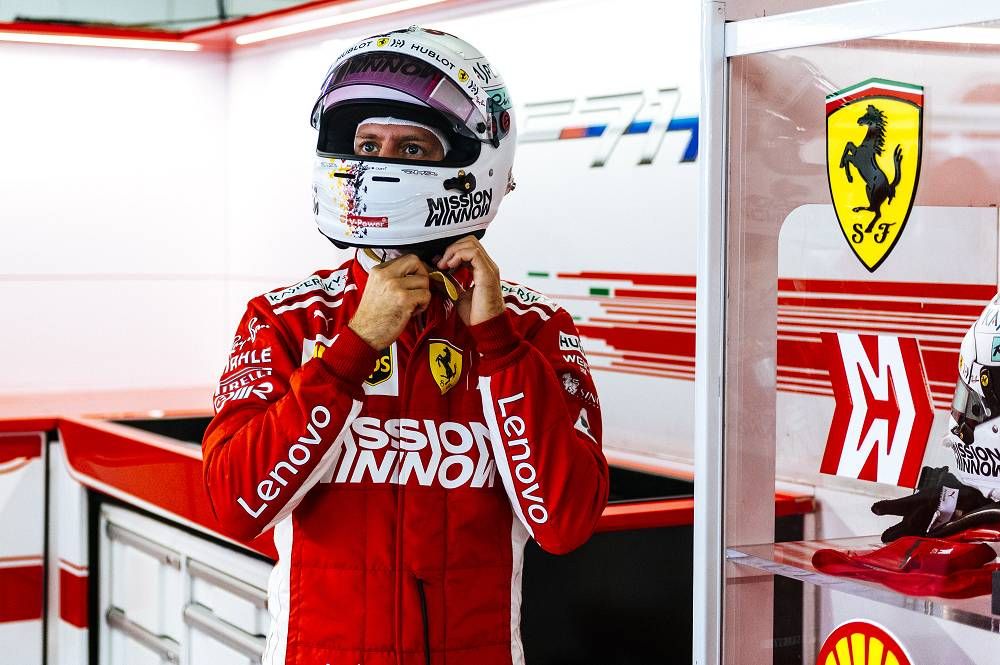


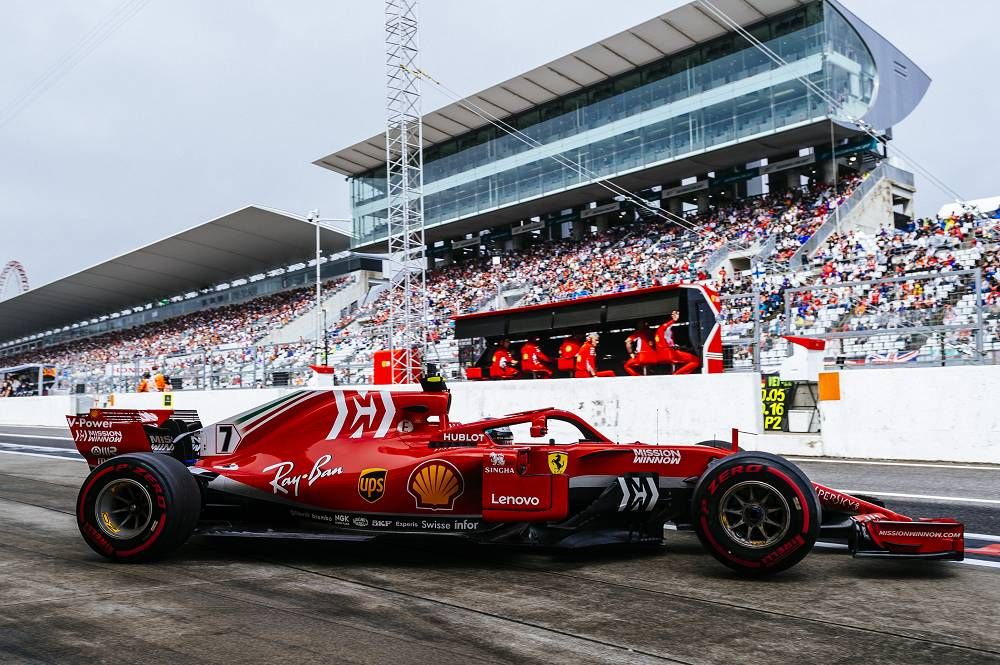
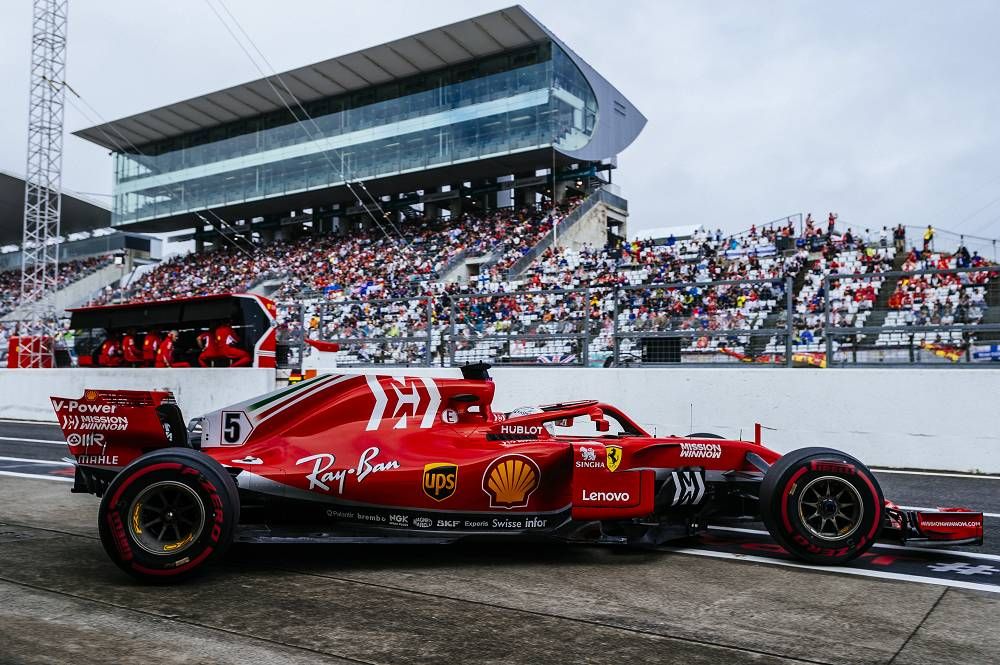

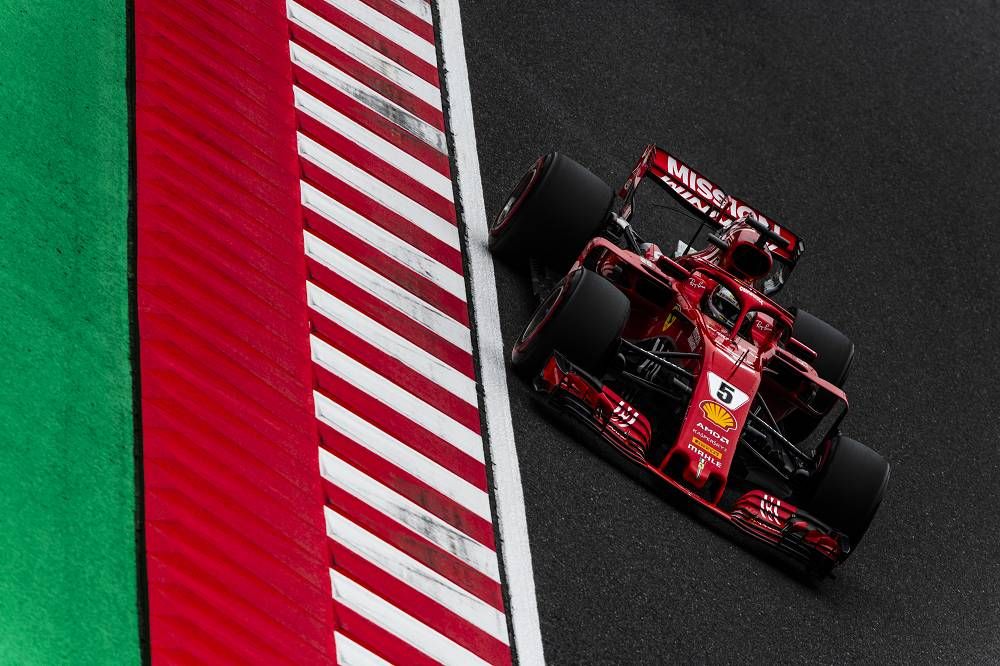
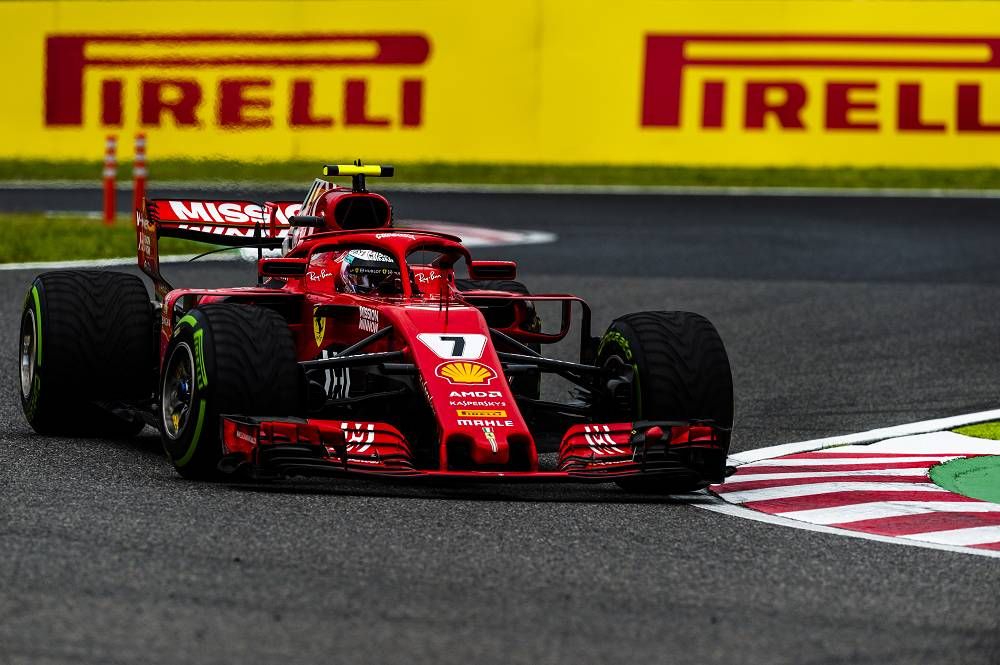
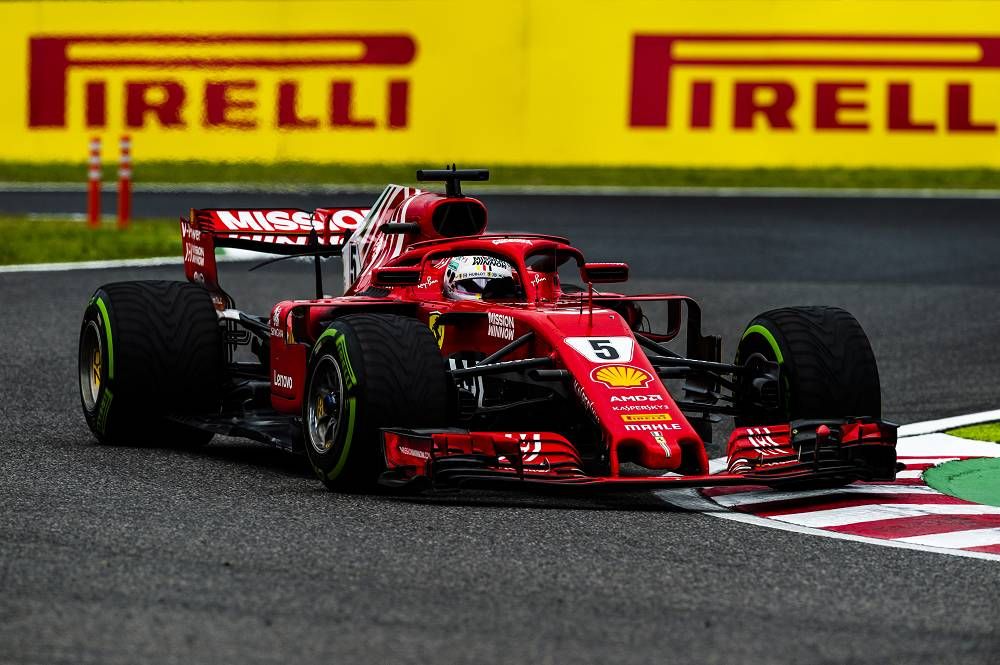


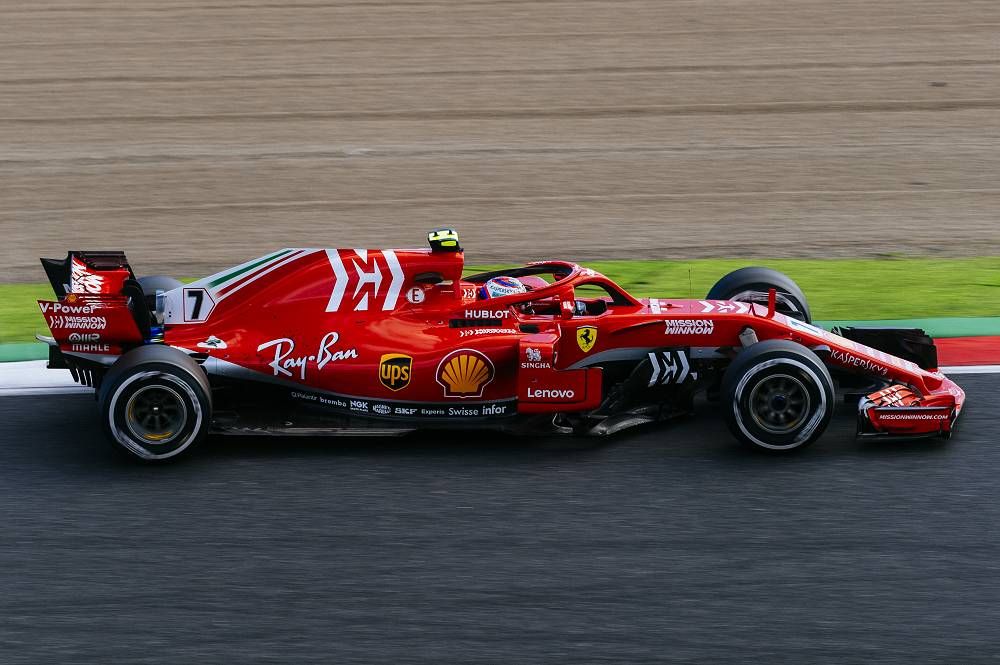
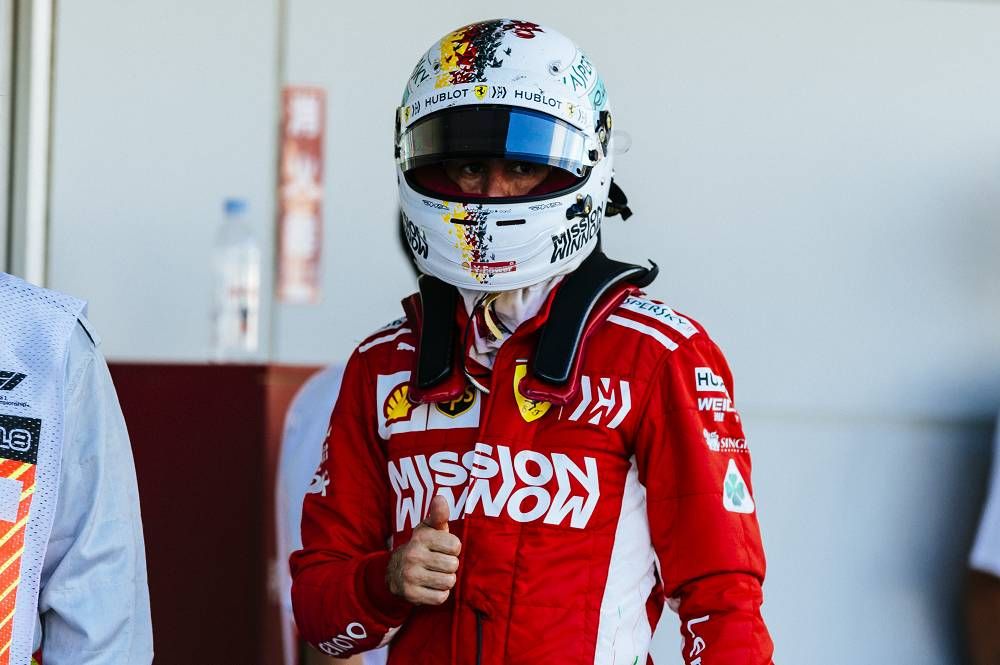
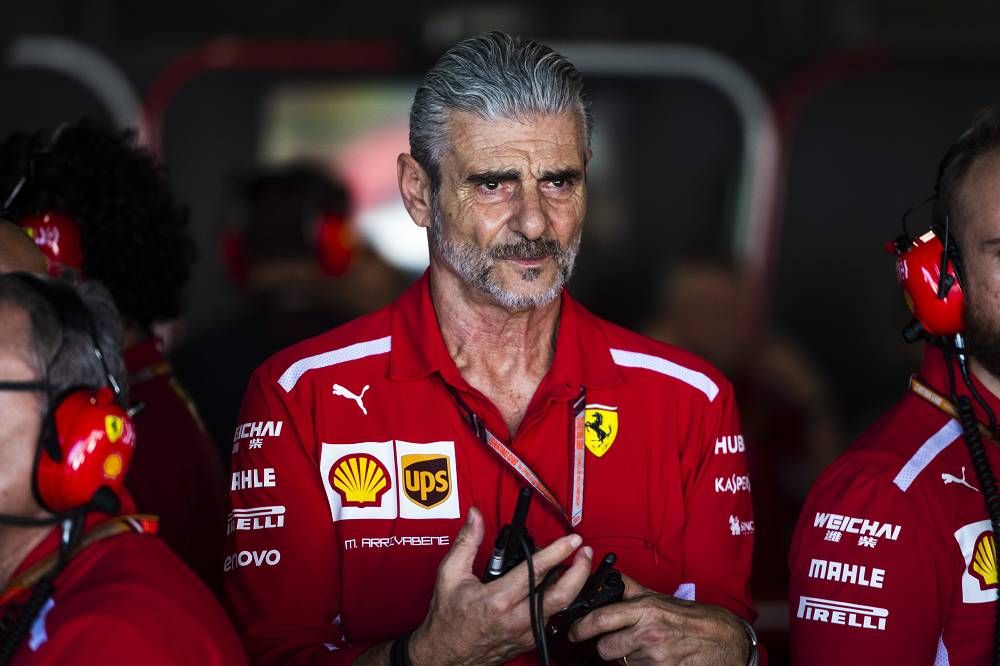
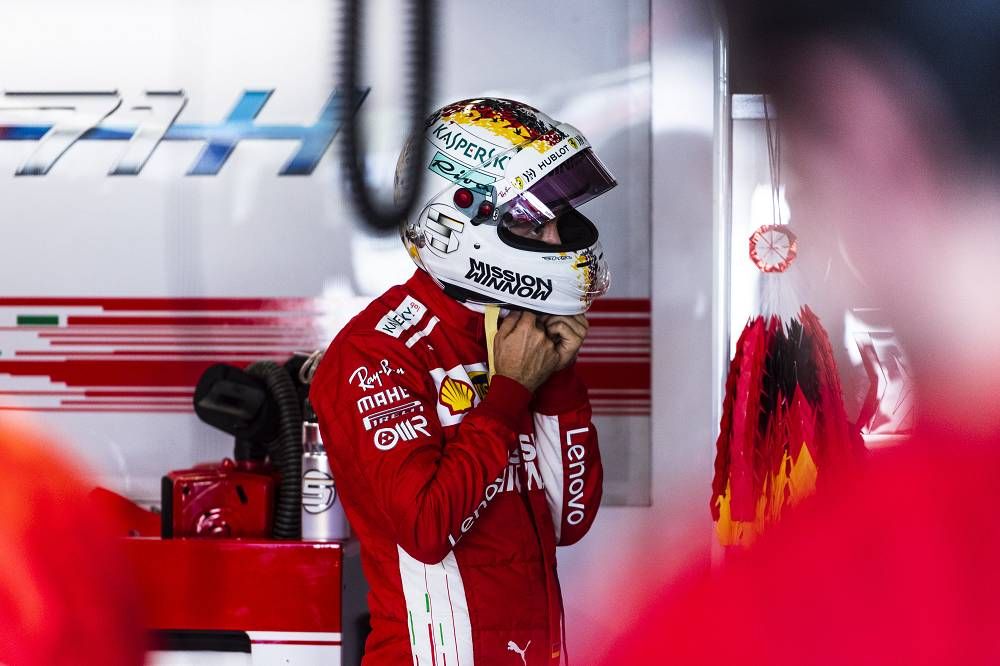
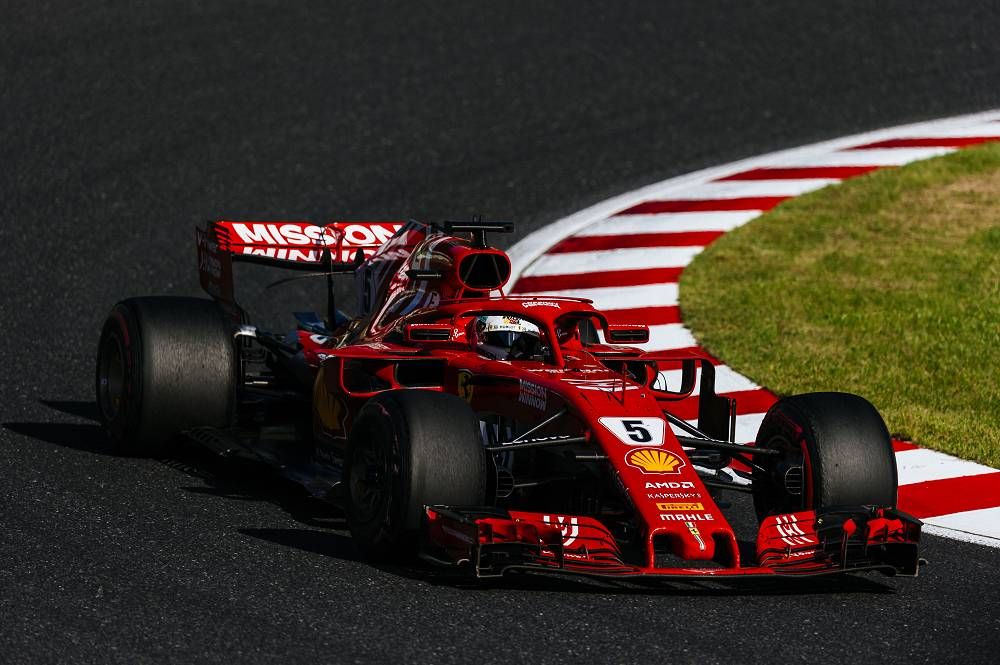

Japanese Grand Prix – Suzuka 7 October
Posted: 07.10.2018
Source: Ferrari
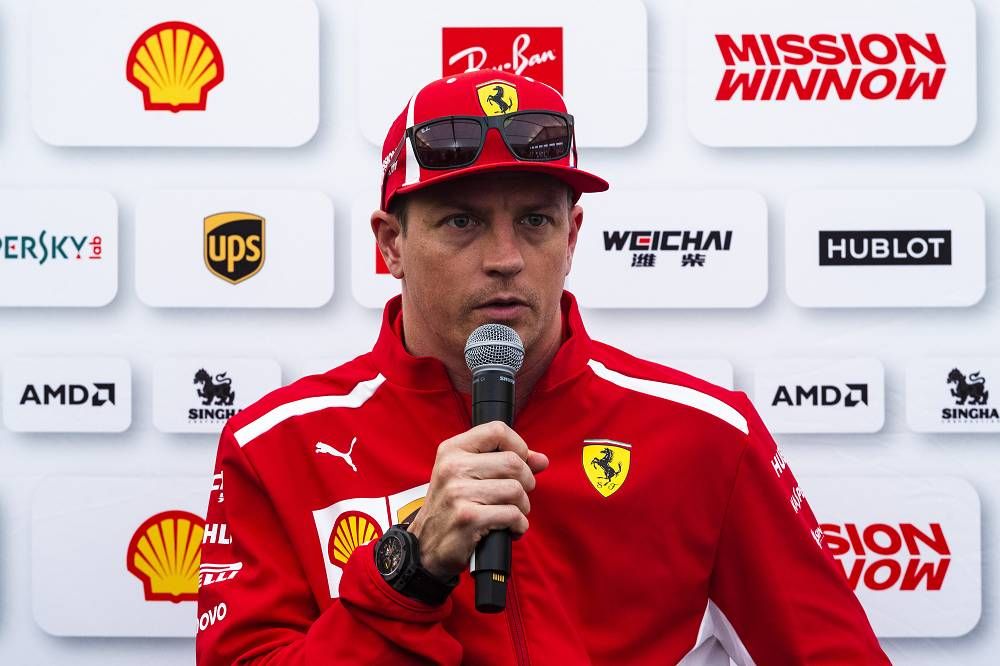
Maurizio Arrivabene: ”After what happened in qualifying, today the team and the drivers fought back well. The podium could have been within our grasp, but unfortunately, damage on both cars, as a result of collisions in the race, affected the final result. Regardless of what is now a very difficult situation in terms of the championship, we will tackle the coming races giving them our best shot, maintaining concentration and determination.”
Kimi Raikkonen: ”After the contact with Max I saw some parts flying off my car; it was damaged pretty badly on the left hand side. Obviously, this affected negatively the rest of my race. What happened is unfortunate and after that it was pretty difficult to drive on. I had lost a lot of downforce, but there was not much I could do. It’s impossible to know what our performance would have been without that accident at the chicane; we had improved the car over the weekend, it was getting better and better, but unfortunately this is what we have got today. It’s been a difficult and poor weekend overall, the result is not ideal. Now we need to look deeply on everything and hopefully we’ll come back at the next race on a more normal situation where we’ll be able to fight.”
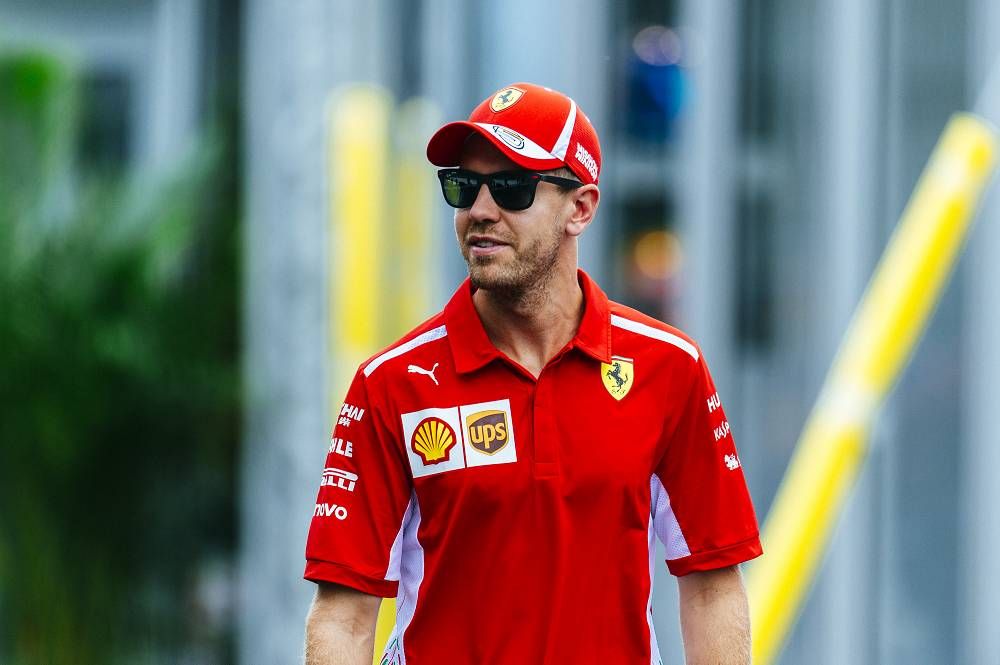
Sebastian Vettel: ”Today, I found it quite inspirational walking through the garage and watching the guys work! All the team is fired up and that certainly helps, as the last couple of weeks haven’t been that easy. The spirit is unbroken despite everything. Races like this are a bit of a hand-over and we know it is difficult from where we are in the point standings, but we don’t have much to lose. We have given everything so far and I believe there’s still something we can learn and understand from the car. So we keep fighting and resisting and we’ll see what the other races bring. As for the collision with Max, I was obviously pushing to pass, I knew he had a penalty, but I also felt that we were fast. I could see that his battery was clipping, while I had saved some energy from mine. I saw a gap and went for it on the inside, he obviously tried to defend and I couldn’t go anywhere, so we touched. However, this is part of racing.”
Japanese Grand Prix – Fifth and sixth in Suzuka
Posted: 07.10.2018
Source: Ferrari
Cars damaged in the race, but the team fights back
Suzuka, 7 October –Fifth and sixth places for Kimi and Seb respectively for Scuderia Ferrari in Japan. It was probably the most we could do after the problems in qualifying, both cars being damaged as a result of collisions in the race, which meant Sebastian had to fight his way back up the field.
FILM OF THE RACE –Kimi and Seb were on Supersoft tyres for the start, fourth and eighth respectively on the grid. It was hot, with an air temperature of almost 30 degrees and track temp at 37. Kimi maintained his position, while Seb hugged the right hand side and immediately made up two places. He then got past Grosjean with a miracle move around the outside of Spoon. At the end of the opening lap, Verstappen went straight on at the chicane and as he rejoined he nearly took out Kimi, who had to slow, which meant Seb moved up to fourth. The incident was investigated by the Stewards, who gave Max a 5 second penalty, while Ferrari Number 7 had some damage from then on.
Lap 3 and the Safety Car came out as bits of Magnussen’s tyre were all over the track. The race was on again on lap 7 without any changes to the order. On the next lap, Seb gave it a go, attacking Verstappen on the inside of Spoon, but they touched and the Ferrari spun. Sebastian rejoined in 18th place and began fighting his way up the order, passing Ericsson. The move was investigated but no action was required.
On lap 18, Kimi pitted taking on Mediums, before passing Ocon to go eighth. Seb meanwhile worked his way up to twelfth. Verstappen pitted and took his penalty. Kimi closed on him but lost time behind Gasly and could not pass. His lap times were affected by the earlier damage and he found himself fifth behind Ricciardo after the pit stop.
Vettel made his stop after 27 laps and fitted the yellow-banded Softs. It was showtime and he was straight back in the points, as high as seventh when he set a fastest race lap on lap 33. He then gained another place before his pace matched Kimi’s who was too far ahead to be caught. But in the end, Vettel at least had the satisfaction of the fastest lap of the afternoon in 1’32”318. “The car was strong,” commented Seb. Despite everything.
Japanese Grand Prix – “Not easy, but not impossible either”
Posted: 06.10.2018
Source: Ferrari
Kimi and Seb on today’s Qualifying at Suzuka-and the race to come
KIMI (P4, 1min29sec521, SS tyres): “It was a tricky qualifying with mixed conditions. In Q3 we thought that the rain would come earlier, so we decided to go out on Intermediate tires. Unfortunately it did not happen and then we were a bit off with the timing. We came in to fit the Supersoft , but in turn 14 I touched a wet kerb, ran a bit wide and lost some time. Obviously fourth place is not ideal, but at least we were able to put a lap together despite the mistake. Third position could have been easily possible. It’s a pity we did not get it today; the feeling with the car was getting better and better in qualifying. For sure tomorrow is going to be tricky, but we will do our best”.
SEB (P9, 1min32sec192, SS tyres): “At the beginning of Q3, I was asked if it was ok for me to go out on Inters and I said yes. Obviously, it was the wrong decision and now it’s easy to say, but it could have been the other way around. We thought there could have been more rain, but in the end it didn’t come. If it had rained five minutes before, it would have been a different story. However, it wasn’t our session in terms of timing and we’ve been through similar situations a couple of time so far. We are a team, so now we accept together the consequences. Tomorrow is another day, it won’t be easy as we start from the back, but it’s not impossible”.
Japanese Grand Prix – “Now we need to work for Qualifying”
Posted: 05.10.2018
Source: Ferrari
Seb and Kimi comment on free practice 2 in Suzuka
SEB (P3, 36 laps completed, best 1min29sec050 on Supersofts): “All in all I am satisfied, as I think this Friday has been a smooth one for us, but we aren’t fast enough yet. Today we tried something with the car, which seemed to give a better feeling, so let’s see if we can carry this over tomorrow and find something else, too. Today I think the car slid a little bit too much, thus damaging the tires, but I believe that, overall it was a clean session with no interruptions.
We are trying to get the best out of our package, so we keep focusing on our job. Tonight we have to work hard because we need to be fast in qualifying. Obviously, if the others are as strong tomorrow as they were today, then it will be very hard, but we’ll see. Rain could make things more interesting tomorrow, but for now we keep working hard, doing our job and then we’ll see. It’s a long weekend and today is only Friday, so I am sure there’s still a bit to squeeze out of the car”.
KIMI (P5, 33 laps completed, best in 1min29sec498 on Supersofts): “This has been a normal Friday, both in terms of the things we tried and of engine usage. We have been focusing on trying to get the best set-up for the car and towards the end of the session it felt better to drive, but for sure we have some work to do before tomorrow. I don’t know if it will be raining or not during P3 and Qualifying, we’ll have to see what the weather brings”.
Japanese Grand Prix – “My favorite track”
Posted: 04.10.2018
Source: Ferrari
Seb and Kimi ahead of the Japanese GP weekend
SEB: It has been only a few days since the last race in Sochi, so we hope that the track here suits us better and we can have a better weekend than in Russia. We have a strong car, but not a dominant one. There were races from our side where we weren’t close enough and where we didn’t have the pace the others had. However, during most of the races we have been close enough to have a good fight.
I’m very happy to be here and I love this track, it’s my favourite circuit in the world, so I just want to enjoy it and focus on the things that are working well for me. We made some progress with our car, but you never know where you are in comparison to the others; maybe they have done smaller steps or bigger steps, but I’m pretty sure, from speaking to all our engineers, that we are pretty much where we would like to be or where we wanted to be. Of course, you would always like to have more performance, but that’s the same for everyone. As for the weather, since it may be raining this weekend, I think we have nothing to worry about in wet conditions. The rain didn’t play into our hands but it won’t be like that forever, so I’m not afraid if it’s wet before Sunday.
KIMI: The weather will play a big part over the weekend, for everybody. Hopefully we can have a clean practice session. A lot will depend on the weather conditions and how much we can run. When we have mixed conditions as we have today, you cannot really be 100 per cent sure that in an hour it is going to rain; so you need to try to get the best out of all the practice and see how it is. When it rains, it often makes things tricky; if it is too wet we cannot run, plus with rain tires we have certain limits in how many we are allocated, so we have to save some of them for qualifying and the race. Driving in the wet has probably not been our strongest point a while ago, but on a few occasions, recently, we have been pretty good. Also in the last race we were quite fast, but not as fast as we wanted to be. Hopefully here will be a different story. For sure it’s not going to be easy, we’ll wait and see what happens. We’ll do our best and try to be in the fight for both qualifying and the race.
Japanese Grand Prix – A textbook track
Posted: 02.10.2018
Source: Ferrari
Suzuka, the most popular track and the most copied
Concerns about typhoon Trami, which unfortunately has caused serious damage in Japan, have now passed. The days leading up to the Grand Prix have been beautifully sunny, with temperatures reminiscent of late summer. But the forecast says more rain is on the way, in bursts that could last until just before qualifying on Saturday.
A large part of the team flew to Japan directly from Russia. It’s always exciting to see the Suzuka International Circuit come to life with each passing day, as the families bringing their children to enjoy the amusement park mingle closely with the Formula 1 fans, who are truly unique in terms of their passion and inventiveness.
Ask any driver, and the Scuderia Ferrari pair is no exception, to list their three favourite tracks, 99 percent of them will include this one, designed in 1962 by Dutchman John Hugenholz, as a test track for Honda. It’s actually a modular design, allowing for a variety of configurations and lengths according to the type of racing. The 5.807 kilometre-long Grand Prix layout is definitely the best known. A run of corners that follow one another without pausing for breath make up the double uphill “esses,” which have inspired more modern facilities such as Austin. There’s not much heavy braking, top speeds reach 330 Km/h, even if there are no long straights and overtaking is not easy, while the drivers can never stop working. It’s a track where finding a good rhythm and having good aero balance are the keys to success.

| Circuit | Sochi Autodrom |
| Date | 30.09.2018 |
| Laps | 53 |
| Distance | 309,745 km / 192,508 miles |
| No | Driver | Ferrari | S/N | Team | Result |
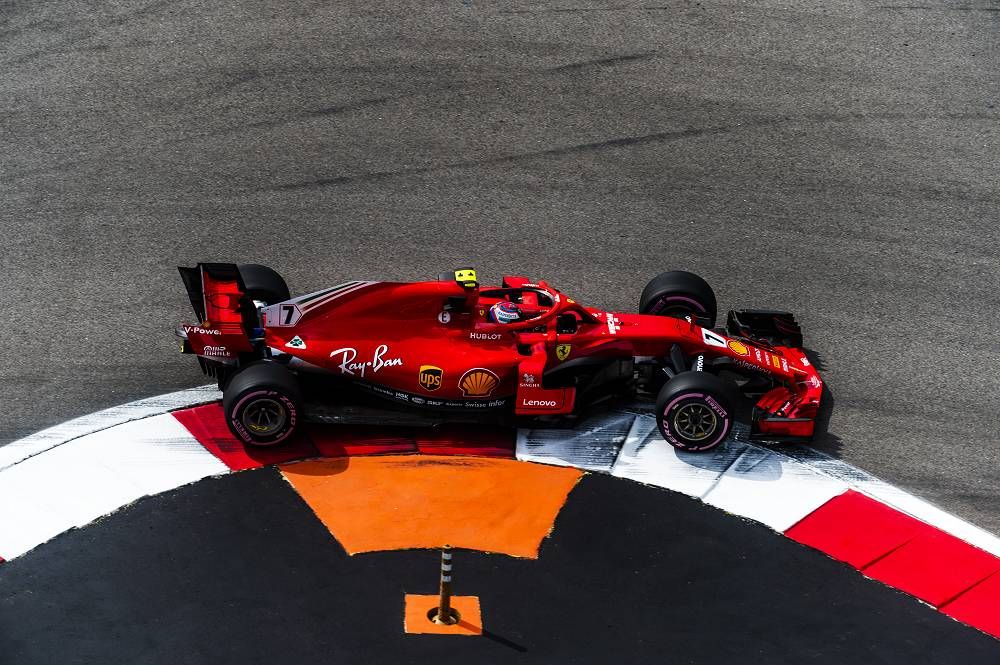
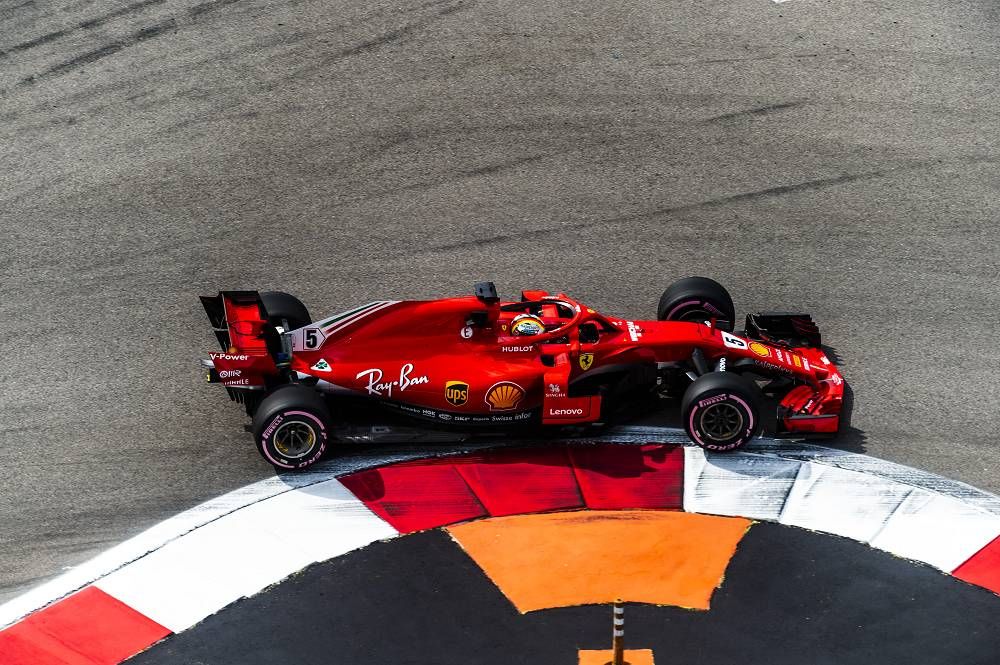
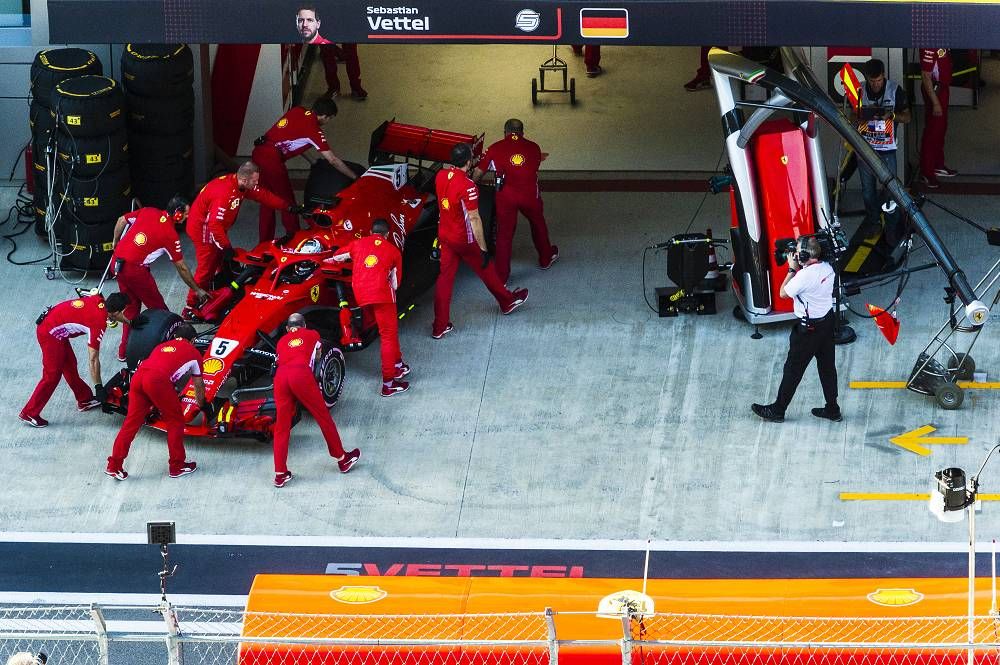
| 5 | Sebastian Vettel | SF71H | – | Scuderia Ferrari | 3. |
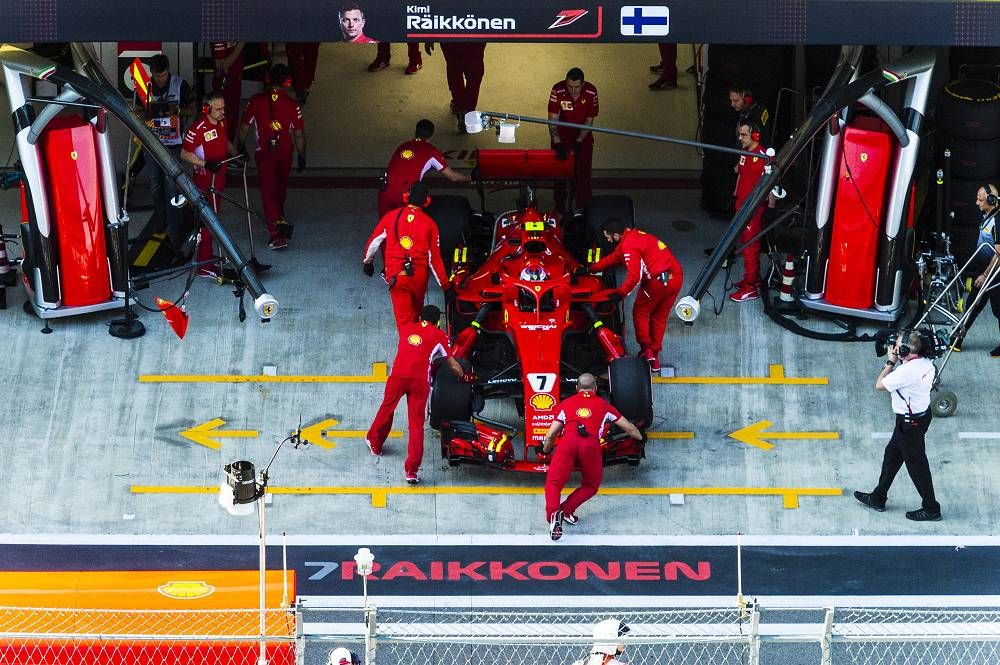
| 7 | Kimi Raikkonen | SF71H | – | Scuderia Ferrari | 4. |
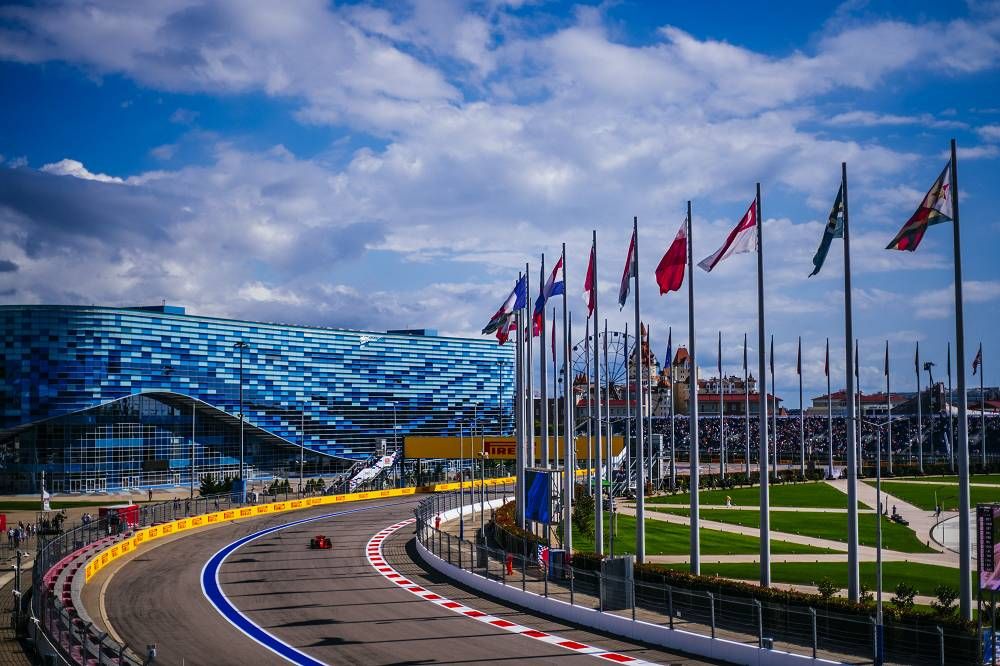
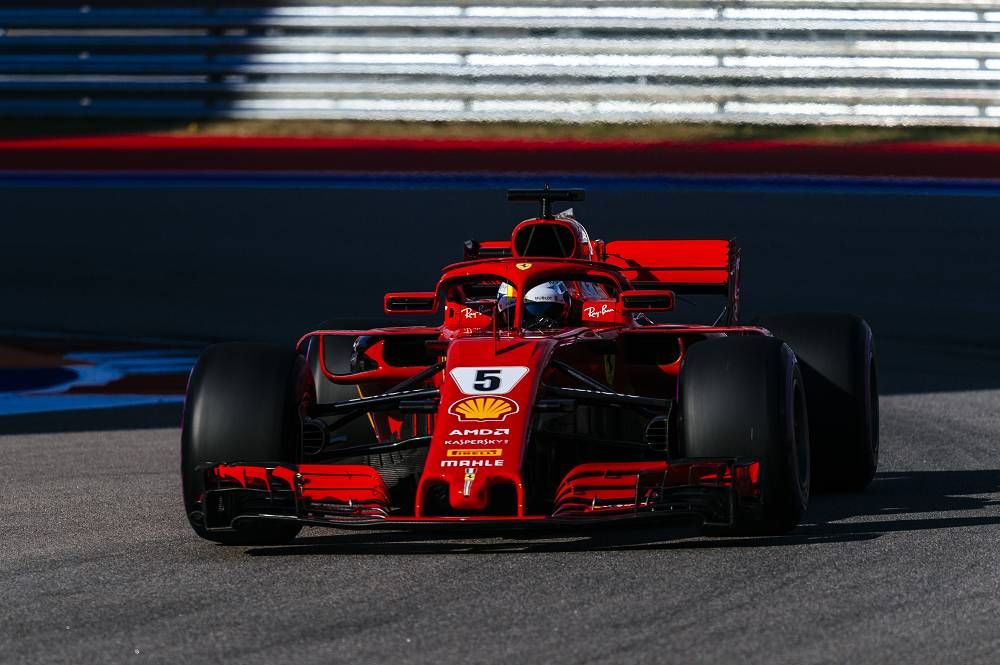
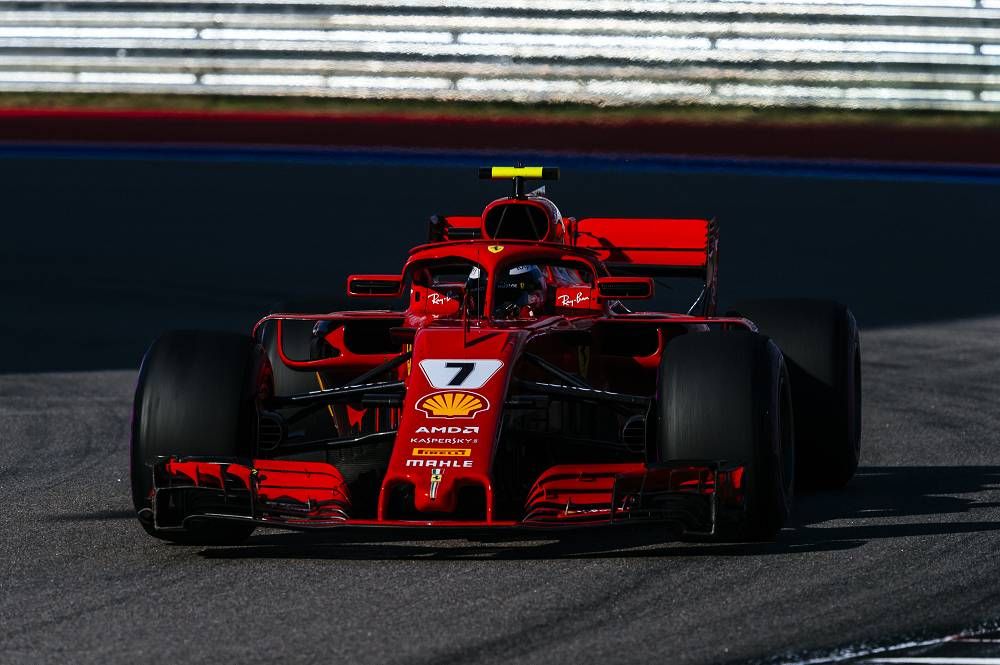
Russian Grand Prix – Sochi, 30 September
Posted: 30.09.2018
Source: Ferrari
Maurizio Arrivabene: “Right from Friday, the Sochi weekend was rather a difficult one for us. Despite all our efforts to find the ideal set-up, neither on Saturday nor in the race were we competitive enough to worry our closest rivals. Compared to the way we performed at other circuits, something was missing here and so we were unable to reduce the points gap. On paper, the next race in Japan should have very similar characteristics to the one at Silverstone, so in Suzuka, we will get a more precise indication as to the potential of our car. If it goes well, we will know that, despite the difficult situation in terms of the classification, we still have the right tools with which to fight all the way to the very end.”
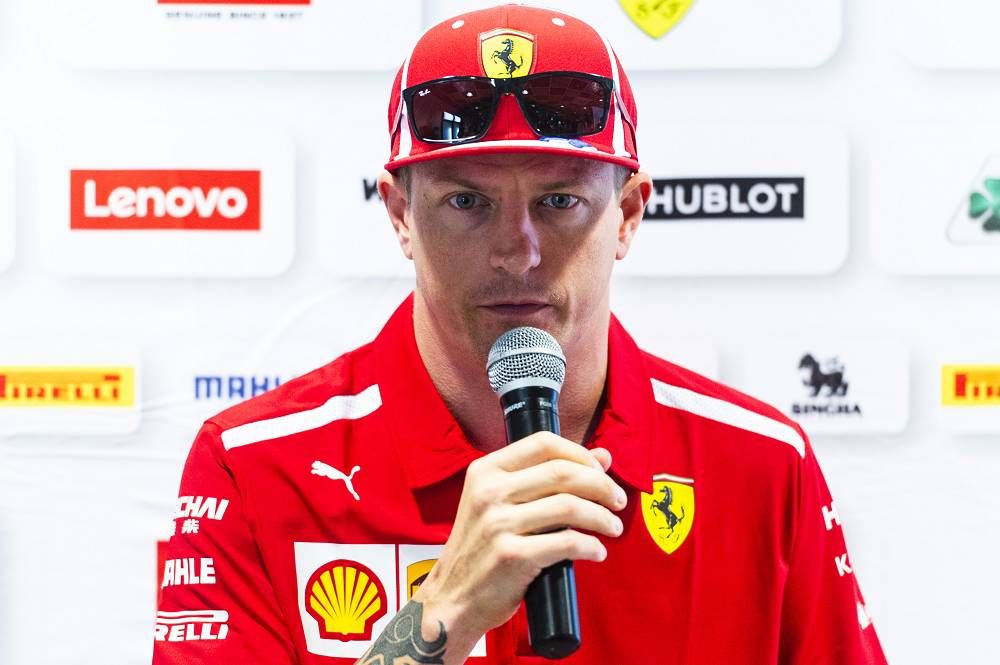
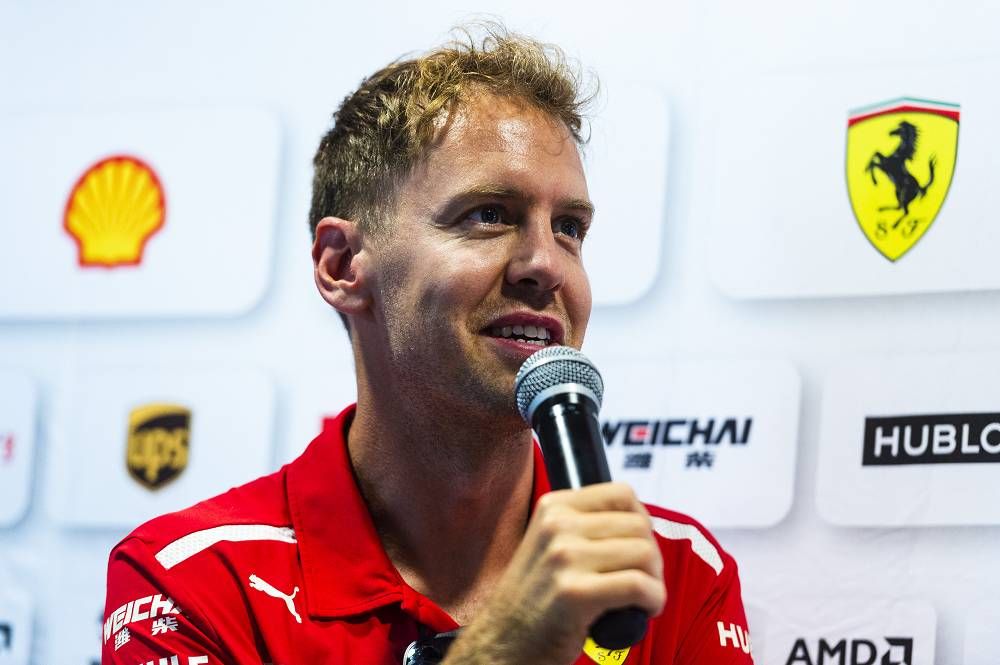
Sebastian Vettel: “Today the feeling with the car was very good and I was able to push, but I just wasn’t as fast as the others. Obviously, today it was better than yesterday in terms of pace, but it wasn’t enough to put pressure on our competitors. We tried everything and I am happy that we got a podium finish, but obviously this is not the result we were looking for. My start was good, but there wasn’t much track space for me and I could go nowhere. After pit stop we were able to overcome Lewis, but he could pull ahead more than us and at the end there was nothing to do. We lost some points during the two last races and it doesn’t help, but we have our plan to follow and hopefully we can make some progress in the races to come. Maybe the next couple of tracks are better suited for us, we will know when we get there. We need to keep pushing and try; who knows what will happen in the next races.”
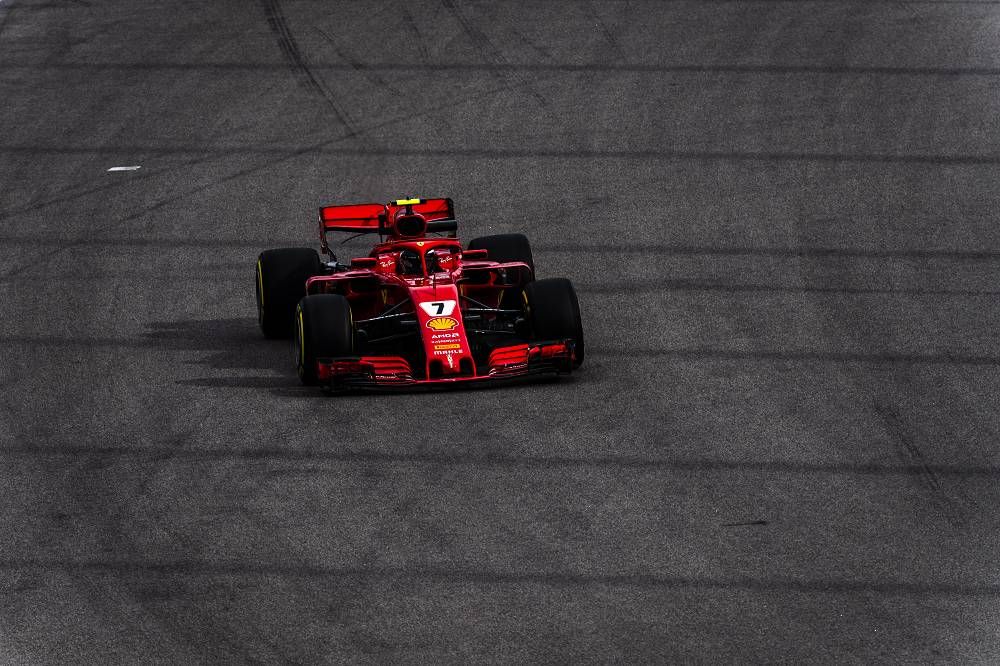
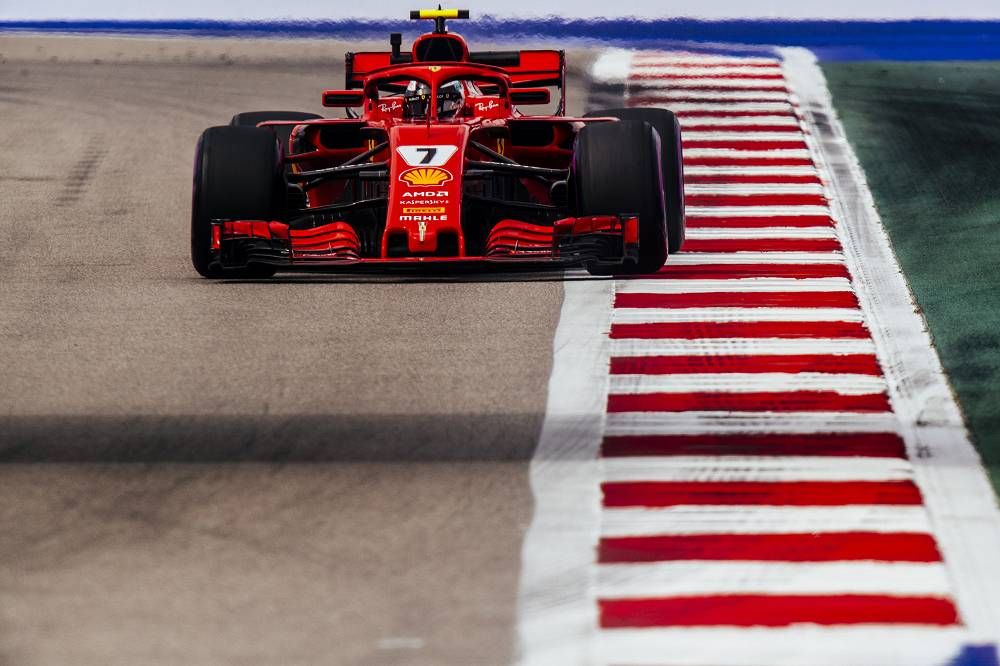
Kimi Raikkonen: “Not much happened in my race today, I was most of the time on my own. Unfortunately, this is what we kind of expected to happen. The feeling with the car was pretty good; with the first set of tires we suffered a bit with the front left, but then on the Softs the car was very nice to drive. Unfortunately yesterday in qualifying we were not fast enough and obviously today in the race it was very difficult to overtake.”
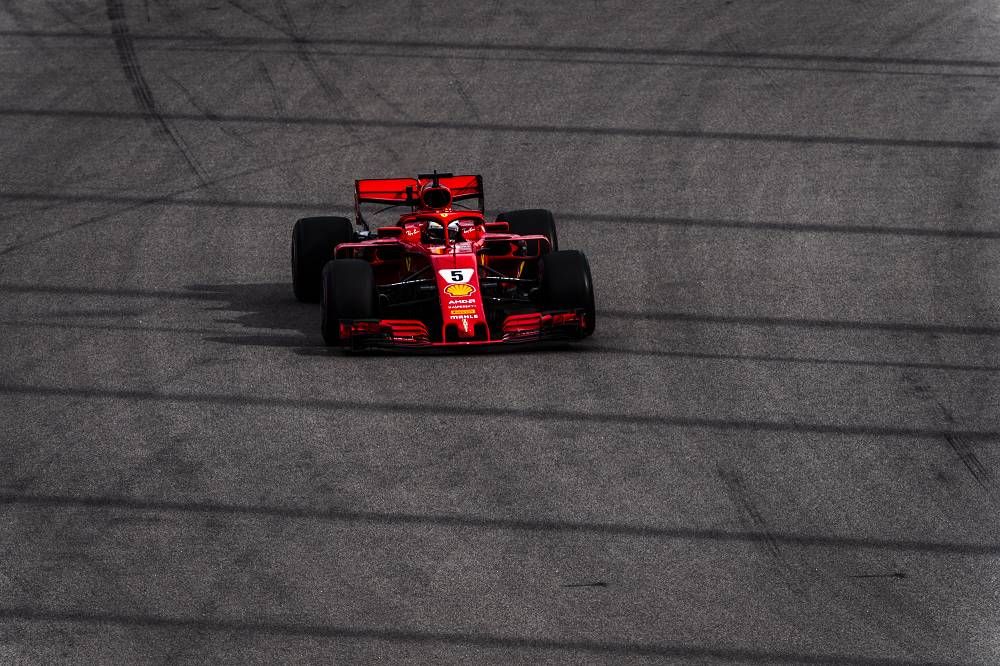
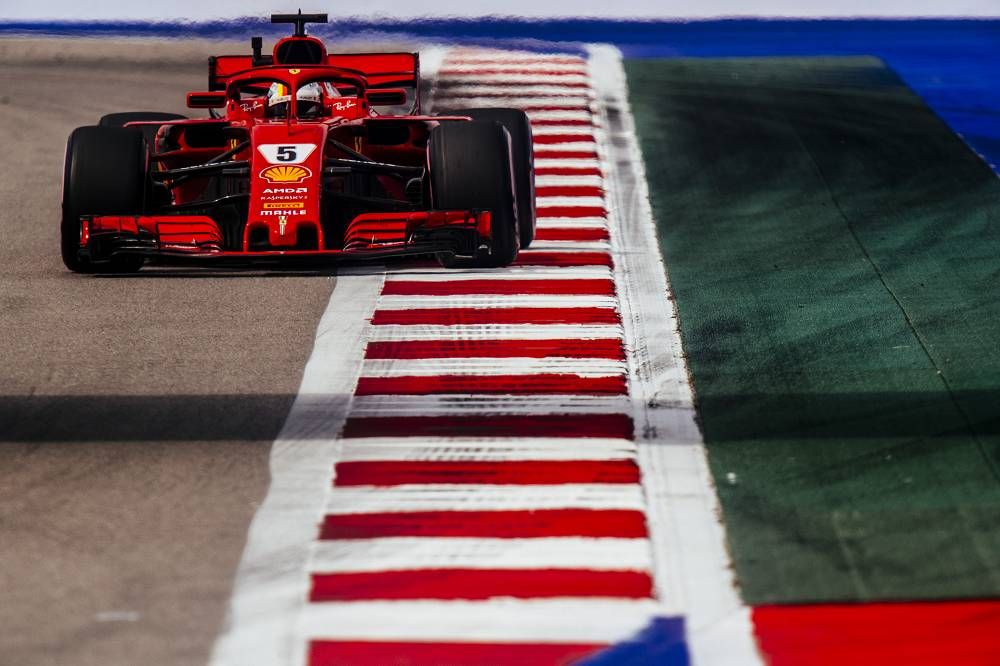
Russian Grand Prix – Third and fourth in Sochi
Posted: 30.09.2018
Source: Ferrari
Seb on the podium, Kimi right behind in Sochi
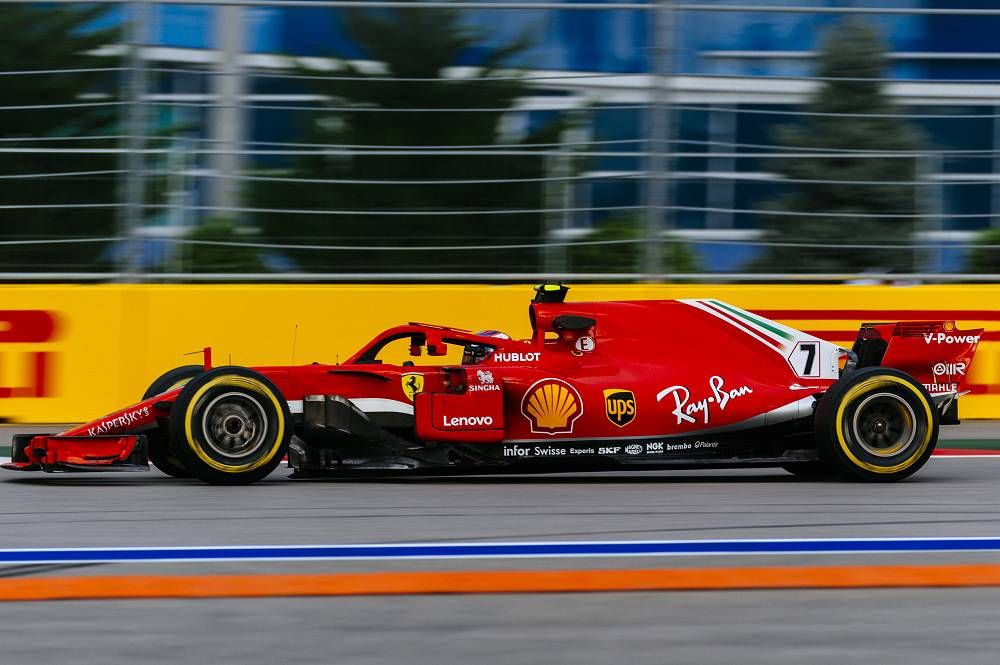
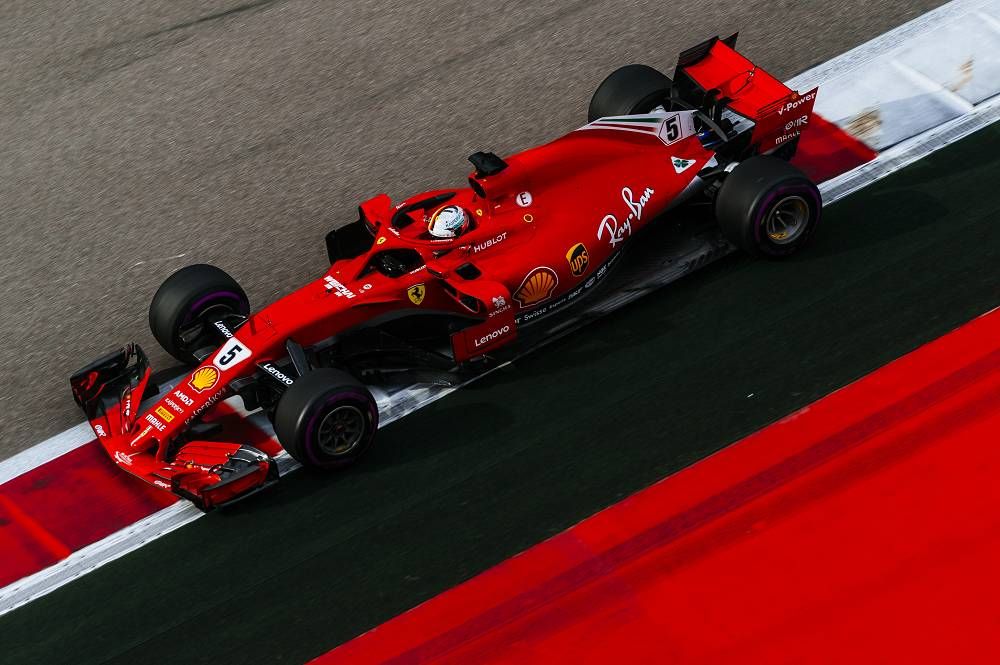
Sochi, 30 September – Scuderia Ferrari ended the Russian GP in the positions from which they started, third for Seb Vettel and fourth for Kimi Raikkonen. Now it’s time to look ahead to the next Grand Prix, which takes place this coming weekend in Suzuka.
FILM OF THE RACE – Rain before the start caught everyone’s attention, as a few drops fell on the grid, while the sun still shone. The thermometer indicated that air temperature was 24 and the track was at 27.
The first four started on Ultrasoft tyres, with the SF71Hs both on the second row. Seb tucked into Hamilton’s slipstream, getting alongside at Turn 1, but he was unable to get past as they hit the braking area. Kimi was right behind. The pace settled down in the first stint prior to the pit stops.
Bottas came in early on lap 13. Ferrari reacted, bringing Sebastian in next time round for a set of yellow Softs. The number 5 car came out in clear air behind Valtteri. Seb gave it his all and when Hamilton, who had to cover the Ferrari move, came out of the pits, he found the red car ahead of him. The two men engaged in battle, but the Mercedes man managed to retake second place. The race director announced an investigation into Vettel’s first defensive move, but it was deemed that no offence had been committed.
All this left Kimi in the lead and he tried to get out ahead of Ricciardo. He pulled it off and everyone on track was now using the harder tyre. Both Ferraris posted fastest race laps. Verstappen was leading, but he had yet to pit and the others were lined up behind him.
On lap 25, Bottas slowed and let his team-mate through. Seb continued to force the pace, setting the fastest lap on lap 32, followed by Kimi. In terms of race pace, the Ferrari seemed more competitive than in qualifying. Raikkonen did what he had to fend off Verstappen, who only changed tyres in the closing stages. Seb was slowed by backmarkers and that’s how the race ended. “We tried,” said Vettel over the radio. And we’ll try again.
Russian Grand Prix – Attacking from 2nd row
Posted: 29.09.2018
Source: Ferrari
Seb and Kimi looking forward to race opportunities
Sochi, September 29 – The qualifying session ended with P3 and P4 for Seb and Kimi respectively. Both drivers used two sets of Hypersoft tyres for their Q3 runs, but managed to make the cut in Q2 with the Options (Ultrasoft), which will be the ones they start on tomorrow, thus being able to count on running a longer first stint for the 53-lap race.
SEB: I think the car today was better than yesterday. The session was fine, and I think we could use our car to its full potential, there was nothing wrong with it, but we just weren’t very fast enough. Nevertheless, the race is tomorrow, and if I can bring the good feeling I had towards the end of the session into the race, then I think we are in a good position. For sure, I want to do everything well and I think that there is a chance to overtake after the start. We need a good getaway-but not too good, otherwise you end up giving the other guy a tow!
KIMI: Today In qualifying our car was the best we have seen this weekend . On my last attempt in Q3 I had a pretty good lap going , but then one of the Mercedes backed off in front of me and the lap did not come together. The feeling with the car was pretty good, but obviously it was not enough. Overall, It looks like we are a bit behind here, and it has been like this all weekend so far. Obviously it’s not ideal, but it is what it is. This is not an easy place to overtake, but tomorrow we’ll do our best and see what happens.
Russian Grand Prix – Improvement expected
Posted: 28.09.2018
Source: Ferrari
Seb and Kimi comment on today’s session
SEB: “Some Fridays are good, some aren’t and this one hasn’t been great for us. We are not where we want to be yet and we’ve got some catching-up to do. Today it was difficult to put the laps together, we went through the tyres too fast, especially the front left, and struggled a bit with both the fast laps and with fuel on board. There was also a lot of traffic and obviously this never helps. Now we have some work to do, as we need to find the reasons for that and come back stronger. However, I am positive as ever, as I think that tomorrow and on Sunday it will be better and we’ll find out the right things to apply. We want to put both cars on the front row tomorrow; we don’t know yet what will happen, but we’ll try to do our best as pole is the best place to start from”.
KIMI: “Usually, on Friday, it is always tricky with the tires; then the situation improves, the circuit cleans up and there’s more grip to be found. Today, the conditions we found were pretty much those we had expected. Normally, we don’t look too much into the lap times on Friday ; we try many things and learn from it. For sure there’s some work to be done and there are things to improve, but this is normal. We’ll see what tomorrow brings in qualifying, when everybody is pushing to the maximum.
Russian Grand Prix – “All of us are very motivated”
Posted: 27.09.2018
Source: Ferrari
Scuderia Ferrari drivers comments
KIMI: “It’s really nice to come here, I enjoy this place and the track . The circuit itself it’s not very hard on the tires, or at least, that has been the case in the past years; they seem to last forever, so you never really make the difference on the tire war, anywhere, and this makes it very difficult to overtake.
Usually, this circuit doesn’t bring about very exciting races. The first time we came here it was quite tricky to make the tires work, but as the tarmac gets older the grip increases. We’ll see how it is this year. It is one of those circuits where you think you can always push more and more, but if you try, you actually end up going slower.
It’s a very nice circuit, but not so easy to make the best lap time. We always aim at doing the best we can and then we will see what happens. We’ll push hard this weekend and try to maximize every race”.
SEB: This track in Sochi is a fast one, with long straights and obviously we expect to do well as we are one of the top three teams, but I don’t have a clear idea of what will happen. After tomorrow we’ll see how the other cars work and how we feel with ours.
We are some points behind in the championship and we need to catch up to make sure we are there; that’s our target and the best way to do it is to finish ahead. That’s what we generally try to do, so our plan doesn’t really change from race to race. We try to give everything we have and I still believe we have a chance to win.
We always have a look at what we did over the weekend and certainly after qualifying in Singapore we didn’t get the best out of our package, but we tried everything during the race. I think we had a good start there and then we tried to use all the opportunities we had, but it didn’t work well enough; we didn’t perform the best way and the others were faster than us. So, we need to give credit to the others.
Our car is different this year as last year I think it was a surprise for many people to see we were so competitive, but this year everyone knows it is strong. I think we don’t have to get distracted by the result, but we need to focus on the job we have to do and see where we are.
Some races didn’t go the way we wanted to, but all of us are very motivated; the guys in the team have been nice to me – and they meant it – and this really helps me to overcome these races. I get all my energy from outside, thanks to our fans and supporters. It’s great to receive positivism and support from all of them.
Russian Grand Prix – On the shores of the Black Sea
Posted: 26.09.2018
Source: Ferrari
Sochi kicks off another double header
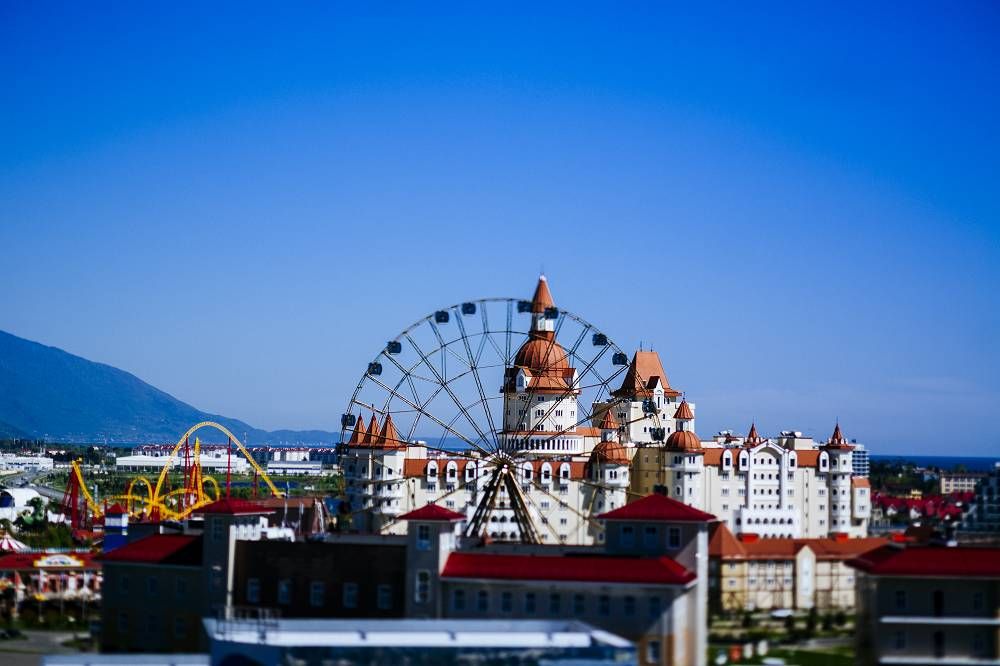
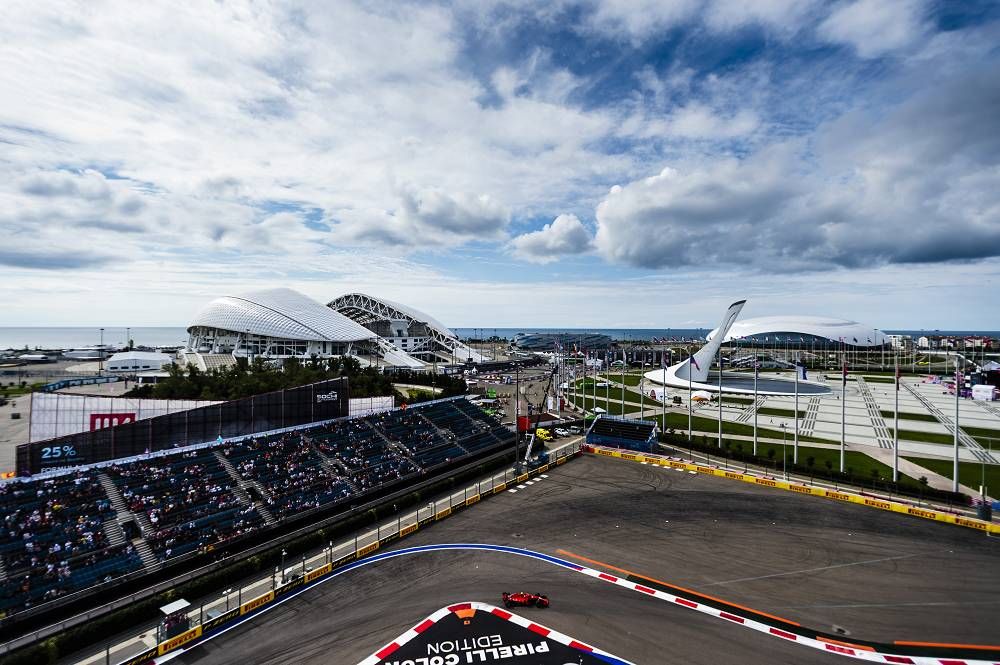
This will be the fifth Russian Grand Prix in the modern era, but the event has come from a long way back. Over a hundred years ago, in 1913, even before the creation of the USSR, the first race was run. At the start of this century, racing driver Sergei Zlobin drove in some tests and there was a stillborn project to build a race track on Nagatino island, which isn’t actually an island, but a district. Other ideas, also in the Moscow area, came to nothing. Eventually, the decision was made to move 1600 kilometres to the south of the capital, to the shores of the Black Sea. The rest is history.
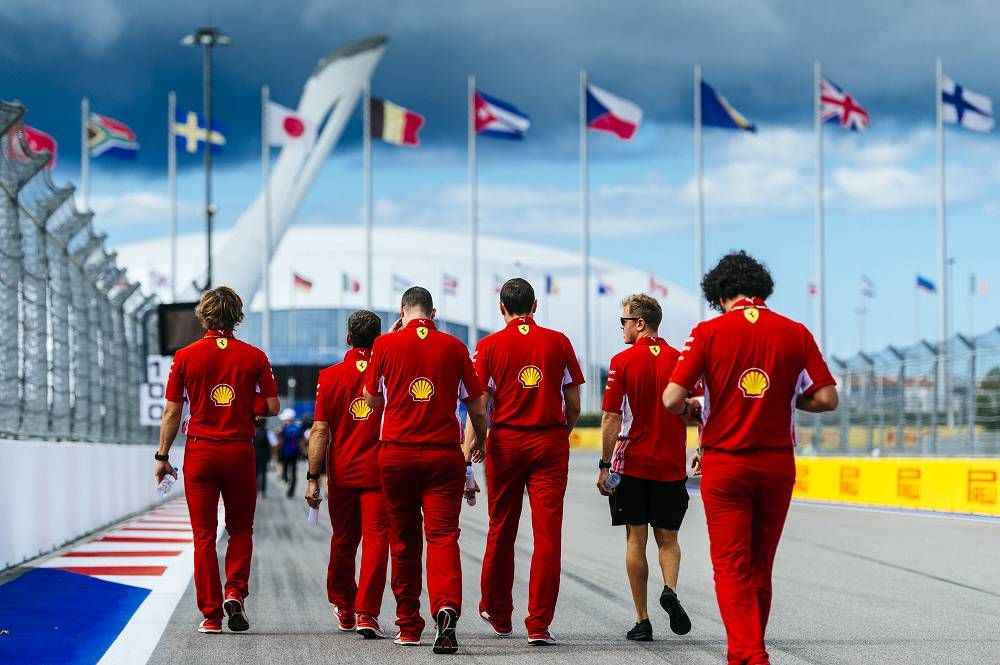
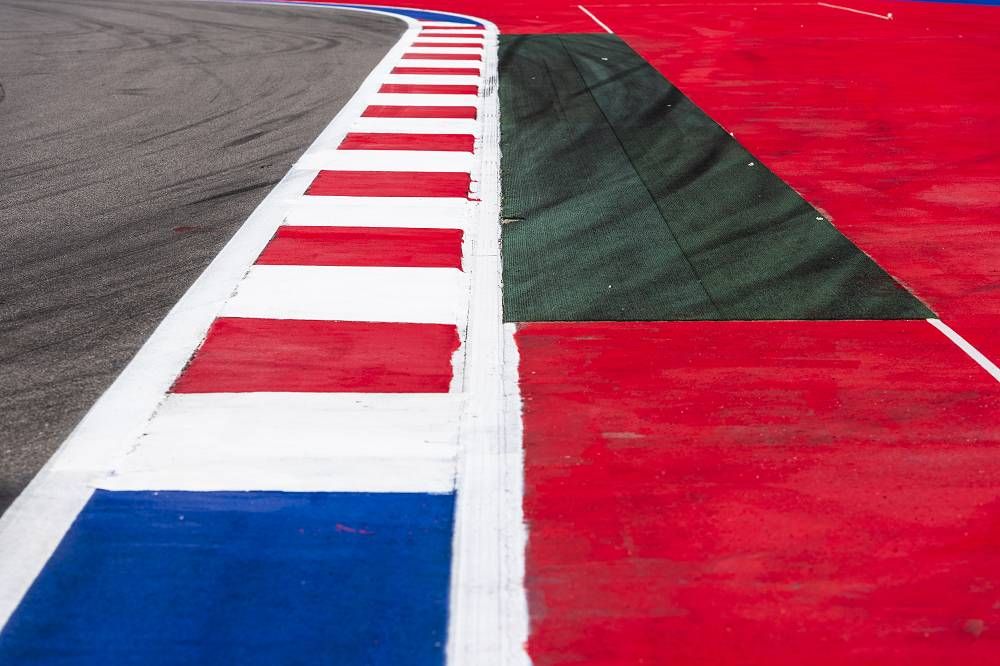
The Sochi track, which is actually closer to the town of Adler, wends its way through the buildings of the winter Olympics. It features a particularly smooth track surface, which is well suited to the softer tyre compounds, the Soft, Ultrasoft and making its first appearance here this weekend, the Hypersoft. Temperatures should be of the order associated with a late summer. The track combines a very fast section with a sector featuring right-angle turns. The run from the start line down to the first corner is a little bit more than 400 metres, but in reality the first braking zone is much further down the track, so that, after the start, drivers can get in the slipstream of those ahead. The 3-4 turn, a long left handed semi-circle, is actually taken almost flat-out. Fuel consumption is high and mechanical grip is not that excessive, given the need to balance the amount of downforce from the wings, for the fast sections.
Russia marks the start of another back-to-back, with two races in two weeks. Come the Monday after the race, the crew and equipment of Scuderia Ferrari will already be Japan bound, for the classic event at Suzuka.
The 2018 Cavalcade Classiche brings the timeless charm of Ferrari to Sardinia
Posted: 24.09.2018
Source: Ferrari
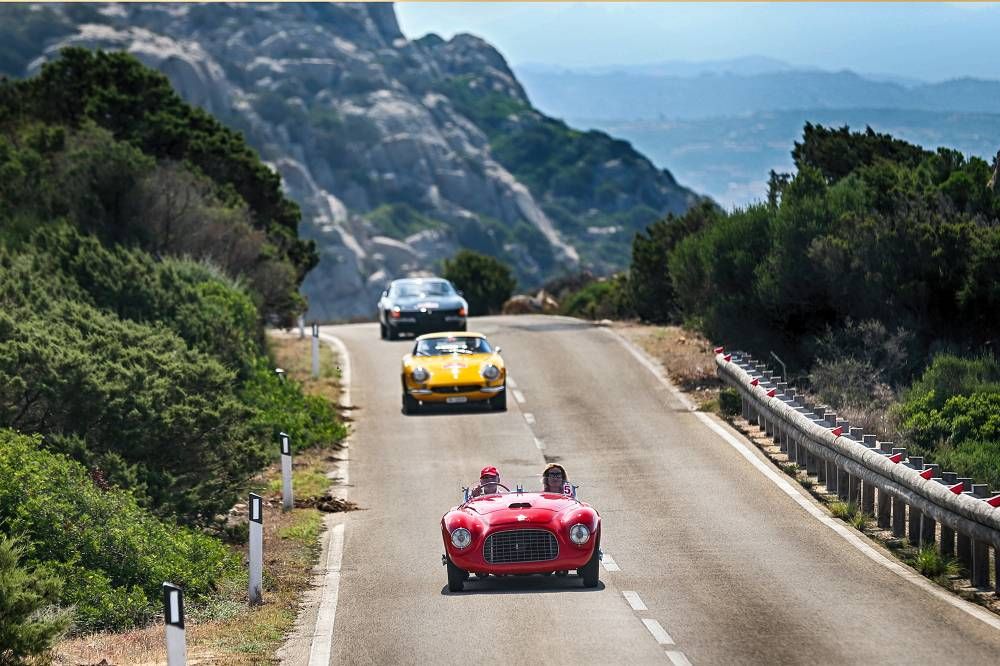
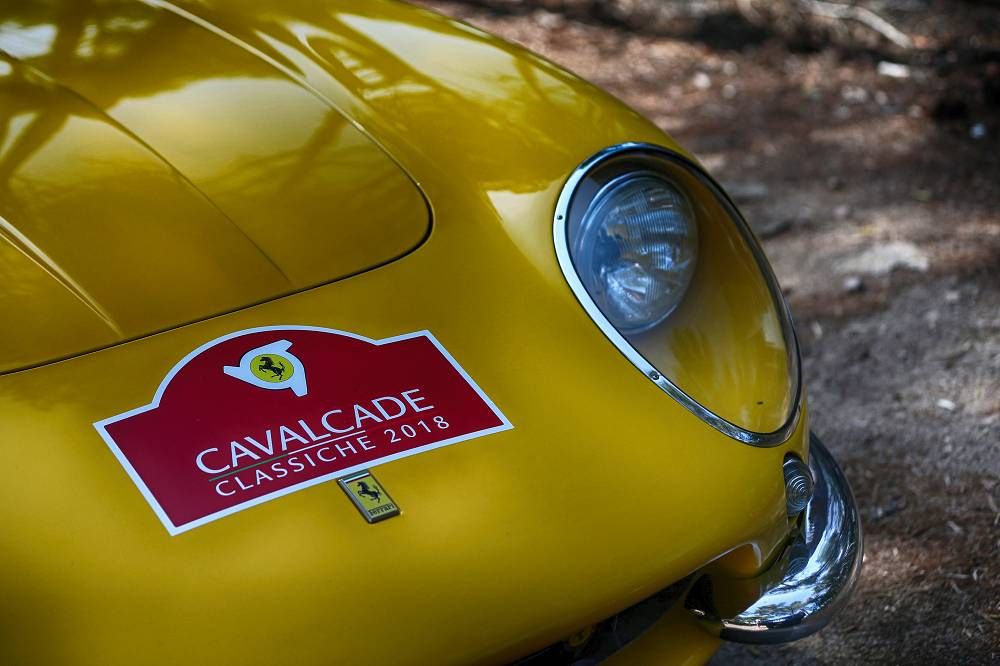
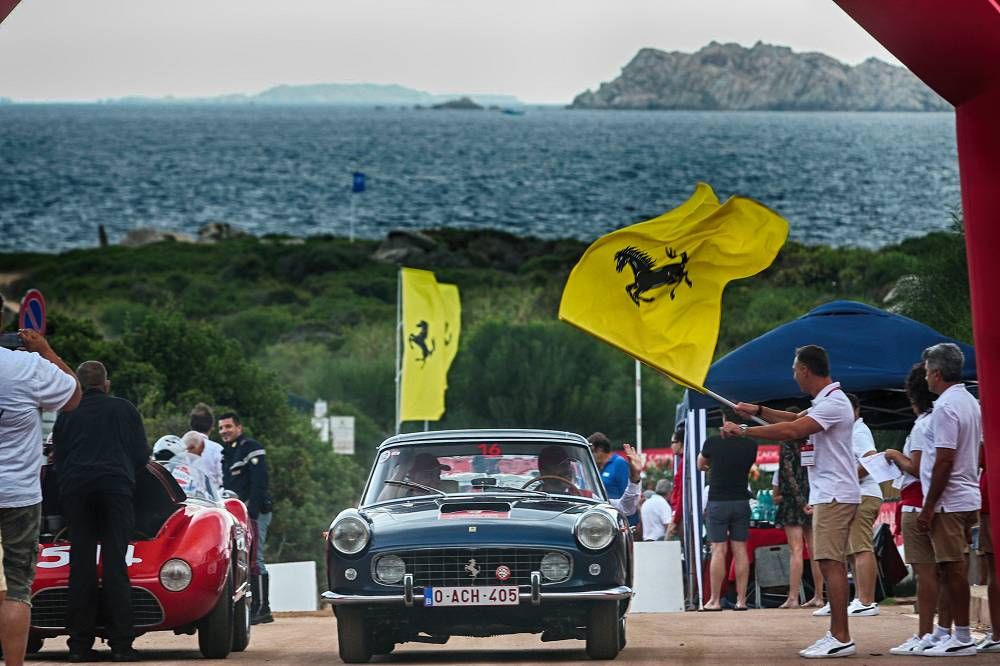
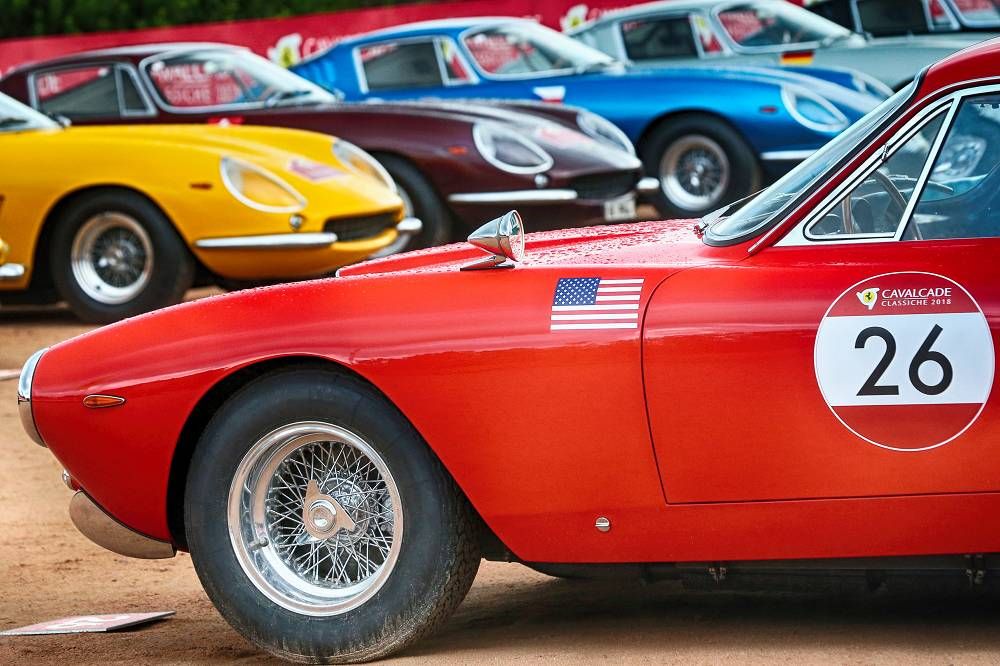
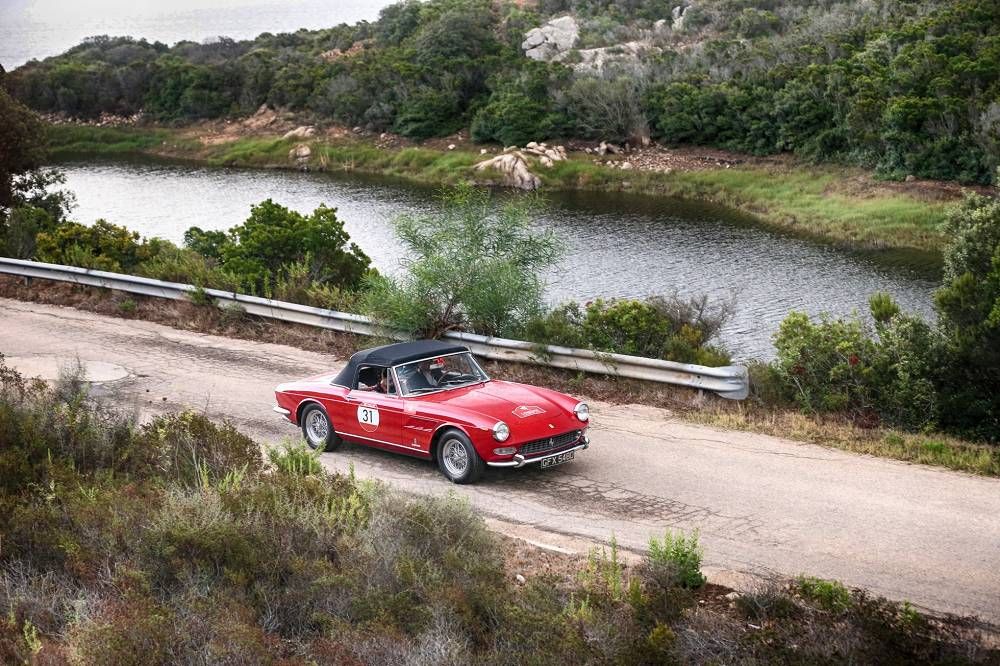
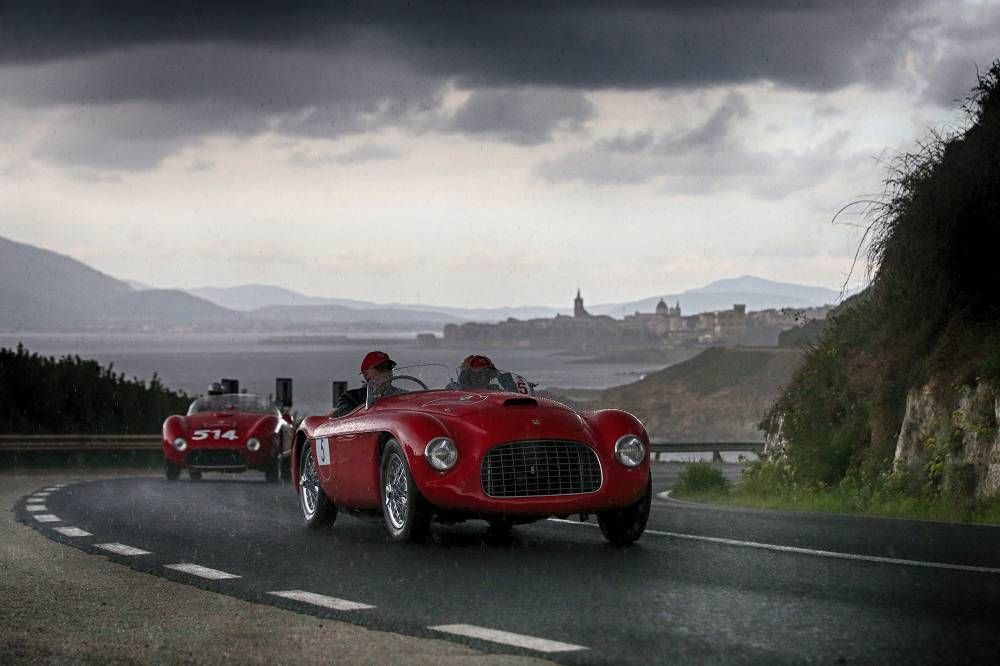
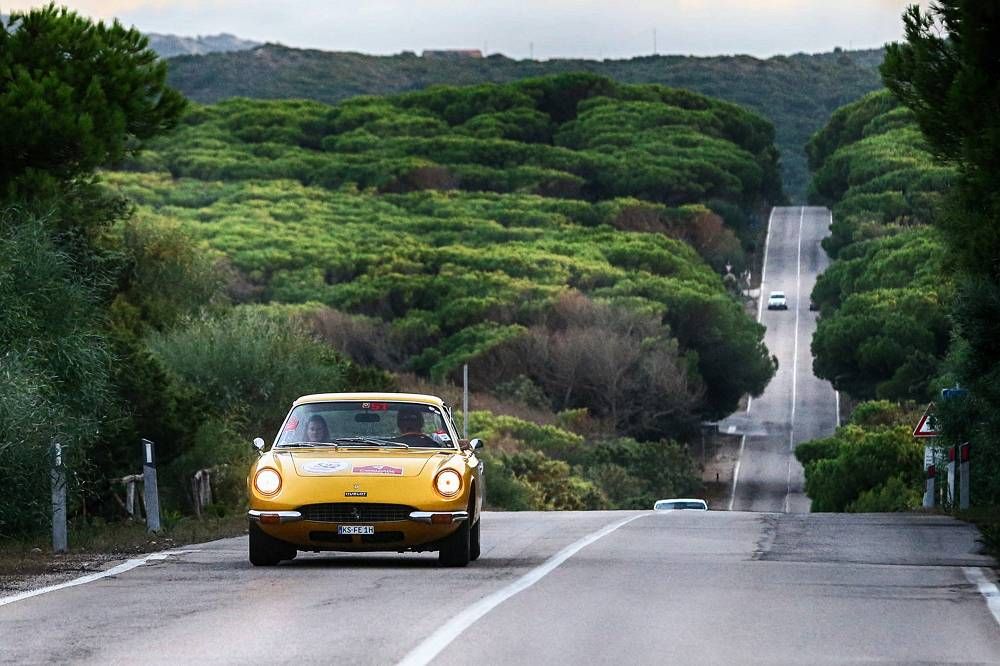
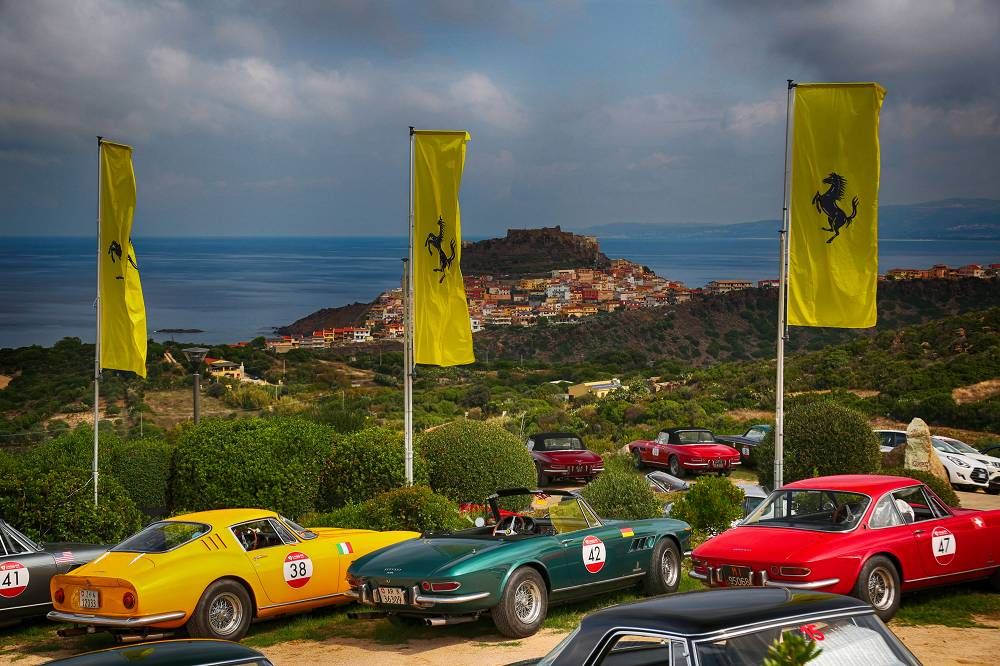
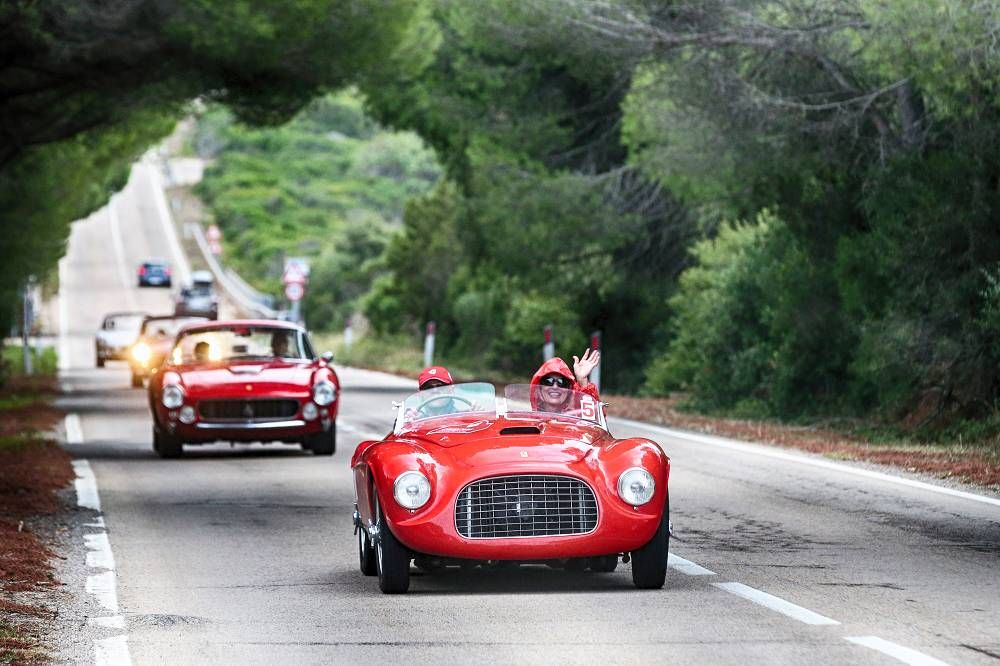
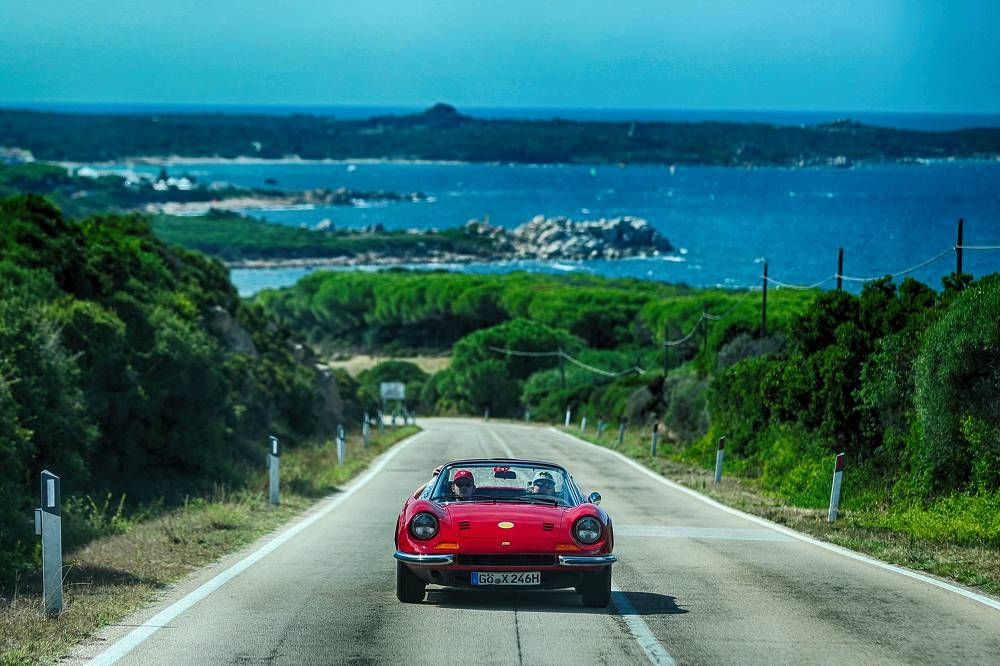
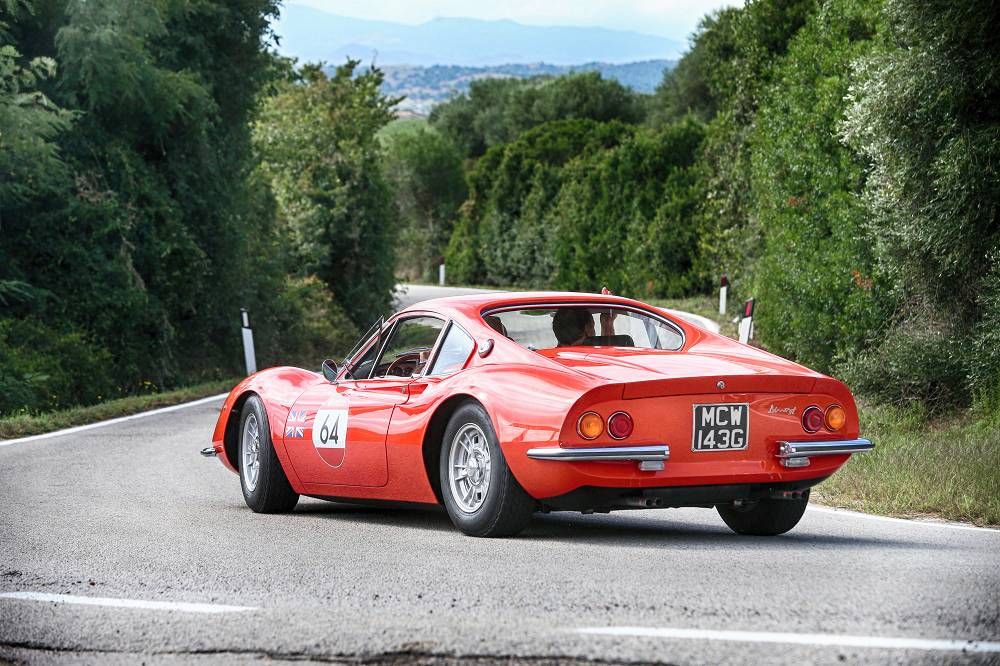
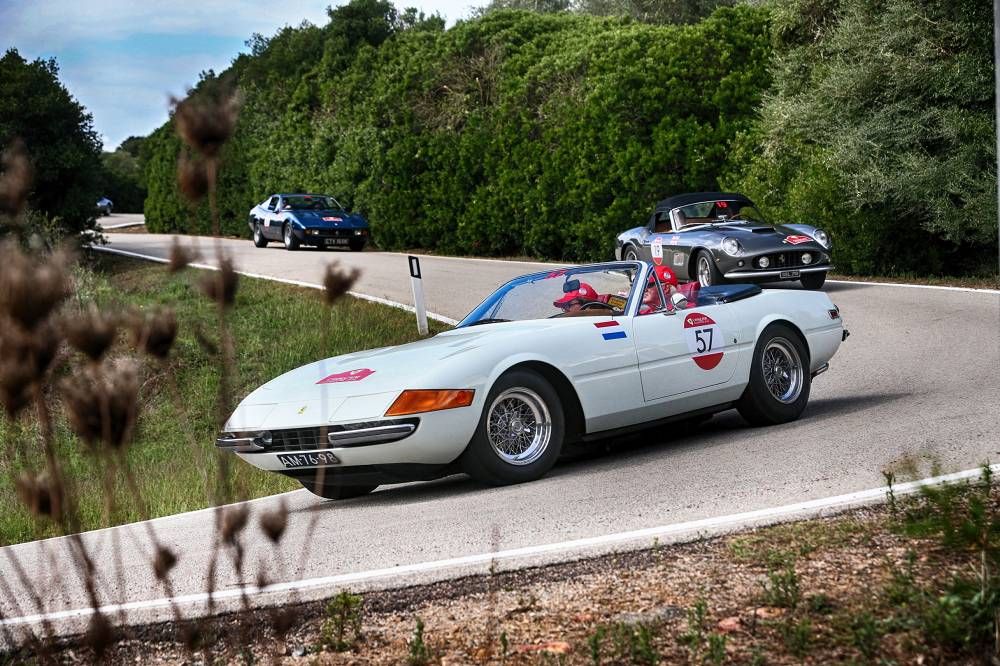
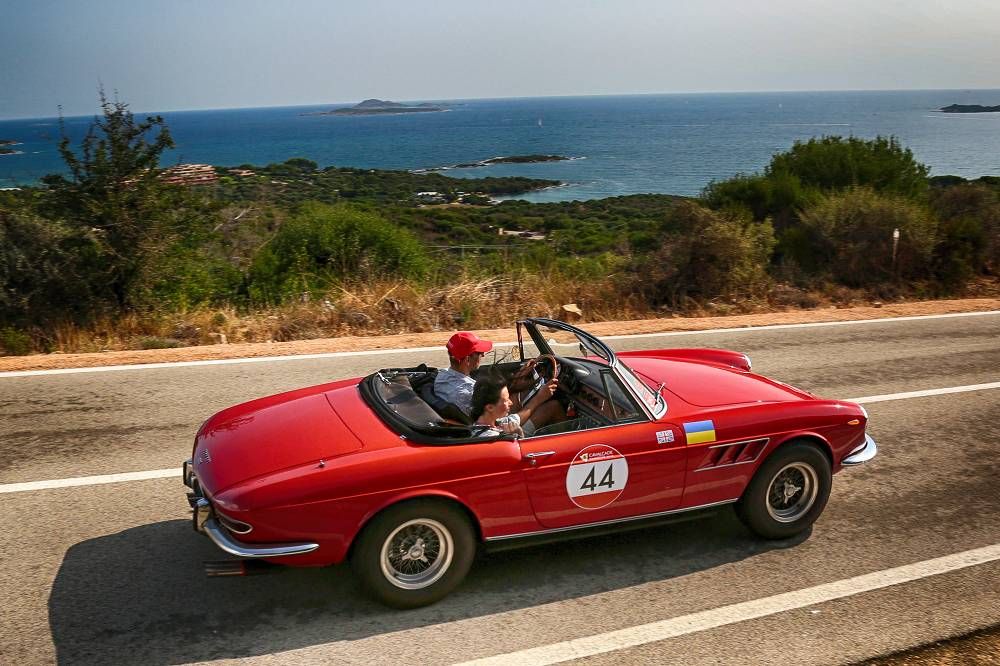
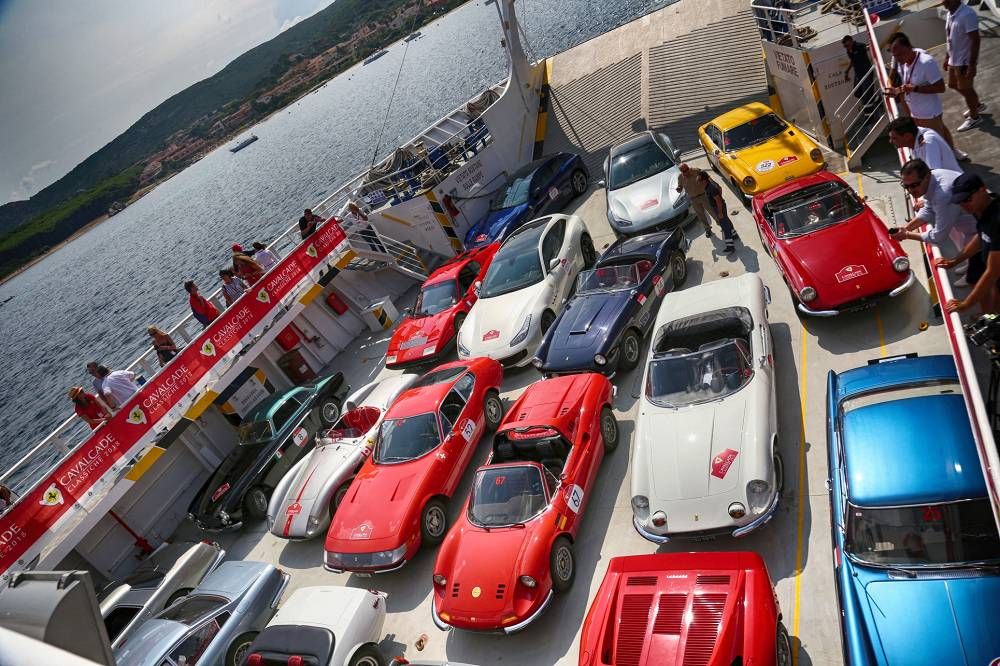
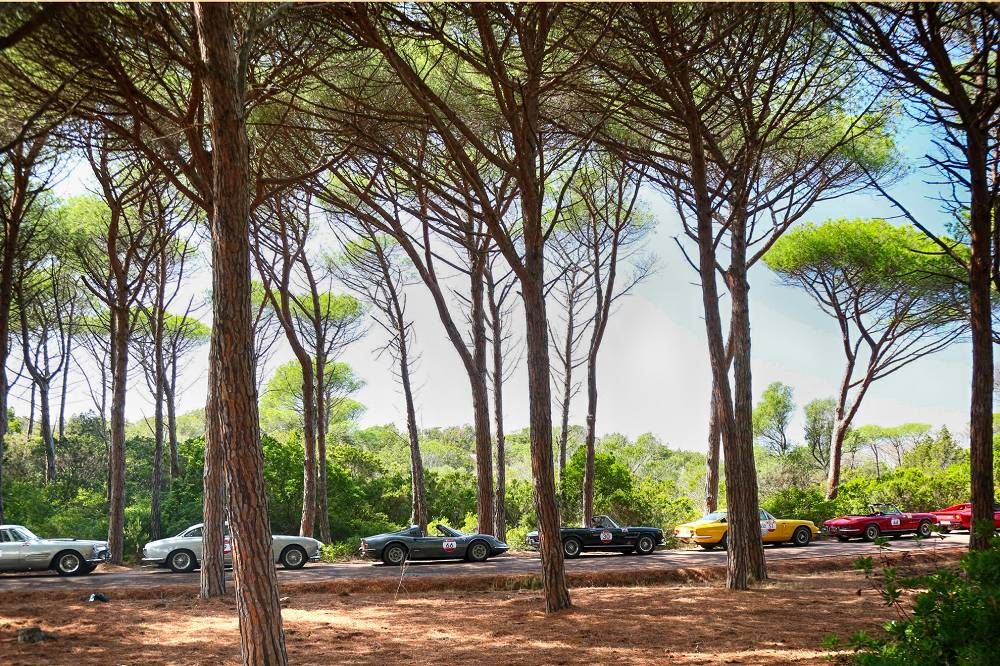
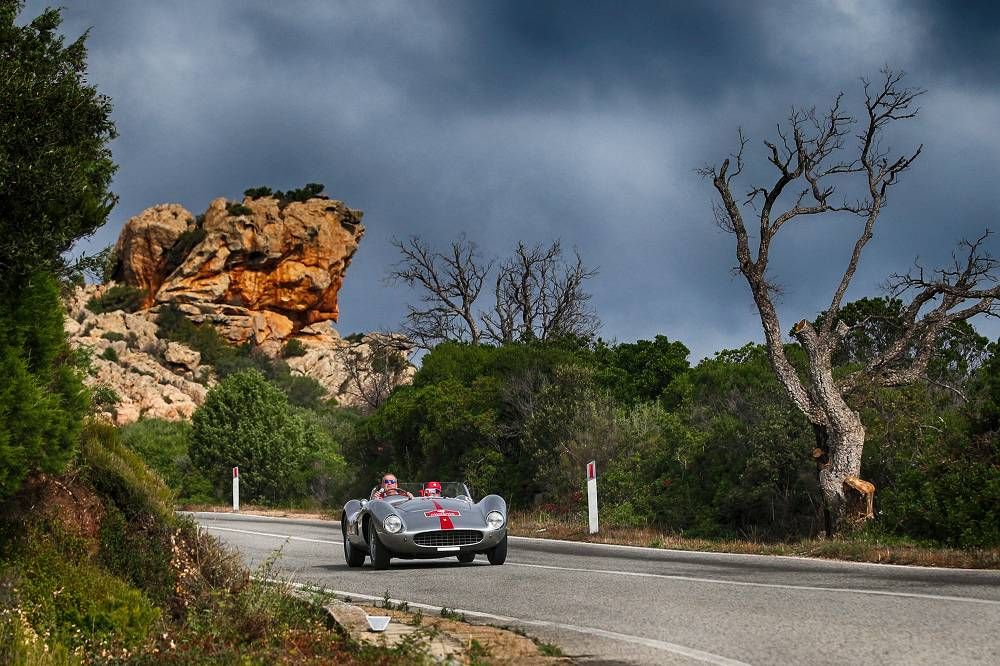
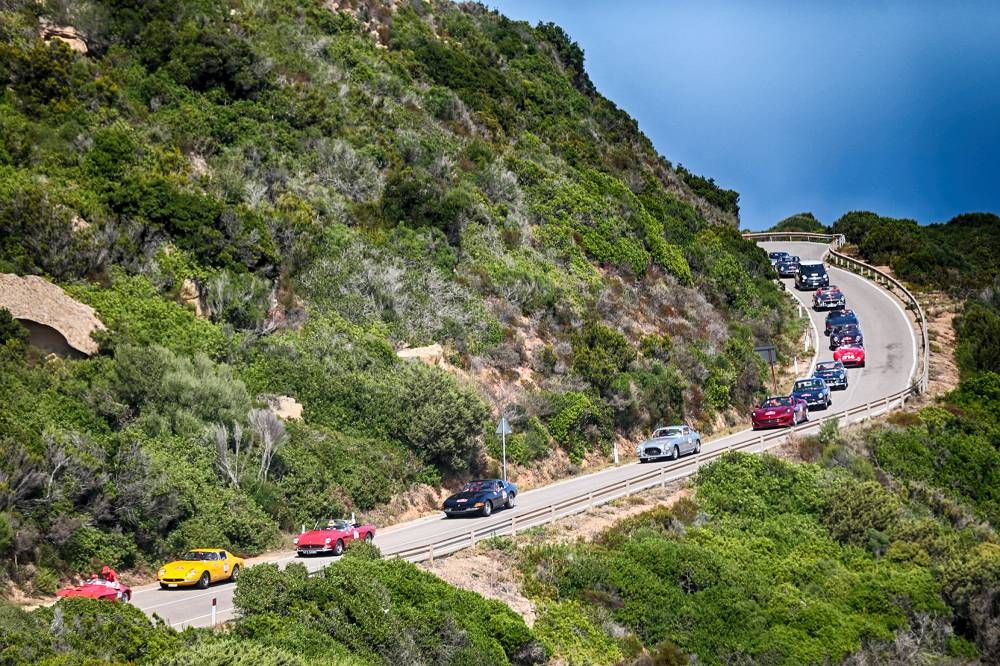
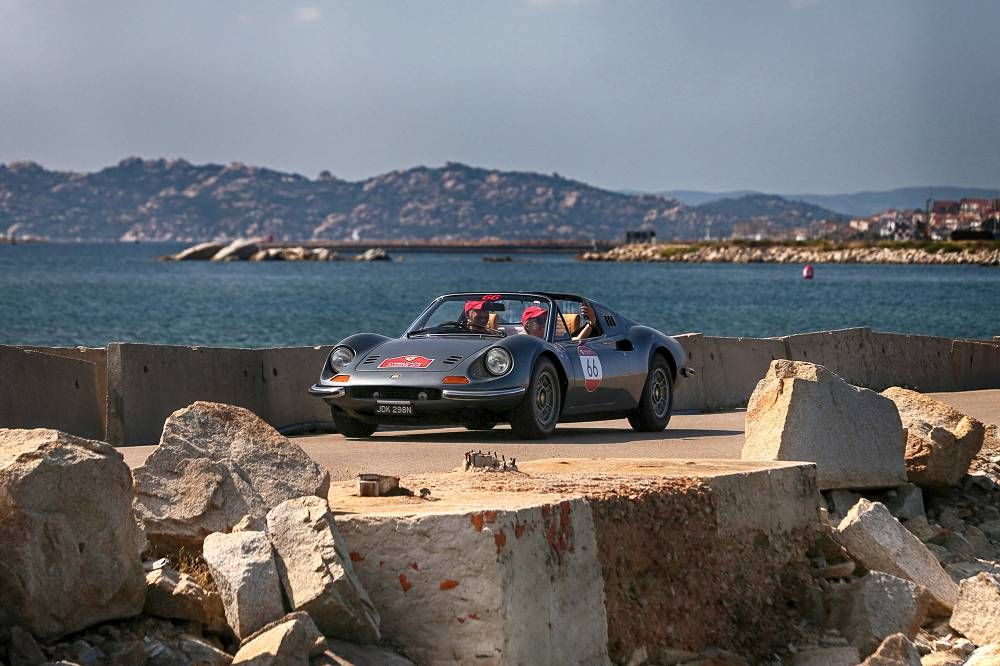
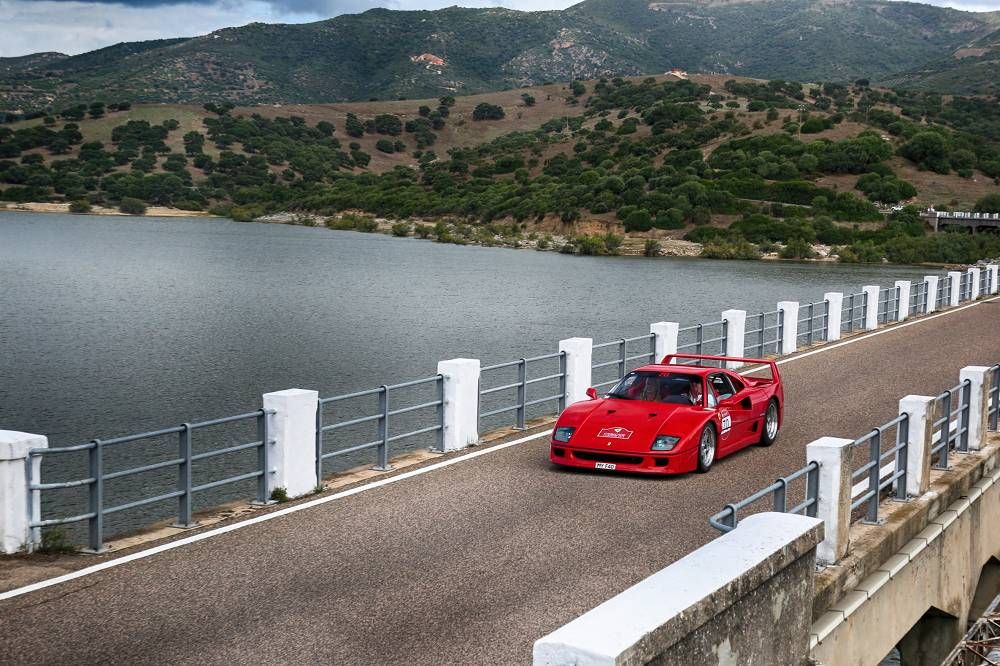
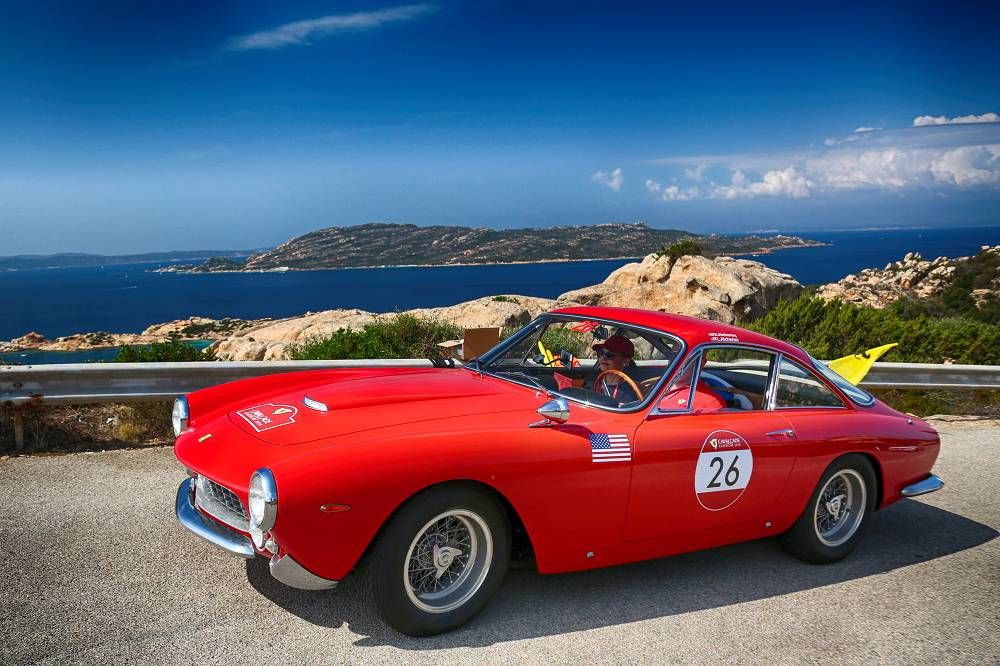
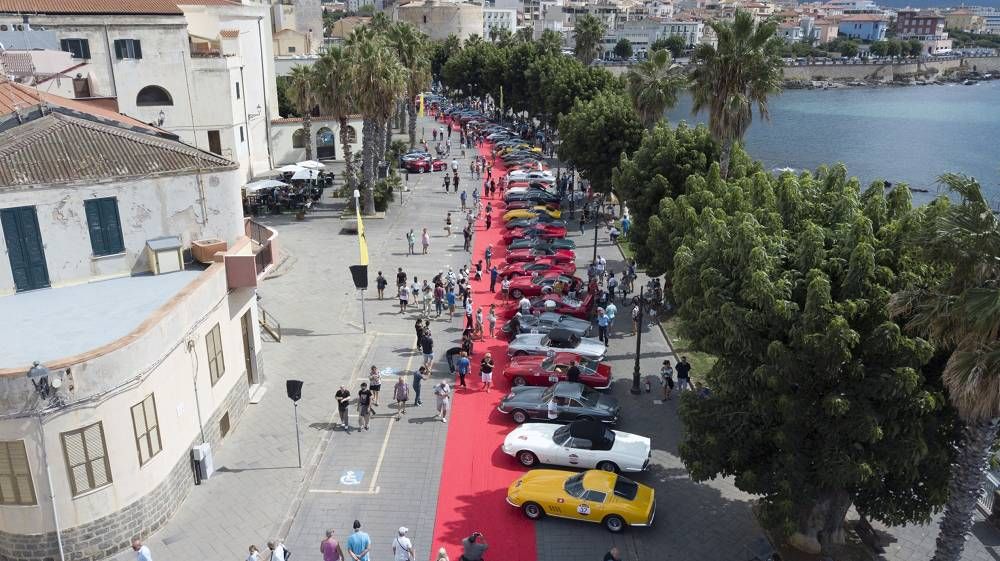
Maranello, 24th September 2018 – More than 70 classic Ferraris from all over the world gathered in Sardinia for the second edition of the Cavalcade Classiche.
The event, which attracted clients from over 20 different nations, was created to allow Ferrari owners to share their passion for driving the cars that wrote some of the most glorious chapters in the Prancing Horse story. A fantastic celebration of cars and driving not only for the owners themselves but for all of the enthusiasts that had the opportunity to admire some of Ferrari’s most famous masterpieces on the roads of Sardinia: the 500 TRC, the 340 America, the 250 Europa, the 750 Monza and the 250 California SWB to name but a few of the historic models that made up the exclusive field.
Staged between September 18th and 22nd, the Cavalcade started out from Valle dell’Erica and then explored various areas of beautiful Northern Sardinia each day, from Alghero to the Valle della Luna, from Castelsardo to Porto Cervo and the island of Caprera. After covering over 800 km, the Cavalcade ended, as per tradition, with a spectacular parade and official presentation of all the cars to the public of Maddalena.
F1 Clienti/XX Programmes – Over 30 dream cars in Barcelona
Posted: 19.09.2018
Source: Ferrari
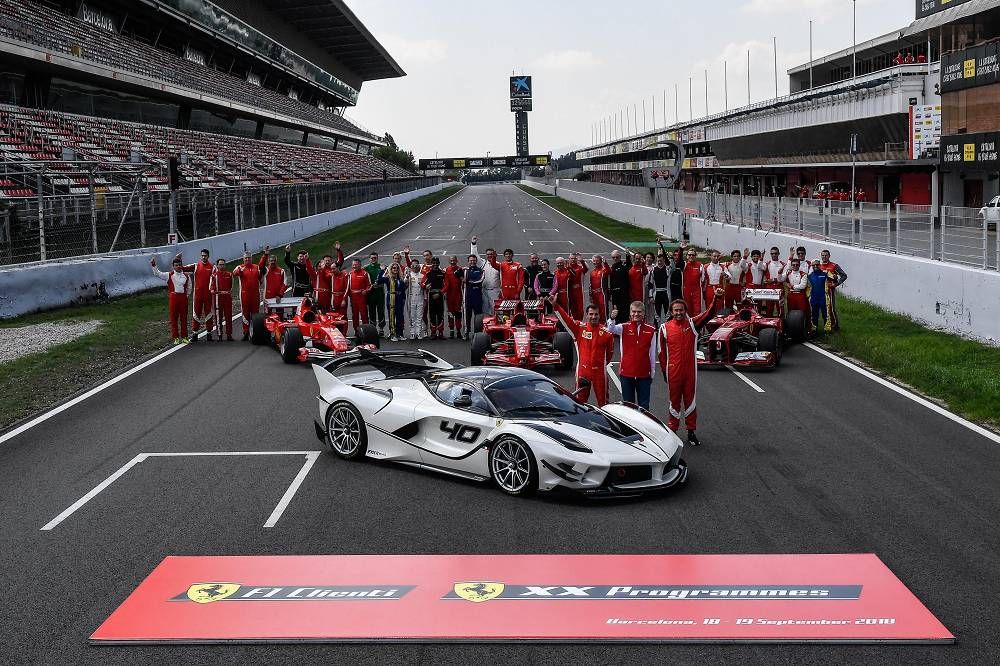
Barcelona, 19 Sept 2018 – More than thirty F1 Clienti and XX Programmes cars took turns in two days of tests on the Barcelona track, at Montmelò, thrilling and entertaining the special customers who let rip on the ups and downs of a track that has hosted the Spanish Formula 1 Grand Prix since 1991.
Semi-automatic jewel. The legendary F1-89 single-seater, a car that holds a special place in the history of the category, was also present. This was the first car equipped with a semi-automatic transmission and gear shifter on the steering wheel, an extraordinary innovation that hugely reduced the work of the drivers. Previously, continuous use of the gear lever had taken its toll on their hands. As well as driving comfort, this innovation also meant that drivers never had to take either hand off the steering wheel, thus reducing errors. For the F1-89 the situation was almost paradoxical since it never had the chance to compete on this track because the system was only completed in 1991.
The winners. There were also various cars on the track from the 2000s, including a number of Spanish Grand Prix winners. One of these was the F2001, which dominated the race with Michael Schumacher, or the 2004, which, again with the German, monopolised the season and won the title at Spa-Francorchamps at the end of August. The F2007 also put in an appearance. Felipe Massa drove this car to his fourth career win, while Kimi Räikkönen triumphed the following season with the F2008. There was also space for the F138 with which Fernando Alonso gained victory at home in the 2013 season.
XX Programmes. In addition to the Formula 1 single-seaters, finding in Barcelona their perfect natural environment, the cars of the XX Programmes also provided entertainment and fun. Ten FXX Ks and FXX K EVOs took to the track, with their incredible 1050 hp engines. Customers were free to fully exploit the potential of the hybrid car on the long straight to the finish line, while the 599XX and 599XX EVO used their sophisticated aerodynamics to stick to the asphalt and reach high cornering speeds. A truly unmissable spectacle.
Ferrari Corse Clienti – The 2019 calendars
Posted: 19.09.2018
Source: Ferrari
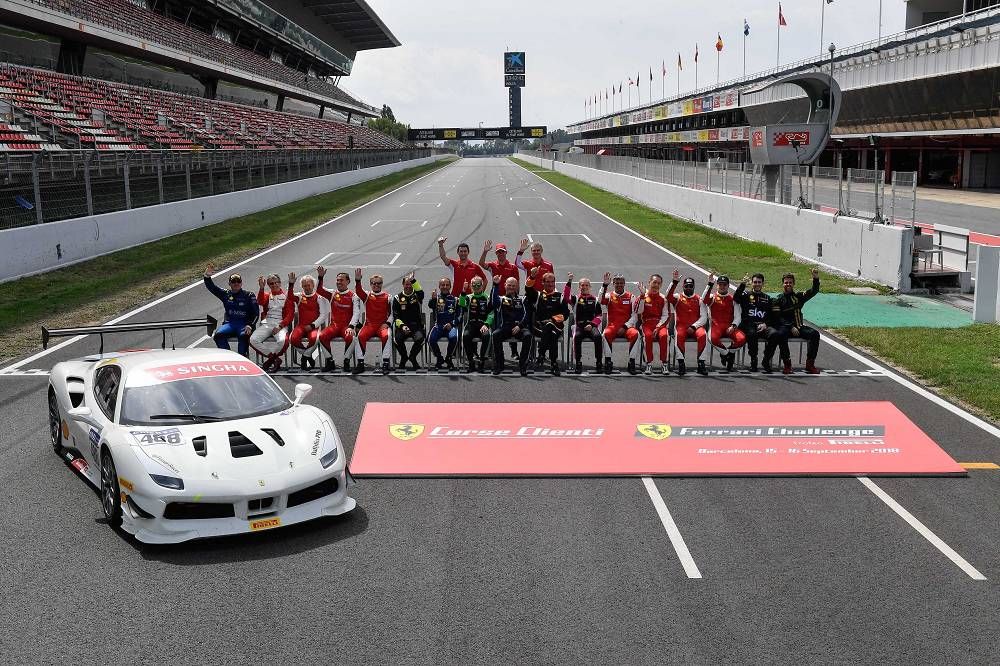
Maranello, 19 September 2018 – Ferrari has released the 2019 calendars of the three Ferrari Challenge series and the exclusive Corse Clienti activities of F1 Clienti and XX Programmes.The three one-make series (Europe, North America and Asia-Pacific) have a programme of six races each with the addition of the Finali Mondiali, which will be announced later.
Ferrari Challenge Europe. Bahrain makes its European series debut in February (15-17) with a night race, followed by the stages in Valencia (29-31 March) and Spielberg (3-5 May), which is back on the calendar for the first time since 2009. Then in June, after a two-season gap the series will again coincide with the legendary 24 Hours of Le Mans. From 5 to 7 July, the 488 Challenge cars will race at the Nürburgring, during the Ferrari Racing Days, while the sixth round will be held at Imola from 27 to 29 September.
Ferrari Challenge North America. The North American series will start at the Circuit of the Americas in March (8-10) and continue on the legendary Sebring track from 5 to 7 April. The third round will take place at Laguna Seca during the Ferrari Racing Days in North America (10-12 May). The meeting in June (7-9) will be combined with the Canadian Formula 1 Grand Prix, while round five will bring the championship to one of the most famous circuit in the world, Indianapolis (26-28 July). The last round before the Finali Mondiali will be at Homestead from 6 to 8 September.
Ferrari Challenge Asia-Pacific. The Asia-Pacific series (APAC) will twice overlap with Formula 1. The season opens in Melbourne from 15 to 17 May before continuing in Sepang with a night race (19-21 April). At the end of May (24-27), Shanghai will host its usual second round, which will be followed by two Japanese stages: at Motegi (5-7 July) and at Fuji (30 August – 1 September). The last round before the Finali Mondiali will accompany the Formula 1 Grand Prix in Singapore.
F1 Clienti/ XX Programmes. The exclusive activities of F1 Clienti and XX Programmes will follow their own calendar, occasionally overlapping with the dates of the various Ferrari Challenges. The season kicks off in Bahrain from 14 to 17 February and then moves to Valencia on 2 and 3 April. The third and fourth rounds will be held Stateside, at Sonoma (7-8 May) and Laguna Seca (10-12 May during the Ferrari Racing Days), before moving to Suzuka on 5 and 6 June. The single-seaters and laboratory cars for exclusive use on the track will visit the Nürburgring for the European Ferrari Racing Days from 5 to 7 July, followed by another day on the 8th for customers who want to try out their FXX, 599XX, FXX K and FXX K EVO cars on the 20km-plus Nordschleife track. Two Italian dates will precede the Finali Mondiali: Vallelunga (2-3 September) and Imola (1-2 October).
FERRARI CHALLENGE EUROPE
1) 15-17/2 – BAHRAIN (NIGHT RACE)
2) 29-31/3 – VALENCIA
3) 3-5/5 – SPIELBERG
4) 12-15/6 – LE MANS
5) 5-7/7 – NÜRBURGRING
6) 27-29/9 – IMOLA
7) TBA – FINALI MONDIALI
FERRARI CHALLENGE NORTH AMERICA
1) 8-10/3 – AUSTIN
2) 5-7/4 – SEBRING
3) 10-12/5 – LAGUNA SECA (FERRARI RACING DAYS)
4) 7-9/6 – MONTREAL (F1 GP)
5) 26-28/7 – INDIANAPOLIS
6) 6-8/9 – HOMESTEAD-MIAMI
7) TBA – FINALI MONDIALI
FERRARI CHALLENGE ASIA-PACIFIC (APAC)
1) 15-17/3 – MELBOURNE (F1 GP)
2) 19-21/4 – SEPANG (NIGHT RACE)
3) 24-27/5 – SHANGHAI
4) 5-7/7 – MOTEGI
5) 30/8-1/9 – FUJI
6) 20-22/9 – SINGAPORE
7) TBA – FINALI MONDIALI
F1 CLIENTI/XX PROGRAMMES
1) 14-17/2 – BAHRAIN (NIGHT AND DAY)
2) 2-3/4 – VALENCIA
3) 7-8/5 – SONOMA
4) 10-12/5 – LAGINA SECA (FERRARI RACING DAYS)
5) 5-6/6 – SUZUKA
6) 5-7/7 – NÜRBURGRING (8/7 XX PROGRAMMES ON THE NORDSCHLEIFE)
7) 2-3/9 – VALLELUNGA
8) 1-2/10 – IMOLA
9) TBA – FINALI MONDIALI
Ferrari Monza SP1 and SP2: the first in a new concept of limited series ‘Icona’ cars
Posted: 02.10.2018
Source: Ferrari

Models inspired by the Sports cars that made history
Paris, 2 October 2018 – The Ferrari Monza SP1 and SP2 are the forerunners in a new concept, known as ‘Icona’ (Icon), that taps into a leitmotif of the most evocative cars in the company’s history to create a new segment of special limited series cars for clients and collectors. The intention is to use a modern aesthetic to reinterpret a timeless style, with technologically advanced components and the highest performance possible through continuous innovation.
The Ferrari Monza SP1 and SP2 are inspired by barchettas of the 1950s which were driven to victory in international motor sport not just by official works team drivers from the Scuderia, but also by a legion of gentlemen drivers who, in those years, frequently found themselves wheel to wheel with legendary professional drivers of the era.
The first ever Ferrari to be referred to as a barchetta was the open-top version of the 1948 166 MM. The name was coined by Giovanni Agnelli who, upon seeing the car for the first time at the Turin Motor Show that year, commented that it was less like a car and more like a barchetta, referring to the Italian for a small speed boat. The Touring-bodied 166 MM barchetta wrote Ferrari’s name firmly in the history books, winning first the Mille Miglia and then the grueling 24 Hours of Le Mans in 1949. This model was followed by other extraordinarily successful Ferrari Sports cars, such as the 750 Monza and 860 Monza which were inspiration for the name of the new models.
Barchettas were similar to spiders in form (two seaters), but had no roof or weather equipment. Instead of a full windscreen, they were equipped with just a small screen (single or wrap-around) and a removable tonneau cover over the passenger side. The Monza SP1 and SP2 are similar in concept, although the main difference is that they can be ordered either as a single-seater or as a two-seater.
The result is a car that seems sculpted by the wind. It is the purity of the styling elements that impresses – an aesthetic that is futuristic but, at the same time, a respectful yet un-nostalgic homage to the past.
Enzo Ferrari used to say that “If there is such a thing as a soul, engines have one”. This model’s soul is, as is true of all Ferraris, in its engine. The Ferrari Monza SP1 and SP2 are equipped with the most powerful naturally-aspirated V12 ever produced by Ferrari. Thanks to specific areas of development, the power of the 812 Superfast’s 6.5 litre has been increased by 10 cv to 810 cv at 8500 rpm with a slight increase in torque to 719 Nm at 7000 rpm.
Just like on racing cars, extensive use of carbon-fibre has been made throughout the construction of the Monza SP1 and SP2 to make them light and responsive and to enhance their sporty, aggressive visual appeal.
As these are completely en plein air sports cars with no windscreen, one of the biggest challenges was to create an aerodynamic solution that would ensure the driver enjoys the performance of the cars without being affected by issues caused by the barchetta configuration. The result was the patented “Virtual Wind Shield” which is integrated into the fairing ahead of the instrument panel and the steering wheel, providing exceptional driving comfort.
Design:
Exterior
Racing has always greatly influenced Ferrari design language and the Monza SP1 and SP2 are linked to the marque’s glorious past by an invisible bond. Their design, in fact, embodies the elegance, performance and innovation that are such an intrinsic part of Ferrari’s past and present.
From the point of view of pure creativity, the seductive images of 1950s Ferrari barchettas, that evoke in so many ways the atmosphere of the races of the day, were an invaluable source of inspiration.
The Ferrari Styling Centre’s designers gave the barchetta concept an absolutely modern connotation thanks a new and highly personal take on the theme. But there are no nostalgic references, no elements borrowed directly from the past. The Monza SP1 and SP2 were designed like a modern single-seater for a new generation of gentlemen drivers.
The Monza SP1 and SP2 design language is clearly visible in its elegant forms and the wing-profile volume of the all-carbon-fibre bodyshell, in its proportions, refined details, spare lines. The extreme forms of the more extreme high-performance Ferraris have been avoided. In this instance, the Ferrari Styling Centre’s designers strove to retain a form so pure it could be described in a single pencil stroke.
The cars’ sleek, minimalist silhouette seems almost to float on the delicate yet robust sculptural rear diffuser that wraps around the tail like an embrace, visually leading to the slender yet precise line of the flanks and then to the base of the front bumper. That effect is further amplified by the colour contrast between the black carbon-fibre of the sills and the rest of bodywork, the extreme lightness of which is underscored by the two elegant shells comprising it.
The Monza SP1 and SP2’s postmodern aesthetic is also clear at the rear which has the soft, sinuous look typical of the Ferraris of the 1950s, a compact tail and full, muscular forms.
The pivotal idea was to break up the volume into two shells: an upper cover and a lower hull. These two elements create a dialogue yet the upper shell seems almost to float, an effect obtained by a an uninterrupted strip inside a groove that circles the cockpit and ends above the tail. This solution creates the impression that the two volumes are separate.
This is a theme which appeared on Ferraris of various different decades, including those from the 1980s, but in this instance also became a leitmotif that brings structure to the form. It allows the rear of the car to be both solid and light at once.
The interesting thing in this case is that it allowed a new tail light concept to be introduced: the side lights and brake lights have been redesigned as a single unbroken line of light, seamlessly integrated into the slender gap between the two shells. This turns the tail light assembly into a theoretical line that traverses the wings and circles the bonnet, giving the impression that the upper shell is literally suspended above the rest of the volume. This is a very contemporary take on the rear-end treatment of the 750 Monza and 375 MM which provided the inspiration.
This iconic theme of the “line of light” resurfaces in the headlights too and along the side air vents creating a signature “naked” effect.
The cars’ flanks are absolutely clean, taut and pure, interrupted only by the visually striking, scooped side air vent, in homage to the barchettas of old.
The front of the car is sober and spare: a single smooth, pared-back surface seamlessly integrating bonnet and sinuous wings. Its forms are a nod to the signature styling elements from Ferrari tradition. It is a fuselage extending back from the fine mesh radiator grille which itself is underscored by the three-dimensional structure beneath it with its two prominent air intakes. The entire front of the car looks as if it is draped, cloaked and enveloped by the surface treatment.
Particular attention was lavished on the design of the compact doors which open upwards. This involved re-engineering the 812 Superfast’s entire door assembly but the results are spectacular. Equally important is the all-carbon-fibre one-piece bonnet-wing assembly which is hinged at the front to showcase the imposing V12 engine once open.
The exterior is completed by wonderfully sculptural 21” five-spoke wheels that were designed specifically to compliment the minimalist lines of the two cars.
Another iconic theme is, of course, the livery designed for the Monza SP1 on display at the Paris Motor Show. This was inspired by the geometry and graphics of the liveries of Ferrari’s historic racing cars – the 250 GTO, 250 Testa Rossa, to name but a few icons. The result is a stripe across the bonnet which underscores the proportions of the latter and the wings, with the same theme picked up again on the driver’s roll-hoop buttress at the rear.
Interior
The development of the design of the interior focused specifically on the driver cockpit. The ergonomics were crafted by concentrating on all the interior content which were redesigned to match the car’s unique purpose. The instruments, instrument cluster and seat structure needed a functional rethink to meet the driver’s new requirements, one that would also retain a consistency of stylistic language with the exterior and the underlying design philosophy.
Starting with a drop theme [what is a “drop theme”?] in the form of an obvious ring on the tonneau cover, the interior architecture splits into three levels. The first is delineated by the driver’s visual horizon. From that perspective, the line between the car’s interior and exterior is very subtle indeed. The driver’s body is entirely encapsulated by the car apart from their head which juts out over the horizon line, as in racing cars, thus reducing visual distractions of all kinds.
The second level comprises the instrumentation, steering wheel and air vents. Lastly, the spare cockpit embraces, at armrest level, the rest of the commands which are clustered on a single very simple surface completely devoid of any stylistic virtuosity.
The carbon-fibre single-piece seat is upholstered in leather and lends the inside of the car an exquisitely tailored look, as do the very few other areas of leather upholstery which are carefully positioned to guarantee maximum comfort when driving.
Engine and gearbox
The engine in the Monza SP1 and SP2 is derived directly from that of the 812 Superfast, with optimised fluid-dynamics in the intake ducts to deliver even higher performance. The V12, which was recognized as the best engine over 4 litres and the Best New Engine at the 2018 International Engine of the Year Awards, brought in a number of innovative solutions. Amongst these is a 350 bar direct injection system for the very first time on a high-performance petrol engine paired with variable geometry intake tracts conceptually derived from those of naturally-aspirated F1 engines.
The high pressure injection system results in improved nebulisation of the injected fuel which drastically reduces the amount of particulate emitted during the catalyser warm-up stage, ensuring it complies with specific emissions legislation. Particular attention was also paid to calibrating the performance strategies to enhance the engine’s potential and the sensation of extreme power delivered by the car while ensuring the driver can easily dose the massive torque available, thanks to smooth, progressive power delivery at all engine speeds.
The dual-clutch transmission’s gear shifting strategies also enhance the cars’ sportiness. In the sportier Manettino positions, both up and down shift times are inherited from the 812 Superfast which has a faster, more pronounced shift for a more exhilarating driving experience.
Thanks to the uncompromising open configuration, the V12 sound is even more all-enveloping. The more noticeable intake sound is captivating and absolutely unmistakable. The driver feels completely immersed in an incomparable experience that only a car brimming with Ferrari DNA could deliver.
Vehicle dynamics
In terms of longitudinal and lateral performance, the car’s architecture is unique because of the complete absence of both windscreen and roof, yielding different aerodynamics. As a result, the goal for its longitudinal and lateral performance was to meet and, if possible, improve on the 812 Superfast’s performance.
The result is that the Monza SP1 and SP2 share the excellent acceleration characteristics (0-100 km/h in 2.9 sec and 0-200 in 7.9 sec) and braking performance (100-0 km/h in 32 m) of the 812 Superfast and only lose a little in maximum speed (over 300 km/h).
In order to achieve the goals set, the Virtual Short Wheelbase concept debuted on the F12tdf and then later also adopted on the 812 Superfast was maintained, as was the Electric Power Steering (EPS).
The larger 21” forged rims required bigger tyres – 275/30 at the front and 315/30 at the rear – and the suspension set up is slightly stiffer to improve the feeling of agility and the response time to commands.
The result is that the model is perfectly balanced with no roll whatsoever for almost unimaginably pure, uncompromising sports-car handling. Because there are no windscreen pillars, the driver’s view is completely unhindered and this enables them to attack corners with a freedom only experience with a Formula 1 car. The driver can thus enjoy involving and rewarding sports car responses over twisty routes: the car is always gratifying but never difficult to control.
Aerodynamics
As with all Ferraris, the design of the Monza SP1 and SP2 was crafted around the aerodynamics required to immerse the driver fully in the car’s impressive performance.
The Virtual Wind Shield was patented for this car in response to the need to allow the driver enjoy it at high speeds. Although it remains below the driver’s cone of vision, it delivers maximum driving comfort for a barchetta, both in terms of historic car benchmarks and models with similar architecture.
The concept was first developed virtually using in-depth CFD modelling and then physically in the wind tunnel. A full-scale mock-up was built specifically for the Wind Tunnel in which our test-drivers alternated with dummies fitted out with pressure sensors (rake and keel probes). Because of the extreme nature of the car, the support of the test-drivers and their experience was vital both in the initial phase of defining the target and the final validation stage of the overall package. Instrumented dummies and computations, on the other hand, gave our engineers an in-depth understanding of the aerodynamic phenomena that need to be managed and also allowed us to increase the critical mass of the solutions tested.
With no windscreen whatsoever, the air flowing over the bonnet would hit the driver’s face. The aim with adopting the Virtual Wind Shield was to minimise the negative effect of the air flow without compromising the exhilarating sense of speed and contact with the road that only a car of this kind can deliver.
The Virtual Wind Shield is essentially an aerodynamic passage underneath the driver’s side aero screen, where the upper part is shaped as an aerofoil. Part of the air flowing over the bonnet enters the air intake under the aero screen, where it is accelerated and deflected vertically ahead of the instrument panel. It is aided in doing so by the nolder on the aero screen itself which creates strong suction thereby accelerating the air coming out of the duct beneath the wind shield. This generates what is known as a highly energised upwash that deflects the flow over the driver’s head creating a low-speed bubble around the cockpit.
Inside the Virtual Wind Shield duct are two divergent fences. These two fences create a pressure variation between the central channel and the outer channels of the duct which minimises fluctuation in the flow field at the outer edge of the low speed bubble around the driver. This in turn reduces aerodynamic noise and boosts overall comfort by eliminating the risk of dangerous oscillations in the transverse aerodynamic forces around the driver’s head.
Driver and co-driver apparel
To communicate the feeling of being directly connected to history, Ferrari collaborated with two luxury companies of excellence, Loro Piana and Berluti, on creating a selection of apparel and accessories especially for Monza SP1 and SP2 clients.
Ferrari worked with Loro Piana to produce items of clothing to enhance the unique driving pleasure afforded by these two cars. The apparel was inspired by the elegant 1950s, a time when Mike Hawthorn always insisted on driving in a bow tie and Marzotto won the Mille Miglia in a double-breasted suit. Inspiration from the past that has produced a comfortable yet range of clothing.
Inspired by the design of the Ferrari Monza SP1 and SP2, a set of driver’s overalls comprising trousers and bomber jacket are made from “rain storm techno wool stretch” fabric which protects the driver from the elements yet allows complete freedom of movement. The suit closes securely to offer complete protection from the wind but can also be worn with the lapels opened back on the wearer’s chest, instantly conjuring up the imagine of a sophisticated sports jacket. Exclusive extra fine merino wool is used for the driver’s overalls, but it has been treated with Storm System® to make it water-resistant and windproof – perfect for driving at speed.
Ferrari worked closely with Loro Piana creating a seamless yet uncompromising interpretation in textiles of both styling elements and colours. Rosso Corsa provides a vivid contrast with carbon-fibre-inspired dark grey while the cars’ sinuous lines are reflected in the cut of the garments also, overlapping and running effortlessly through the bomber jacket, sweater and trousers. The predominantly diagonal motifs are sporty and borrowed heavily from carbon-fibre.
Inside the jacket, there is also a highly distinctive Ferrari styling reference: the engine and identification plate for each car personalised with the number of the car. A patch on the belt can also be personalised with the owner’s name or monogram as a further personalisation flourish.
The sweater is made from highly select ultrafine 15.5 micron Wish® merino wool. Soft, light and warm, it is designed to be extremely comfortable without creating any unnecessary bulk under the driver suit. The high collar is zipped for warmth but the zip is carefully concealed to keep the lines as clean and neat as possible.
In case of rain, there is a cap: traditional elegance given a modern take using water and wind-resistant technical wool with a wool piqué lining. The cap is elasticated at the back for a perfect and very comfortable fit that never feels tight.
The range of apparel is completed by the scarf in Wish® wool with a diagonal structure and contrasting selvage, and gloves in incredibly soft and unlined plongé leather for optimum feeling at the steering wheel.
Ferrari also worked with Berluti, a leading luxury footwear and leather goods brand, to produce other unique and innovative products Ferrari Monza SP1 and SP2 owners. A helmet was developed specifically to provide owners with the comfort and safety demanded in a barchetta-style car. Made from carbon-fibre, the helmet is instantly recognisable thanks to inserts in leather which have been subject to Berluti’s unmistakable treatment making this a genuinely exclusive item.
To carry the helmet and apparel owners will also receive two Berluti bags, both exclusively designed for this iconic car with clear references to Ferrari’s Rosso Corsa colour and the cars’ forms.
Lastly, a special lace-up Oxford driving shoe was developed. Available in Graphite black or Brun, it’s made of Venezia leather and features hidden laces and red piping on the heel. The special sole was designed using the same carbon-fiber fabric used by Ferrari for its cars.
7 years maintenance
Ferrari’s unparalleled quality standards and growing focus on client service underpin the extended seven-year maintenance programme that is also offered with the Monza SP1 and SP2. Available across the entire range, it covers all regular maintenance for the first seven years of the car’s life.
The scheduled maintenance programme for Ferraris is an exclusive service that allows clients the certainty that their car is being kept at peak performance and safety over the years. This very special service is also available to owners of pre-owned Ferraris.
Regular maintenance (at intervals of either 20,000 km or once a year with no mileage restrictions), original spares and meticulous checks by staff trained directly at the Ferrari Training Centre in Maranello using the most modern diagnostic tools are just some of the advantages of the Genuine Maintenance Programme. The service is available on all markets worldwide and from all Dealerships on the Official Dealership Network.
Technical Specifications
ENGINE
type V12 – 65°
Overall displacement 6496 cc
Bore and stroke 94 x 78 mm
Max. power output* 596 kW (810 cv) at 8500 rpm
Max. torque* 719 Nm at 7000 rpm
Specific power output 125 cv/l
Max. engine speed 8900 rpm
Compression ratio 13.6:1
DIMENSIONS AND WEIGHT
Length 4657 mm
Width 1996 mm
Height 1155 mm
Wheelbase 2720 mm
Front track 1688 mm
Rear track 1678 mm
Dry weight ** approx. 1500 kg (SP1), 1520 kg (SP2)
Fuel tank capacity 90 l
TYRES
Front 275/30 ZR 21 10 J
Rear 315/30 ZR 20 11.5J
BRAKES
Front 398 x 38 mm
Rear 360 x 32 mm
TRANSMISSION/GEARBOX F1 seven-speed dual-clutch transmission
ELECTRONIC CONTROLS ESP, ESC, F1-Trac, E-Diff 3, SCM-E with twin solenoids
PERFORMANCE
0-100 km/h 2.9 sec
0-200 km/h 7.9 sec
100-0 km/h 32 m
Max. Speed >300 km/h
FUEL CONSUMPTION/CO2 EMISSIONS
Under homologation
* With 98 RON petrol / ** With optional lightweight content
The Ferrari Monza SP1 and SP2 unveiled – the first models in a new concept of limited-edition special series called ‘Icona’
Posted: 18.09.2018
Source: Ferrari
Iconic cars whose sophisticated design and engineering is inspired by legendary Ferrari Sports cars of the past
Maranello, 18 September 2018 – The new Ferrari Monza SP1 and SP2 have been unveiled on occasion of the company’s Capital Market’s Day at the factory in Maranello. These limited-edition special-series cars are the first in a new segment called ‘Icona’ and draw inspiration from the most evocative Ferraris of the 1950s and feature the most advanced sports car technology available today.
Aimed at dedicated clients and collectors, the Monza SP1 and SP2 reference the iconic Ferrari racing barchettas of the past, not least the 1948 166 MM, which originally inspired the name ‘barchetta’, and the 750 Monza and 860 Monza. Designed with the sole aim of winning, these uncompromising models helped build the Ferrari legend in the 1950s by delivering numerous victories in the World Sports Car Championship.
The Ferrari Monza SP1 was designed as an uncompromising single-seat road car that offers a truly unique experience behind the wheel. The second configuration, the Monza SP2, thanks to the elimination of the tonneau cover and the addition of a second protective screen and a second roll-bar, is instead a two-seater enabling the passenger to share the same driving sensations.
The Monza SP1 and SP2 feature a unique design, the best weight-to-power ratio of any barchetta, thanks to the extensive use of carbon-fibre in construction, and distinctive details, such as head-and tail-lights, wheels and interior, which further enhance the cars’ exclusivity. Equipped with the most powerful engine Maranello has ever built, a 810 cv V12, they can sprint from 0-100 km/h in 2.9 seconds and 0-200 km/h in 7.9 seconds.
The architecture of the two cars is based on a monolithic form with an aerodynamic wing profile where the complete absence of a roof and windscreen gave the designers the freedom to create unique proportions that would not have been possible on a traditional spider.
The result is the feeling of blistering speed normally only experienced by Formula 1 drivers, which derives from the concept of a cockpit carved from the car’s very volume that wraps around the driver.
The Ferrari Design Centre has sought to create a very pure design, as though born of a single pencil stroke, to convey an ideal of timeless elegance, minimalist form and refined detail. Visually complex solutions, such as those seen on recent racing cars, have been avoided, giving way to a more understated formal design language. Never has a model expressed such a narrative power, highlighting its appeal as a driver’s car where the link between man and automobile becomes symbiotic.
A radical choice was made for the design of the cars’ compact doors which open upwards. Equally important is the all-carbon-fibre one-piece bonnet-wing assembly which is hinged at the front to showcase the imposing V12 engine once open.
As with racing models, the bodyshell of both cars is made entirely from lightweight carbon-fibre. The entire interior is trimmed in the same material with a natural finish to enhance the sporty impact of the design. Weight reduction and the ‘barchetta’ configuration guarantee unique vehicle dynamics: perfectly balanced with no roll whatsoever for pure, uncompromising sports-car handling.
Because these are authentic “en plein air” sports cars, one of the greatest challenges in their design was managing the aerodynamic flows inside the cockpit in the absence of a windscreen. The solution was the innovative patented “Virtual Wind Shield” which has been incorporated into the fairing ahead of the instrument panel and the steering wheel. The “Virtual Wind Shield” deviates a part of the air flow to maintain driving comfort.
Especially for Monza SP1 and SP2 owners Ferrari, in collaboration with two leading luxury brands, Loro Piana and Berluti, has created elegant gentlemen-driver-inspired apparel and accessories. The driver’s selection includes racing overalls, jersey, helmet, gloves, scarf and driving shoes. These feature a number of technical solutions to guarantee a comfortable fit and ensure freedom of movement while driving.
Short Technical Specification
ENGINE
Type V12 – 65°
Overall displacement 6496 cm3
Max. power output * 603 kW (810 cv) at 8500 rpm
Max. torque * 719 Nm at 7000 rpm
DIMENSIONS AND WEIGHT
Length 4657 mm
Width 1996 mm
Height 1155 mm
Dry weight** 1500 kg (SP1), 1520 kg (SP2)
PERFORMANCE
0-100 km/h 2.9 sec
0-200 km/h 7.9 sec
Max. speed >300 km/h
FUEL CONSUMPTION/ CO2 EMISSIONS
Under homologation
*With 98 octane petrol
**With optional lightweight contents