Test Barcelona – GP simulation, Kimi’s day
Posted: 09.03.2018 / Source: Ferrari

Testing ends at Catalunya: 157 laps for Raikkonen
Montmelò, 9 March – The second and final winter test at the Catalunya Circuit has now ended. Today, Kimi Raikkonen was behind the wheel of the SF71H, having recovered, after being indisposed over the past few days. He rattled off 157 laps, the best of them in 1’17”221, set using the Hypersoft tyres. Scuderia Ferrari’s programme included set-up work and a race simulation, running different types of tyre and fuel loads. This was the hottest day of the entire two weeks of testing, with temperatures over 20° and the track around the 37 mark.
“Overall, I feel we have a good package,” was Kimi’s assessment. “For sure the weather at the start of testing wasn’t ideal, but we have finished with a couple of pretty good days. The car gives me a good feeling and, even if there are still a lot of things to improve, its reasonably easy to drive and it reacts to the various set-up changes. However, no one can say where we really are, compared to our rivals. We’ll have a better idea in a couple of weeks in Melbourne and then, in general, after the first few races of the season. I like racing and I can’t wait to start.”
Over the two test sessions, the Scuderia Ferrari drivers covered a total of 929 laps (286 for Kimi and 643 for Sebastian) equivalent to 4324 kilometres.


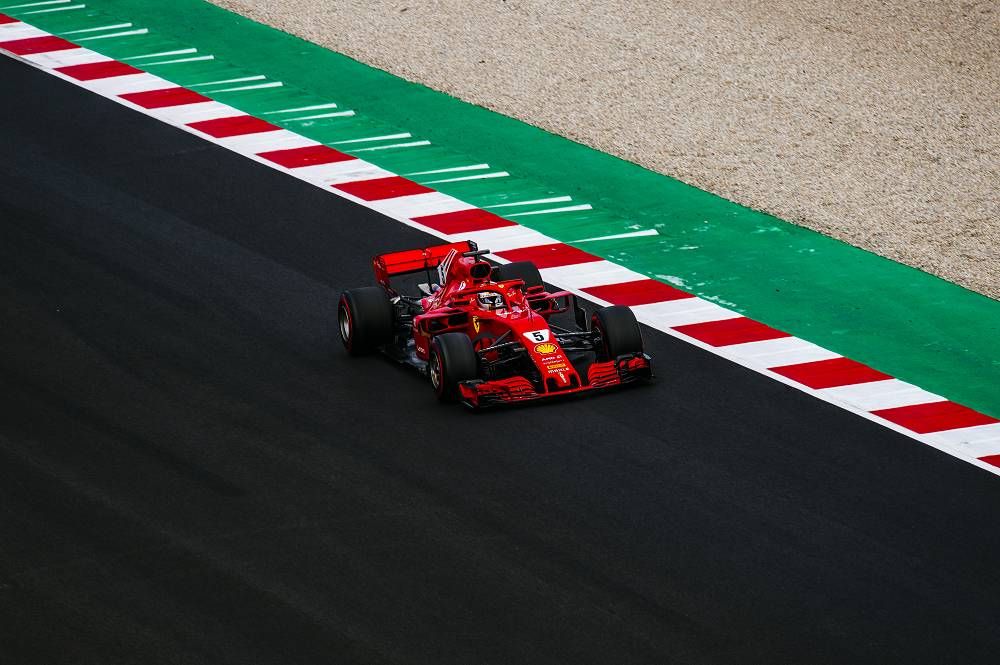


Test Barcelona – Sebastian “in race mode”
Posted: 08.03.2018 / Source: Ferrari
On his last day of testing, Vettel completes a trouble-free GP simulation
Montmelò, 8 March –Winter testing has now ended for Seb Vettel. The next time he meets up with the SF71H will be in Melbourne, for free practice at the Australian Grand Prix. The final day of testing for the German champion was given over to a programme that included set-up and tyre evaluation with different fuel loads, the classic race weekend simulation that signs off winter testing for every driver. By the end of the day, Seb had completed no fewer than 188 laps (equivalent to over 875 kilometres,) in all conditions, including a false start test, with other cars on track. His best lap was a 1’17”182, set on the new Hypersoft tyres that are making their debut this season.
“The times on these test days don’t mean much,” repeated Sebastian. “The important thing is that the SF71H has proved to be very strong, allowing us to run all day without any significant problems. We are still working on some things for the first race and it’s not really possible to make any predictions based on the performance of the other teams, because everyone is running a different programme. However, I’m happy for the guys in the team.”
It was cloudy and chilly this morning at the Catalunya circuit and then a bit milder in the afternoon, with an average temperature of 15 degrees (28 track temperature) with a few gusts of wind. Tomorrow, Kimi Raikkonen will round off testing with a similar programme to his team-mate.
Test Barcelona – A change of plan
Posted: 07.03.2018 / Source: Ferrari
Seb and Kimi share the driving on the second day of testing
Montmelò, 7 March –It was a bit of an unusual Wednesday at the Catalunya Circuit, as both drivers had a turn behind the wheel of the SF71H. Scuderia Ferrari completed 115 laps, equivalent to a distance of 535 kilometres. Sebastian Vettel did 66 laps in the morning, the German’s best being a 1’19”541. Kimi Raikkonen was only able to drive in the afternoon, feeling unwell and staying in his hotel room until lunchtime. The Finn managed 49 laps, with a fastest time of 1’20”242, as he continued with the programme that had been affected by last week’s bad weather. Both men set their best times on the Soft tyres. Tomorrow, testing continues with Sebastian Vettel driving, so that Raikkonen can make a complete recovery. Kimi will return on Friday, thus bringing the second and final winter test to a close, prior to heading off to Melbourne.
Test Barcelona – Pushing for the 800
Posted: 06.03.2018 / Source: Ferrari
That’s the distance in kilometres covered by Seb today in the SF71H
Montmelò – 171 laps of the Catalunya Circuit totals 796 kilometres. That’s the distance Sebastian Vettel reeled off in the SF71H on this the first day of the second and final pre-season test session.
This time, the weather behaved itself with air temperature reaching 15 degrees and the track hitting 26. Only wind in the afternoon affected the session.
Scuderia Ferrari set to work on the dot of 9, the car doing some laps fitted with sensors to acquire data linked to the aerodynamics. After that came some relatively long runs, switching between the Soft and Medium compound tyres. It was on the latter that Seb set his fastest time in 1’20”396, on his 66th lap.
“It was a good day’s work,” commented the driver at the end of the session. “We managed to get through our programme, even if the conditions weren’t always ideal, because of the wind.”
Tomorrow, Wednesday, testing continues with Kimi Raikkonen at the wheel.
Test Barcelona – Testing ends at Catalunya
Posted: 01.03.2018 / Source: Ferrari

120 laps for Seb today, almost 300 over three days
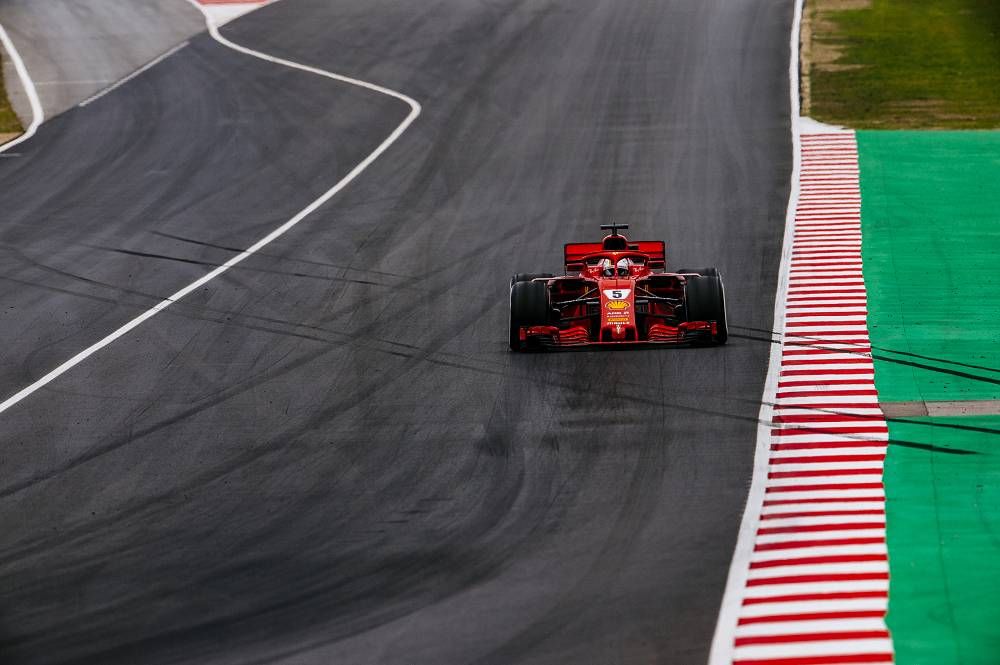
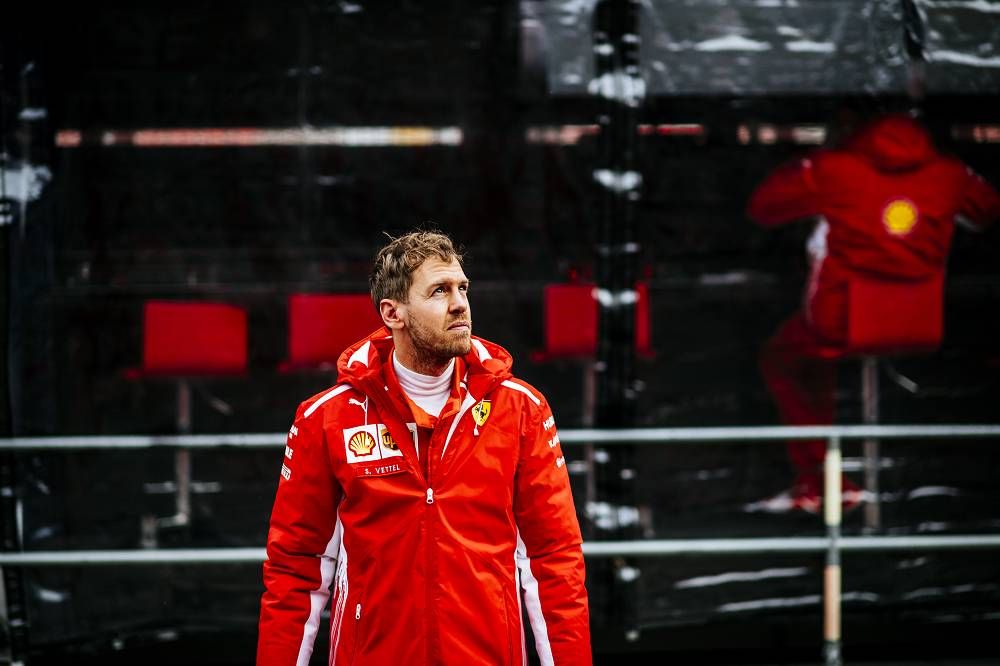
Montmelò, 1st march – The 120 laps Sebastian Vettel drove today, brings the total completed by the SF71H over what was effectively just a three day session to 298, equivalent to 1387.19 km/h. After yesterday’s snowfall, temperatures were very definitely on the up today at the Catalunya Circuit: at the end of the session, there had been a high of 12.7° air and almost 15 on track, but damp conditions in the morning still affected the work. It explains why, during the first few hours, Seb used wet weather Intermediate tyres, before switching to new and used Softs for the rest of the day. The final part of the session was given over to long runs, which yielded a best lap during these tests of 1’20”241. “The afternoon wasn’t exactly ideal,” commented the driver, “because of the track conditions and also a bit of time lost in the garage to sort out a few details. I’d have liked to have driven more, but we can do that next week, when we will start to get a clearer picture.”
The team also did some pit stop practice. Testing resumes on Tuesday 6th March, running through to the 9th.






Test Barcelona – Snow stops play
Posted: 28.02.2018 / Source: Ferrari
Testing wiped out by bad weather. Ferrari and Kimi take a break
Montmelò –Meteorologically speaking, spring starts tomorrow, but it seems that doesn’t apply to the Catalunya Circuit. The third day of testing was wiped out…following snowfall this morning. And even when it turned to rain in the afternoon, temperatures never reached the sort of numbers required to run a Formula 1 car. Air temperature just crept over two degrees with the track a fraction more.
Come the afternoon, Kimi Raikkonenn and Scuderia Ferrari took the only reasonable decision, namely to write off the day, which under the current regulations cannot be recovered later. Tomorrow, Sebastian Vettel will drive as planned, to round off the first test session. So the SF71H spent the whole day in the garage. There was no point in venturing out, because with such low temperatures, even the Wet tyres would not work properly and furthermore, running would not generate any worthwhile date on how the car was performing.
“Today, it felt more like being in Finland than Spain,” quipped Kimi. “And everyone knows there’s no Formula 1 in my country.” He will be back at the wheel next week, with the T2 session getting underway on Tuesday 6th March, running for four day. This time, the Scuderia Ferrari programme has Sebastian driving on the 6th and 8th, with Kimi getting his turn on Wednesday 7th and Friday 9th, that being the final day of winter testing.
Barcelona Test – Marathon on ice
Posted: 27.02.2018 / Source: Ferrari
Cold and even snow, but Vettel and the SF71 rattle off 98 laps: “And that’s the important thing”
Montmelò, 27 February –Snow just a few kilometres from the Costa Brava on the Spanish Mediterranean is not what you expect. The last time this happened at an F1 test at the Catalunya Circuit was 19 years ago, but the icy blast of the past few days brought in a few snowflakes this afternoon. Nevertheless, the SF17H, with Sebastian Vettel having his first day at the wheel, reeled off 98 laps, the fastest of which was a 1’19”673, set on Soft tyres. Scuderia Ferrari wasn’t in action for all nine hours – one more than usual as even the lunch break was cancelled – but come the end of the day the programme ran to plan.
And that’s the point made by the driver: “The important thing today wasn’t the lap time, but the fact that, in these conditions, we managed to cover almost a hundred laps without encountering any reliability problems. That’s what we are concentrating on at the moment, with the search for performance coming later. From an operational point of view, everything went smoothly and I’d say the car is working. But today’s conditions are not the ones in which you’d normally run an F1 car: today it even snowed and with air temperature around 3 to 4 degrees and the track at 8 to 9, everyone struggled to get the tyres up to temperature. The weather was the limiting factor today: the fact it’s been much colder than last year and also that the track has been completely resurfaced, means it’s impossible to make any comparisons. For now, we are concentrating on ourselves, without looking at what the others are doing.”
During the day, the SF71 used the Medium and Soft tyres and also did a couple of laps on the Intermediates. Tomorrow, it’s again Kimi Raikkonen’s turn, for his last day of this session.
Barcelona Test – “The only problem was the weather”
Posted: 26.02.2018 / Source: Ferrari
A cold debut for the SF71H with Kimi at the wheel
Montmelò, 26 February –While Italy is freezing, the Barcelona area is not doing much better, even if the trees are already in blossom here. After a sunny Sunday, which meant that Scuderia Ferrari was able to comfortably complete its Filming Day, the “real” debut for the SF17H took place in plunging temperatures, with rain arriving towards the end of the session. However, by the end of the day, Kimi Raikkonen had completed 80 laps of the Catalunya Circuit, the fastest of them in 1’20”506 on Soft tyres. He worked through the first part of a programme that, over the course of this week, is given over mainly to acquiring data.
“The real problem, the only one today, was the weather,” summarised Kimi. “My first impressions with the new car were OK, but it’s still too early to make any judgement, especially given today’s conditions. These tyres aren’t designed to work at 8 degrees and it was difficult for everyone. As for the rest, our work had nothing to do with lap times and we just ran and changed a few things, trying to understand the car, which doesn’t seem to have any faults. Now we must try and do more kilometres.”
The first long run with the Halo protection fitted over the cockpit went off without any problems. “Compared to the tests we did in previous years, this time the Halo had been conceived as an integral part of the car design, which had not been possible before. I didn’t notice anything different to driving the car without the protection.”
Testing continues tomorrow, with Sebastian Vettel, while it will once again be Kimi’s turn on Wednesday, with Seb then rounding off the first winter test.
A Tailor-Made Lunar New Year
Posted: 24.02.2018
Source: Ferrari

Showcasing Two Unique Creations from The Ferrari 70th Anniversary Celebrations Collection
Jakarta, February 24th 2018 – Ferrari owners were invited to indulge in an exquisite Lunar New Year Gala Dinner. In the midst of the lunar new year festivities, 2 out of 350 limited edition Tailor-Made 70 Style Icons Ferraris were unveiled.
The attendees were treated to the sight of a cool two-tone Ferrari California T inspired by the 410 Superamerica, and an FXX Pachetto Evoluzione inspired 488 GTB. A Classiche inspired Ferrari California T is clad in a combination of Bianco Italia white and Blu Abu Dhabi. Its interior is covered in a carefully made selection of Black Leather, Blue Medio Soul Leather, and white piping around the seats.
Whereas the 488 GTB has endured a Scuderia Tailor-Made treatment. Wearing a Rosso Corsa exterior with masterfully placed Bianco Avus accents. Inside, is nothing short of a masterpiece with the unification of selected sporty materials such as carbon fiber trims and Ultrasuede microfiber seats.
The unveiling of these very exclusive 70 style icons Tailor-Made Ferraris was gracefully opened by a Tang Dynasty influenced dance and Barongsai performance, proceeded with a Yee Sang ceremony. A traditional Chinese orchestra accompanied the guest as they enjoyed an 8-course oriental meal.


Ferrari SF71H
Posted: 22.02.2018 / Source: Ferrari

The SF71H (the code name for the 669 project) is the sixty fourth single-seater car designed and produced by Ferrari to compete in the Formula 1 World Championship. Rule changes introduced last season led to the introduction of significant aerodynamic modifications and wider tyres, all aimed at increasing performance. Therefore the new 2018 Ferrari F1 car has been created to make the most of the experience gained last year. Compared to 2017’s SF70H, the wheelbase has been changed slightly, with the side dimensions also revised along with the cooling system. The suspension follows the tried and tested practice of using push-rods at the front and pull-rods at the rear, however, their design has been updated based on experience gained during the first season running the wider tyres.
Cockpit protection
The most obvious element to catch the eye is the Halo, designed to protect the cockpit area. After two years of on-track testing, it has now entered the rule book. It weighs around 7 Kg, plus fittings and this has only been partly compensated for with an increase of 5 Kg – from 728 to 733 – to the minimum car weight set in the 2018 regulations.
Power Unit
The number of V6 engines that can be used over the course of the season, without incurring a penalty, continues to decrease, this year from 4 to 3. The same number applies to the turbo-compressor and MGU-H – the energy recovery system attached to the turbo – while only 2 MGU-K -the device that generates kinetic energy linked to the transmission – are allowed over the year, a figure which also applies to the electronic control unit and the batteries. Therefore those in the engine department have also based their work on these new parameters.
The programme
After it’s launch on Thursday 22nd February, the SF71H will be transported to Barcelona’s Catalunya Circuit, for a filming day on Sunday 25th, followed by the start of testing proper on Monday 26th. The first session runs to the end of Thursday 1st March, while the second test takes place at the same circuit from 6th to 9th March. Both Scuderia Ferrari race drivers, Kimi Raikkonen and Sebastian Vettel will be driving.
| Technical Data |
| Chassis made from carbon-fibre and honeycomb composite structure |
| Longitudinal Ferrari gearbox (8 speed + R) |
| Hydraulically controlled limited slip differential |
| Semi-automatic high speed, electronically controlled gear change |
| Brembo ventilated carbon disc brakes (front and rear) with brake-by-wire system on the rear brakesPush-rod front suspension Pull-rod rear suspension |
| Weight with water, oil and driver, 733 kg 13” OZ wheels (front and rear) |
| ERS System | |
| Battery energy (per lap) | 4 MJ |
| Power of MGU-K | 120 kW |
| Max revs MGU-K | 50000 |
| Max revs MGU-H | 12500 |
| Ferrari 062 EVO Engine | |
| Cubic capacity | 1600 cc |
| Maximum revs | 15000 |
| Supercharging | A single Turbo |
| Fuel flow rate | 100 kg/hr max |
| Amount of fuel | 105 kg |
| Configuration | V6 90° |
| No. of cylinders | 6 |
| Bore | 80 mm |
| Stroke | 53 mm |
| Valves | 4 per cylinder |
| Injection | Direct, max 500 bar |


Unique Tailor Made specification for the Ferrari 488 Pista
Posted: 15.06.2018 / Source: Ferrari

A tribute to the FIA World Endurance Championship world titles exclusively for client racing drivers
Maranello, 15 June 2018 – In occasion of the 24 Hours of Le Mans, the Prancing Horse is launching a unique ‘Piloti Ferrari’ specification for the Ferrari 488 Pista. This special custom creation, the latest from the exclusive Tailor Made programme, was designed to recognise the success of clients who race Ferraris and will make its debut on the eve of the legendary French endurance race at the Circuit de la Sarthe. Inspired by AF Corse’s no. 51 car, with which Alessandro Pier Guidi and James Calado won the 2017 FIA World Endurance Championship (WEC) Drivers’ and Manufacturers’ titles, this special finish for the new Ferrari 488 Pista is available exclusively for customers involved in the company’s motor sports programmes.
The exterior features a new livery with stripes in the colours of the Italian flag recalling the racing version of the 488 GTE, embellished by a laurel celebrating the WEC title, the logo of the championship and the word “PRO” indicating the class the car raced in. The Italian flag livery features again along the car’s flanks which are also adorned with the personal race number each client will be able to add. The version that will be unveiled at Le Mans carries the number 51 used by the world championship drivers. The matte black S-Duct and the natural carbon-fibre ‘dovetail’ suspended rear spoiler and vent surrounds round off the personalisation of the exterior.
The ‘Piloti Ferrari’ 488 Pista will be available in four different colours inspired by the world of racing: Rosso Corsa, Blu Tour De France, Nero Daytona and Argento Nürburgring.
The interior, in black Alcantara®, includes seats upholstered with a special perforated version of the same material that incorporates the Italian flag in the central band of the backrest. The national colours are also clearly visible on the edge of the gearshift paddles and on the floormats which, like the carpeting itself, are made of a special technical fabric. The number that features on the external livery also appears on the base of the steering wheel, while all the carbon-fibre trim parts have a matte finish. The personalisation of the interior is completed by an exclusive identification plate and sill trim in carbon-fibre, the latter with the Tailor Made logo.
The ‘Piloti Ferrari’ 488 Pista is powered by the latest 720-cv version of the 3.9-litre turbocharged V8 which has been voted best engine in the world for the third consecutive year at the 2018 International Engine of the Year Awards.


Introducing the new 488 Pista
Posted: 20.02.2018 / Source: Ferrari

Geneva unveiling for exhilarating, high-performance new Special Series
Maranello, 21 February 2018 – The 488 Pista, which will be unveiled at the upcoming Geneva Motor Show, is the successor to Ferrari’s V8-engined special series – the 360 Challenge Stradale, 430 Scuderia and 458 Speciale – which have received critical acclaim for their performance and undiluted handling.
The Ferrari 488 Pista marks a significant step forward from the previous special series in terms of both sporty dynamics and for the level of technological carry-over from racing. The name is, in fact, a direct homage to Ferrari’s unparalleled heritage in motor sports.
The car’s development evolved directly from the company’s involvement in the FIA World Endurance Championship – in which it has won five Manufacturers’ titles in the GTE class in the six years since the series’ inception – and its 25 years’ experience in running the Ferrari Challenge one-make series.
The 488 Pista’s extensive weight saving solutions, along with engine, vehicle dynamics and aerodynamic developments, all derive from Ferrari’s racing cars: the 488 GTE and the 488 Challenge. The result is a car with an uncompromising mission: to offer impeccable track-like performance on and off the road, even when in the hands of non-professional drivers.
LIGHTER AND MORE POWERFUL
The new model weighs an impressive 90 kg less (1280 kg dry) than the 488 GTB. This fact, combined with the largest ever increase in engine power for a special series car (+50 cv), sets a new benchmark for Ferrari’s V8 sports cars.
Its engine is the most powerful V8 in Ferrari history and is an extreme evolution of the turbo unit that won the overall International Engine of the Year award titles in both 2016 and 2017.
It punches out 720 cv with the highest specific output of in its class (185 cv/l) and is now lighter too, thanks to solutions adopted from the 488 Challenge. As a result it has a top speed of 340 km/h and sprints from 0-100 km/h in 2.85” and 0 -200 km/h in 7.6”.
The engine sound is unique and unmistakably Ferrari, as such a special car warrants. Both the sound quality and the intensity are higher than the 488 GTB in all gears and at all engine speeds in proportion with the progressive increase in power.
BOOSTED DOWNFORCE
The 488 Pista makes full use of Ferrari’s motor-sports experience for maximum aerodynamic performance even on the road. Among the racing solutions adopted is the front F1-inspired S-Duct and the design of the front diffusers which feature a ramp angle that was optimised for the 488 GTE to create strong suction for increased downforce. Additionally, the rear blown spoiler is higher and longer and the shape has been optimised. The final result of all these interventions is an impressive 20% increase in downforce compared to the 488 GTB.
EXHILARATING DRIVING PLEASURE
The vehicle dynamics were designed to enhance driving pleasure and make the car’s full potential available to all drivers, professional or otherwise. The objective was to make the car’s performance on the limit easier to reach and control.
This was achieved by synergies between the development of the mechanical set-up and the electronic dynamic controls integrated into version 6 of the Side-Slip Angle Control system. SSC 6.0 incorporates all the following systems: E-Diff3, F1-Trac, the magnetorheological suspension (SCM) and, for the first time ever, the Ferrari Dynamic Enhancer. The FDE features a world-first: it uses Ferrari software to adjust the brake pressure at the callipers.
A POWERFUL, EFFICIENT DESIGN
The design of the 488 Pista is focussed on functional aerodynamic concepts while the cockpit is pared back in keeping with its very sporty vocation. Ferrari Design used innovative elements, such as the aerodynamic S-Duct at the front, as an opportunity to visually shorten the car’s nose, creating an original floating wing effect.
The racing livery colour scheme is an integral part of the design of the car and the way it dives into the S-Duct underscores the berlinetta’s compact yet imposing forms. Contrasting edging on the aerodynamic elements on the bumpers and flanks add structure to the design.
The concept of the front is echoed in the dolphin-tail rear spoiler which appears suspended to provide an impression lightness and efficiency, while the rear volumes add a sense of power to the tail.
Ferrari 488 Pista
Short technical specifications
ENGINE
Type V8 – 90° twin turbo
Overall displacement 3902 cm3
Max. power output * 530 kW (720 cv) at 8000 rpm
Max. torque * 770 Nm at 3000 rpm in 7th gear
DIMENSIONS AND WEIGHTS
Length 4605 mm
Width 1975 mm
Height 1206 mm
Dry weight ** 1280 kg
PERFORMANCE
0-100 km/h 2.85 s
0 -200 km/h 7.6 s
Max. Speed > 340 km/h
FUEL CONSUMPTION AND C02 EMISSIONS
Under homologation
* With 98 octane petrol
**With optional lightweight features


Scuderia Ferrari and Philip Morris International extend their partnership
Posted: 20.02.2018/ Source: Ferrari
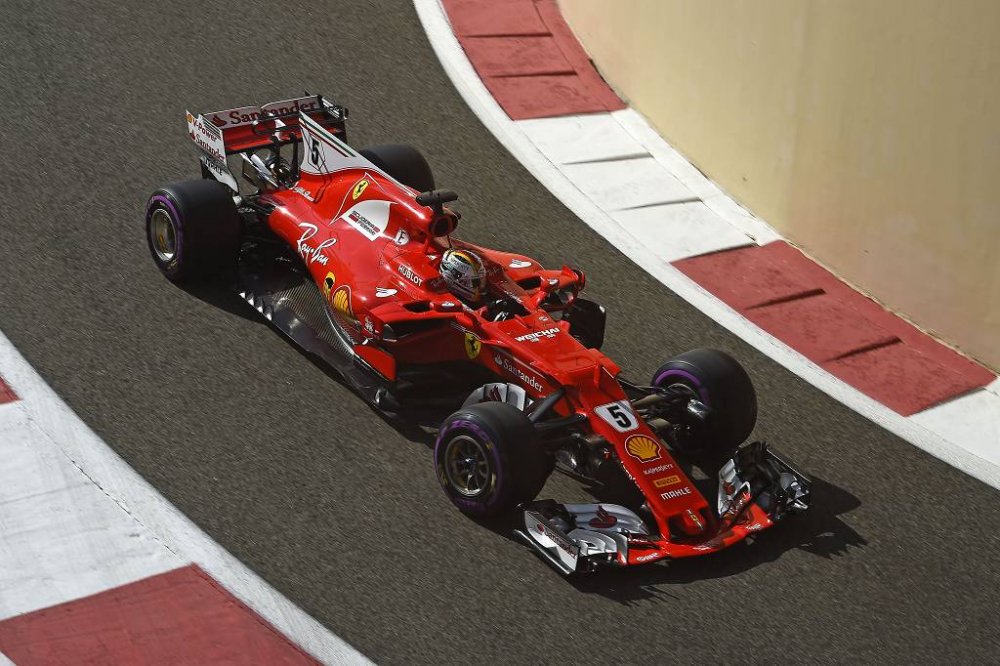
Maranello, February 20th, 2018 – Scuderia Ferrari announces that it has extended its partnership agreement with Philip Morris International.
By virtue of this agreement, Scuderia Ferrari and Philip Morris international continue a collaboration of nearly five decades.
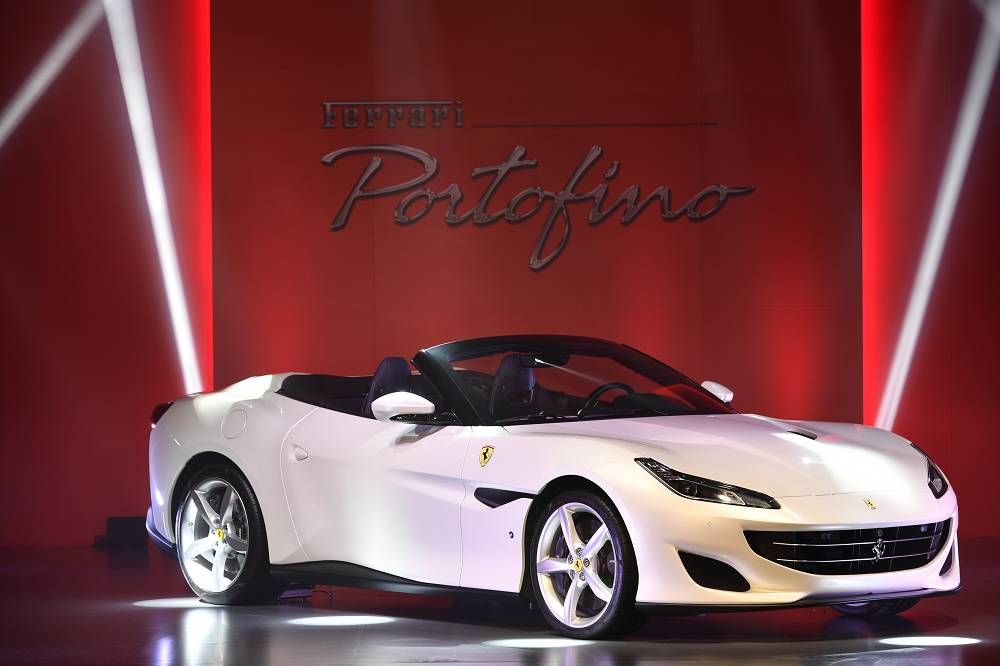
The Ferrari Portofino Japan Premiere
Posted: 20.02.2018/ Source: Ferrari

True Ferrari Performance combining luxury, versatility and on-board comfort
Italian GT par excellence opens up a new horizon
February 20, 2018, Tokyo, Japan – Ferrari Japan unveiled the Ferrari Portofino, which debuted at the Frankfurt International Motor Show last year, to Japanese clients on February 19.
Representing the perfect combination of luxury, versatility and on-board comfort, the Ferrari Portofino is the new GT set to dominate its segment. After the global debut in Frankfurt, the unveiling in Japan where GT model lineup had achieved great success was much-awaited. Over 300 VIP guests with particular interests of the new GT have gathered to see this latest model.
On this particular occasion, the venue was transformed into the world of Cavallino Rampante incorporating the latest technology to show the high performance via emotional visuals and sound. The event reached its climax when the car coloured in the sophisticated Bianco Italia was unveiled. The guests enjoyed the cocktail style party with an opportunity to see the elegantly-designed and highly innovative latest Ferrari, celebrating another page of the Cavallino Rampante history in Japan.
The Ferrari Portofino was named after one of the most attractive towns located in Riviera in the Liguria Region. Portofino has long been known to the world as a symbol of scenic beauty embracing elegance and unique nobility. Bearing the name of the town, the Ferrari Portofino has become the most versatile GT car.
Powered by the Ferrari V8 turbo, a member of the engine family that won the International Engine of the Year Award in 2016 and 2017 consecutively, the new car boasts an ability to punch out 600cv and to sprint from 0-100km/h in just 3.5 seconds. Due to the adoption of new components and the calibration of the engine management software, the output power increased by 40cv from the California T power unit. Thanks to further tuning, the characteristic Ferrari V8 soundtrack can be fully appreciated in open-top driving.
The Ferrari Portofino is also an aggressively-styled car with a two-box fastback configuration – unprecedented in a coupe-convertible with a retractable hard top. This successfully adds extra sleekness to its silhouette, highlighting a sportier character.
This Ferrari model is designed for enjoying daily driving and converts from an authentic Berlinetta into an open-top Spider in just 14 seconds even in low-speed driving. With a brilliant marriage of design, performance, and technology, and with various advantageous features – retractable hard top, spacious trunk, ample passenger space, and two rear seats suitable for a short trip – the new model is perfect for any occasion.
Its vehicle dynamic characteristics have been completely revised. For the first time on this type of Ferrari model, third-generation electronic rear differential (E-Diffs) has been integrated with the F1-Trac, improving both mechanical grip and the control of the car to the limit. The Ferrari Portofino is also the first GT in this range to be fitted with EPS (Electric Power Steering) The integration of the EPS and the E-Diff3 reduced the steering ratio by 7% for even more responsive steering without a trade-off in stability at high-speed driving. Thanks to the adoption of dual-coil technology, the magnetorheological damping system (SCM-E) has been upgraded, helping to reduce roll while contributing to improving absorption of road surface unevenness. The result is an even more dynamic, responsive car that also delivers superior ride comfort.
The new car also focuses on on-board comfort and this is achieved by a slew of new features – an infotainment system with a 10.2” touchscreen display, a new air-conditioning system that improves passenger comfort either with the top up or down, a new steering wheel, 18-way adjustable electric-powered seats with a new backrest design that boosts legroom for rear seat passengers, and the passenger display. All passengers will highly appreciate the new wind deflector which can cut air flow inside the cabin by 30% and reduces aerodynamic noise in open-top driving.
The Ferrari Portofino is the most powerful convertible car that Ferrari has ever produced.




Gala evening dedicated to Ferrari customer teams
Posted: 18.02.2018/ Source: Ferrari

Maranello, 18 February 2018 – The Fiorano circuit hosted a gala evening on Saturday, with an award ceremony for the drivers and teams that won GT races at the wheel of Ferrari cars. These range from the 488 GTE, dominator of the FIA WEC World Championship and the European Le Mans Series, to the F430 Challenge, still capable of winning in Australia. In 2017 more than 50 drivers and 20 teams on four continents secured national and international titles for the Prancing Horse, as well as many individual race victories. Some of these were highly prestigious such as the 12 Hours of Bathurst or the 24 Hours of Spa and Le Mans. The guests were welcomed by Chief Marketing and Commercial Officer, Enrico Galliera, along with head of the Attività Sportive GT, Antonello Coletta. Seven of the nine official Ferrari Competizioni GT drivers also attended the evening.
Queen. And on the subject of special guests there was also an appearance from the “Queen”, the 488 GTE that won five out of nine races in the GTE-Pro class of the FIA WEC also winning the Trophy for GTE-Pro teams for AF Corse. The Piacenza based team will also race two cars in the GTE-Pro class of the 2018-19 WEC FIA Super Season and will offer technical support to various teams competing with Ferrari. The 488 GTE also triumphed three times in the GTE-Am class, including the 24 Hours of Le Mans in the colours of JMW Motorsport. The victorious teams included the US Scuderia Corsa, winner of the 2017 IMSA championship in the GT-Daytona class, alongside Kessel Racing and Rinaldi Racing awarded for their triumphs in the Blancpain championships in the Pro-Am Cup and Am Cup classes. The top management of Ente Competizioni GT were called on stage along with representatives of Michelotto Automobili, which always helps Ferrari to prepare its racing cars.
The prizewinners. Five official Ferrari drivers numbered among the more than 50 prizewinners. James Calado and Alessandro Pier Guidi were celebrated for the GT world title won in the FIA WEC, while Davide Rigon and Miguel Molina received an award for victory in the Gulf 12 Hours. Toni Vilander was also called on stage for his triumph in the 12 Hours of Bathurst 2017 with the 488 GT3 of Maranello Motorsport. The most successful drivers included Hillclimb phenomenon Lucio Peruggini and then David Perel, Marco Zanuttini, Jacques Duyver and Stephen Earle of Kessel Racing, as well as Alexander Mattschull and Daniel Keilwitz from Rinaldi Racing. Also meriting a mention was the tribute to the Wochenspiegel Team Monschau drivers who won the 24 Hours of Nürburgring in the Pro-Am class and gave Ferrari its first overall victory at the Nordschleife, the long Eifel track, since 2011.
Enzo Ferrari was born 120 years ago
Posted: 18.02.2018/ Source: Ferrari

The Enzo Ferrari Museum is celebrating the anniversary with a photo exhibition
“It seems incredible to think that Enzo Ferrari was born in the 19th century,” says Chairman and CEO Sergio Marchionne. “His lesson is more relevant than ever and his modernity unquestionable. He was a man with extraordinary vision and ability to manage people and resources as well as a strong entrepreneurial spirit and exceptional courage. One wonders what he could have achieved if he had had access to today’s technical resources and knowledge. The mark that he left on the world remains a source of pride for all of us at Ferrari and for the whole of Italy.”
Enzo Anselmo Ferrari, the son of Alfredo and Adalgisa, was born in Modena on 18 February 1898. As a child, he showed an unbridled passion for cars (his father, after all, had a workshop…) and as an adult he went on to become not only a great car manufacturer but one of the world’s greatest representatives of the Italian spirit. He was also one of the most influential personalities of the 20th century.
To celebrate his 120th birth anniversary, a photographic exhibition has been organised at Enzo’s birthplace, within the complex that now houses the Enzo Ferrari Museum in Modena. It includes images depicting him at various stages of his life: from childhood to adulthood, from his career as a driver to that of a manager and manufacturer alongside unforgettable motor racing champions such as Nuvolari, Castellotti and Villeneuve.


- Back to Ferrari 166 Spyder Corsa Technical Specifications Page
| S/N 002 C |
166 Spyder Corsa |

|
|
| S/N 083 S | 166 Spyder Corsa |

|
|
| S/N 085 S | 166 Spyder Corsa |
|
|
|
| S/N 087 S | 166 Spyder Corsa |
|
|
|
| S/N 089 S | 166 Spyder Corsa |
|
|
|
| S/N 091 S | 166 Spyder Corsa |
|
|
|
| S/N 093 S | 195 Inter Coupé Ghia |
|
|
|
| S/N 095 S | 166 Spyder Corsa |
|
|
|
| S/N 097 S | 166 Spyder Corsa |

|
|
| S/N 0195 EL | 166 Spyder Corsa |
|
|
|
- Back to Ferrari 166 Spyder Corsa Technical Specifications Page